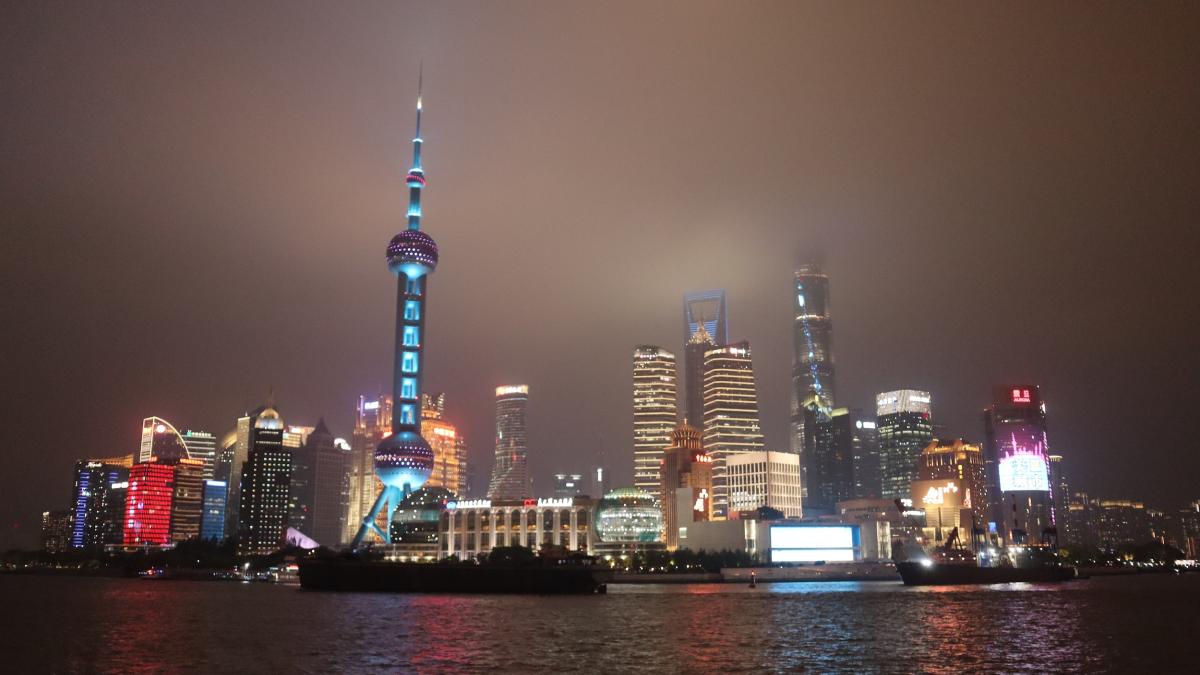
According to reports, foreign private equity fund KKR (Kohlberg Kravis Roberts & Co.) and real estate investment management firm AEW Capital Management are seeking to sell commercial real estate assets in China at steep discounts. In response, Hsieh Chin-ho, chairman of Financial News Media, posted on Facebook stating that KKR and other private equity funds are selling Chinese real estate while buying Japanese assets—an action that reverses the trend seen during Japan’s bubble economy in the 1990s, representing a strategic 'cage-changing' move.
Hsieh noted that two news items have emerged in the past month but have not attracted much attention. One is that major private equity firm KKR, together with AEW Capital, is selling nine commercial properties, including high-end long-term rental buildings in Beijing and the Yu Garden Orange Hotel on Shanghai’s Bund.
Why is KKR’s real estate sale drawing attention? Hsieh pointed out that the significance lies in the fact that these properties are being offered at 50% to 60% of market value. If the entire transaction is completed, KKR may still not be able to repay its bank loans—indicating a loss-making exit that further deepens the downturn in China’s real estate market.
Hsieh mentioned that over the past 15 years, Wall Street private equity funds have invested at least $140 billion (approximately NT$4.5458 trillion) in Chinese commercial real estate. AEW’s sale list even includes the SPDB building, signaling that foreign investors are collectively exiting China’s office market—a move that indirectly reflects a bearish outlook on the Chinese economy. More surprisingly, KKR, in partnership with PAG, has acquired 100% of a real estate development project in Sapporo, Japan, for ¥470 billion (approximately NT$97.3 billion). The investment extends beyond commercial real estate into the liquor industry.
Hsieh stated that since 2024, U.S. private equity funds have been aggressively investing in Japanese real estate, with Blackstone Group also making significant moves. This phenomenon is the exact opposite of Japan’s post-1990s bubble economy adjustment. In 1989, Japan’s bubble burst, leading to the 'lost 30 years,' with real estate prices collapsing and Tokyo properties becoming unattractive.
Hsieh also addressed the scale of potential non-performing loans in China’s banking sector. He noted that recently, all 42 Chinese banks have price-to-book ratios below 1, with Minsheng Bank dropping to just 0.22—indicating that the scale of hidden bad loans in China’s banking system may be unimaginably large. KKR’s move, therefore, represents a significant directional signal reflecting deeper structural issues.
FACT BOX
- Source: PR Times
- Category: News
- Organizations: KKR / AEW Capital Management / PAG