The U.S. Department of Commerce announced in August that it has signed Letters of Intent (LOI) with seven U.S. semiconductor and advanced technology companies, planning to provide a total of $874 million (approximately NT$28 billion, based on exchange rate estimates) in federal grants under the CHIPS and Science Act. The funding aims to advance domestic critical technology R&D, enhance the world's most powerful computing capabilities, and strengthen the autonomy and security of the U.S. semiconductor supply chain.
However, unlike previous direct government funding models, the Department of Commerce will require all grant recipients to provide the government with a minority, non-controlling equity stake. This mechanism allows taxpayers to share in the future financial gains resulting from corporate growth.
According to a press release from the U.S. Department of Commerce, the agency has signed grant LOIs with seven companies totaling $874 million, which will be allocated toward multiple semiconductor core technologies and high-performance computing (HPC) R&D initiatives.
The Department stated that these grants will support innovations such as enhancing the computational power of the world’s fastest supercomputers, strengthening domestic supply chain security, and further solidifying U.S. leadership in the global compute supply chain.
It should be noted that these are currently only Letters of Intent. All companies must still undergo subsequent due diligence and formal review processes by the government. Final grant disbursements will only occur after approval by the relevant authorities.
Simultaneously, the U.S. government has introduced a new requirement: all grant recipients must allow the Department of Commerce to obtain a minority, non-controlling equity stake. The Department emphasized that this measure aims to improve taxpayer return on investment, enabling the government not only to provide financial support but also to share in the economic benefits when these companies succeed.
The funding source remains the CHIPS and Science Act, passed by the U.S. Congress in 2022 and signed into law by then-President Joe Biden. The Act totals over $280 billion, including approximately $52.7 billion specifically allocated to boost domestic semiconductor manufacturing, R&D, and workforce development. Its goal is to reduce reliance on Asian supply chains and enhance U.S. competitiveness in the global semiconductor industry.
Although the Act was established under the Biden administration, the current Trump administration continues to utilize its authority and funding for a new round of semiconductor investments, introducing a novel model where the government acquires equity stakes in recipient companies.
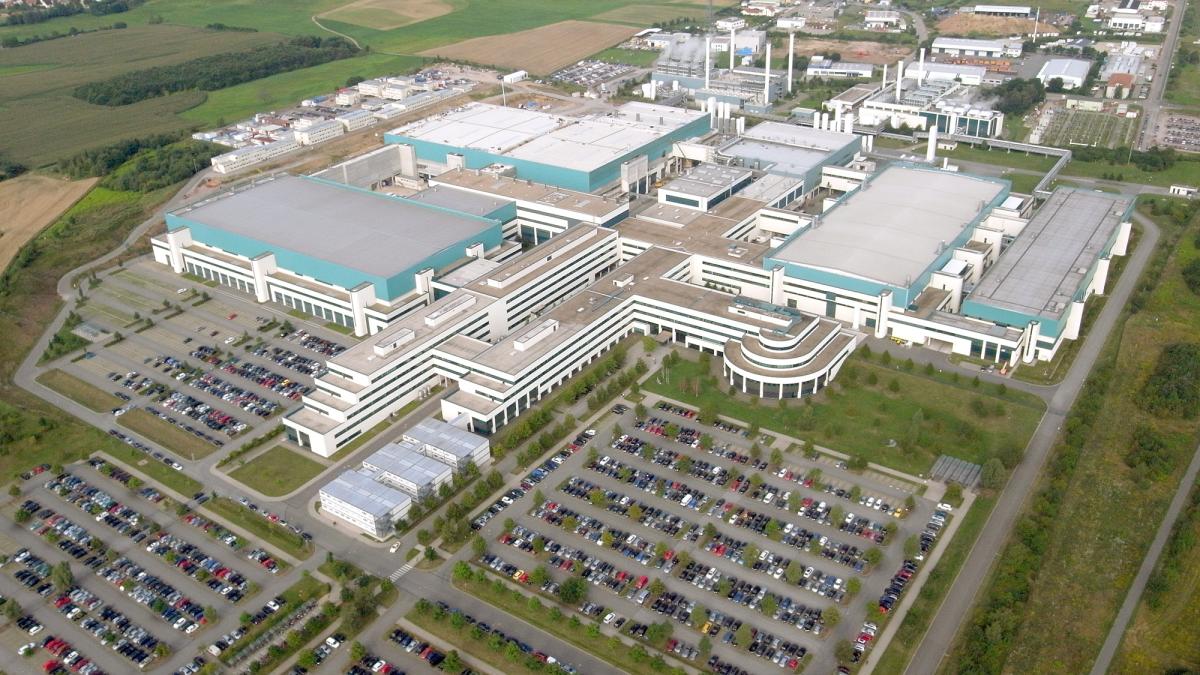
GlobalFoundries, the semiconductor foundry, received the largest grant of up to $300 million. The Department stated that this funding will accelerate the development of Co-Packaged Optics (CPO) technology in the U.S., potentially advancing commercialization by 2–3 years. CPO is considered a next-generation technology for AI data centers, integrating photonic components directly beside AI processors to significantly increase data transmission speed while reducing energy consumption. This technology is expected to enhance the competitiveness of U.S. AI infrastructure.
Kepler Computing Inc. will receive up to $245 million to develop next-generation high-performance AI memory. The company plans to leverage innovative 3D architectures and ferroelectric technology to create a new class of AI memory, aiming to overcome current limitations in memory speed and energy efficiency for AI computing. The government hopes this investment will establish U.S. capabilities in next-generation AI memory technology.
Multibeam Corporation is set to receive up to $140 million. The Department noted that the company will develop advanced packaging technologies using chip stacking and high-density interconnect designs to integrate multiple chips into a single system, connected via thousands of micro-wires for high-speed performance. This technology enhances the overall performance of AI, HPC, and other advanced electronic systems and is one of the most competitive areas in the global semiconductor industry.
Extropic will receive up to $75 million. The Department stated that the company is developing Thermodynamic Sampling Units (TSUs), which use natural thermal fluctuations to perform probabilistic computing, solving complex problems in simulation, optimization, and AI with significantly lower energy consumption than traditional computing architectures. If matured, this technology could dramatically improve AI computing efficiency while reducing data center power usage.
Thintronics is expected to receive up to $50 million. The company will develop ultra-low-loss inter-layer dielectrics for next-generation semiconductor interconnects and advanced packaging. These materials improve signal transmission efficiency in AI, HPC, and high-speed networking equipment, reduce energy loss, and enhance overall system performance.
Obsidia Semiconductors will receive up to $34 million. The Department stated that the company will develop non-invasive chip verification technology to detect counterfeit and maliciously implanted components, improving provenance and traceability in AI and high-end electronics supply chains. The U.S. government views supply chain security as a critical component of national security, especially with the rapid development of AI and defense electronics.
Aeluma is expected to receive up to $30 million. The company will develop large-area, indium phosphide-free substrates for manufacturing photodetectors and laser components used in AI photonic interconnects. These optical communication components are considered foundational for high-speed connectivity in future AI data centers, improving data transmission efficiency and reducing latency.
U.S. Secretary of Commerce Howard Lutnick stated that this investment reflects the Trump administration’s ongoing acceleration of the U.S. technology innovation engine. He emphasized that these strategic investments will further enhance domestic semiconductor R&D and manufacturing capabilities, create high-wage jobs, and help the U.S. maintain its leadership in the global semiconductor industry. Lutnick added that sustained investment in key areas such as AI, HPC, advanced packaging, photonics, and supply chain security will maintain technological advantages amid intensifying global tech competition and reduce reliance on overseas supply chains.
FACT BOX
- Source: PR Times
- Category: Funding
- Organizations: GlobalFoundries / Kepler / Multibeam Corporation