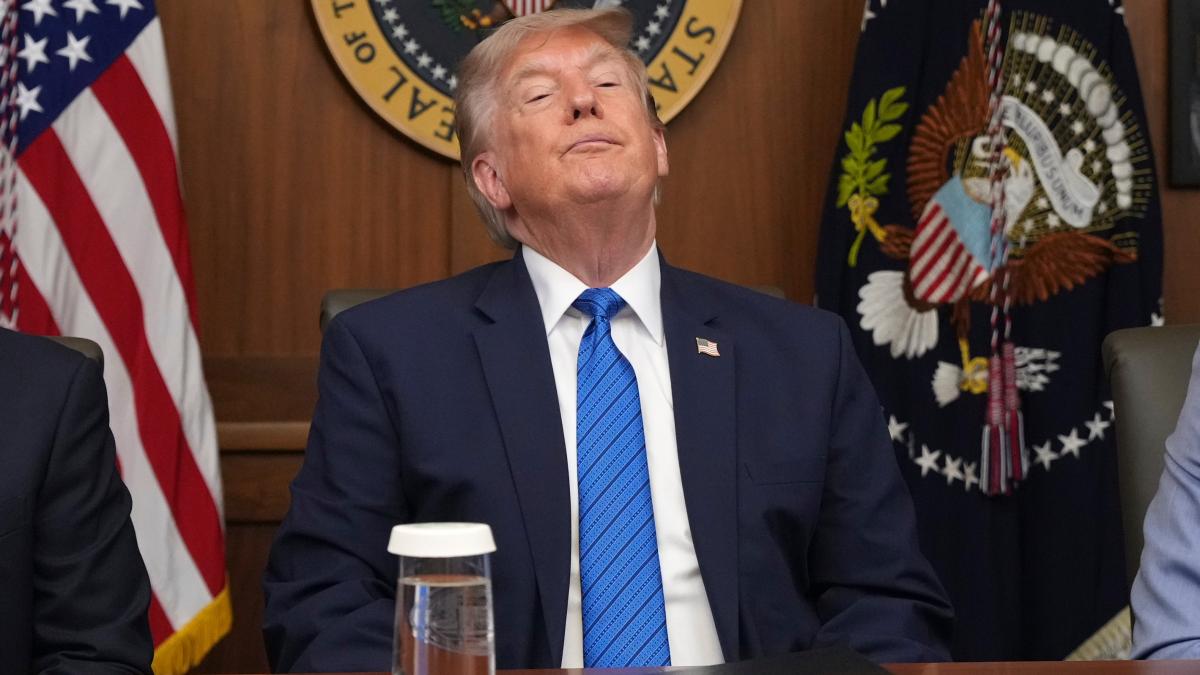
U.S. President Donald Trump officially confirmed on August 2 Eastern Time that the United States has partnered with Japan to intervene in the foreign exchange market, stepping in to bolster the Japanese yen, which had been steadily declining. Trump stated that this action not only creates tangible financial benefits for the United States and contributes to global economic stability, but also carries a deeper significance: sending a message of friendship to Japan.
This statement marks the first time the U.S. government has publicly acknowledged this foreign exchange intervention, which has recently drawn significant attention from international financial markets. Earlier, the UK's Financial Times reported that the U.S. Treasury Department had collaborated with the Japanese government to enter the market and support the yen. This is the first time in nearly 30 years that the U.S. has jointly conducted a yen-supporting currency operation with Japan.
Trump emphasized that supporting the yen brings financial benefits to the United States. During an interview while returning to the U.S. aboard Air Force One, when asked why the U.S. was willing to assist Japan in stabilizing its exchange rate, Trump stated the reason was simple: the strong bilateral relationship. He said the U.S. intervened “because we have a good relationship with Japan.”
Trump further explained that this move would bring tangible financial benefits to the United States and also positively impact the global economy. He stressed that the U.S. would gain financial advantages from this action, which would also benefit the world economy. However, he believed the most crucial significance lies in sending a signal of friendship.
He also mentioned that the U.S. currently has very strong fiscal strength, while Japan is facing persistent downward pressure on the yen, prompting its desire for U.S. support. Trump described the U.S. fiscal situation as “very, very strong” and pointed out that yen weakness has created a need for external assistance in Japan. He emphasized that the U.S. has always been willing to support Japan, as Japan has long been a close ally of the United States, with the exception of the historical incident at Pearl Harbor. While referencing Pearl Harbor with a tone of historical reflection, Trump still underscored the solidity of the current U.S.-Japan alliance and expressed America’s willingness to provide necessary financial market support.
Trump boasted about his negotiation skills, citing cases involving Argentina, Venezuela, and Intel. When asked what specific benefits the U.S. could gain from this currency intervention, Trump emphasized economic gains and drew a comparison to the earlier case of assisting Argentina. He said that while the move was initially criticized, the U.S. ultimately earned $25 billion from that transaction.
Regarding Venezuela, Trump claimed the U.S. gained profits on the scale of hundreds of billions of dollars and praised himself as highly skilled in negotiation deals. He also mentioned the Intel case, noting that after his support, the company’s stock became a hot commodity on the New York Stock Exchange and other markets, generating approximately $75 to $80 billion in benefits for the United States. He emphasized that this benefit was for the nation as a whole, not personal gain.
Regarding this yen intervention, Trump said Japan had proactively requested U.S. assistance, and the primary purpose of U.S. involvement was to demonstrate goodwill toward Japan, as the yen exchange rate had continued to weaken while the dollar remained relatively strong. He believed that the U.S. economy was currently performing exceptionally well, which is why countries around the world sought American support.
The yen has recently faced significant depreciation pressure, with the dollar-yen rate hitting a 38-year low. According to the Financial Times, citing informed sources, the method of U.S. intervention in the currency market was highly unusual. The Federal Reserve Bank of New York, responsible for executing foreign exchange transactions on behalf of the U.S. Treasury, sold euros and bought yen on July 31 on behalf of the Treasury, thereby boosting the yen’s exchange rate.
The report noted that the U.S. rarely directly intervenes in foreign exchange markets, and joint currency operations with other countries are even rarer, making this action immediately attract high attention from global financial markets.
The backdrop of this U.S.-Japan joint intervention is the yen’s ongoing significant depreciation pressure. In July, the dollar-yen exchange rate climbed as high as 163.24 yen, marking the weakest level for the yen since 1986.
Market analysts generally believe the reasons for the yen’s prolonged weakness include the U.S. maintaining relatively high interest rates, causing funds to continuously flow into dollar-denominated assets. Additionally, rising international oil prices have increased Japan’s energy import costs, and capital continues to flow out of Japanese markets, further exacerbating yen depreciation pressure.
Notably, before the news of U.S. intervention became public, the yen exchange rate had already shown signs of rebounding last week. At the time, markets speculated that the Japanese government might have independently entered the market to intervene. Now, with Trump confirming U.S. participation, it further confirms that this yen appreciation trend was not merely the result of natural market fluctuations but was driven by official policy intervention.
Citing market analysts’ estimates, the Financial Times reported that the scale of Japan’s currency intervention this time was approximately 8.45 trillion yen, equivalent to about $52.8 billion, making it one of the most significant currency interventions in recent years. In contrast, Japan’s Nikkei News offered a more conservative estimate, suggesting the intervention amount was roughly between 6 trillion and 7 trillion yen. Although the figures vary slightly, the market generally agrees that Japan’s market intervention scale is substantial. The U.S. joining the intervention further amplified the policy’s effectiveness, reflecting Washington’s policy intent to jointly stabilize international financial markets and the foreign exchange order through cooperation with Tokyo.
FACT BOX
- Source: PR Times
- Category: News