As the semiconductor S-curve corridor in southern Taiwan takes shape, AI business opportunities are expanding from chip manufacturing into industrial safety, transportation, and critical infrastructure. Jiefa Technology (7796) announced today the launch of its 'Greater Southern AI Strategic Initiative,' designating southern Taiwan as a real-world testing ground for edge AI technologies. Its AIVO vision platform will target applications in semiconductor plant safety, urban rail security, major transportation nodes, and drone inspections. Ongoing validation projects are expected to gradually demonstrate tangible benefits starting in the second half of 2026.
Another key focus of this initiative is reducing AI applications' dependence on a single hardware platform. The company stated that its architecture supports chip platforms from NVIDIA, Intel, Arm, and Axelera AI, allowing customers to select computing architectures based on performance, power consumption, cost, and application requirements. Jiefa plans to gradually introduce software licensing and AI-as-a-Service (AIaaS) subscription models, aiming to transform one-off, highly customized projects into replicable standardized products and recurring revenue streams.
From ASIC to AI Hardware-Software Integration: Southern Taiwan as a Technology Validation Hub
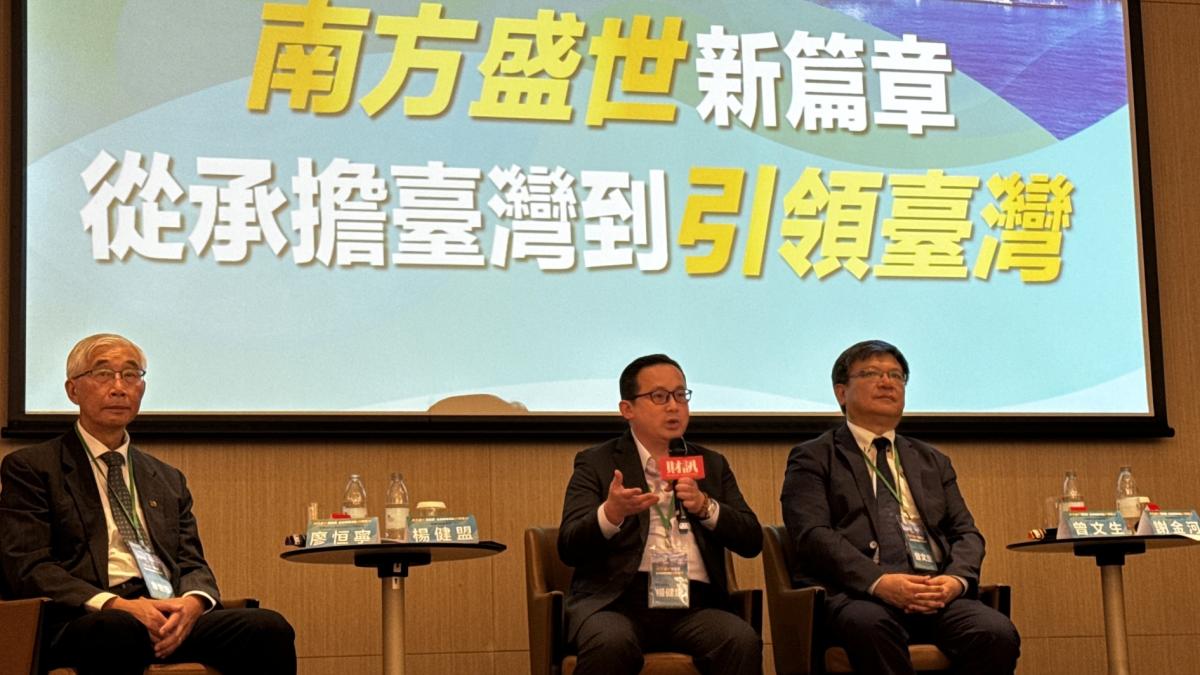
Jiefa Technology Chairman Yang Chien-Meng recently participated in the '2026 Financial News City Forum,' joining a key dialogue on 'Southern Taiwan's Rise and Kaohsiung's Industrial Transformation.' He noted that as the semiconductor S-curve corridor and AIoT innovation clusters in southern Taiwan take shape, Jiefa is expanding from its original ASIC chip design services into AI software, edge computing, and system integration, aiming to become a 'technology partner' for local industries.
Yang pointed out that Kaohsiung is transforming from a traditional industrial city that 'bears the burden of Taiwan' into one of the nation's future-leading industrial hubs. However, local enterprises and public infrastructure projects often face limitations when adopting AI due to specific chip and hardware specifications, making underlying architectures inflexible and increasing subsequent deployment and expansion costs.
Therefore, Jiefa plans to use southern Taiwan as a forward-looking technology validation site. By testing AI systems in real-world projects at semiconductor plants, logistics hubs, and public transport facilities, the company will validate feasibility and then convert successful functions into standardized modules for replication in other cities or overseas markets.
AIVO Enters Semiconductor Safety: From Post-Incident Review to Proactive Alerts
In practical applications, Jiefa is deploying its AIVO edge vision platform in critical infrastructure and high-dynamic heavy-operation environments, including large southern logistics hubs, semiconductor plants, and transportation stations.
Compared to conventional video surveillance systems, the AIVO platform aims to integrate cameras and front-end sensors of various specifications and perform object feature extraction and classification even under rapidly changing lighting, complex backgrounds, or when multiple targets are moving simultaneously.
In other words, the system's function goes beyond reviewing footage after an incident. By deploying edge computing nodes on-site, it aims to instantly identify abnormal states of personnel, vehicles, and equipment and issue early risk warnings, helping semiconductor plants and logistics sites establish proactive industrial safety alert mechanisms.
Jiefa also plans to extend this architecture to AI-powered proactive security for urban rail systems and vehicle flow identification and traffic management at major transportation nodes. Citing market estimates, the company noted that the global smart transportation and critical infrastructure market is projected to exceed USD 250 billion by 2030, making it one of the primary target markets for scaling up AIVO platform applications.
Lightweight Model Deployment at the Edge: Targeting Power Grids and Petrochemical Inspections
Beyond fixed cameras, AIVO is also targeting drone inspection needs in wide-area applications such as smart power grids, large petrochemical plants, and pipeline networks. Jiefa stated that through self-developed image processing algorithms, it has lightweighted AI models to run on edge devices with limited computing resources and power, reducing latency and bandwidth burdens caused by transmitting large volumes of video to the cloud.
On the underlying technology front, Jiefa will collaborate with its group company Arculus EDA Taiwan, combining the latter's ASIC design and EDA verification tool capabilities with Jiefa's AI algorithms, software platforms, and system deployment services to create an end-to-end solution from chip design and model computation to terminal applications.
This vertical integration strategy means that in the future, Jiefa will not only provide AI software but also assist customers in selecting or designing suitable chip architectures based on their performance, power, and cost requirements, followed by backend system deployment.
Support for Four Major Chip Architectures: Reducing Vendor Lock-In
Jiefa stated that its cross-platform AI architecture supports chip platforms from NVIDIA, Intel, Arm, and Axelera AI, allowing customers to avoid being locked into a single hardware vendor and enabling them to adjust computing architectures according to different application scenarios.
For enterprise customers, the significance of a cross-platform architecture goes beyond increasing chip options; it also reduces the cost of redeveloping entire AI systems when upgrading hardware, expanding computing nodes, or adopting next-generation chips. However, the company has not disclosed whether it has formal partnerships or licensing agreements with the aforementioned chip vendors, focusing instead on its software architecture's compatibility and deployment capabilities across different platforms.
Introducing Licensing and AIaaS Subscriptions: Monitoring Order Conversion in the Second Half
In terms of business model, Jiefa plans to gradually expand software licensing, AIaaS subscription services, and modular hardware-software integration solutions, aiming to shift from a revenue structure dominated by one-off, highly customized projects to standardized, repeatable offerings, thereby increasing recurring revenue and overall gross margins.
Yang emphasized that Jiefa Technology 'will not just be a technology provider' but will co-create value with cities. The company will refine AI modules with commercialization potential through real-world validation in Kaohsiung and southern Taiwan, then export the experience and business models to other markets.
Jiefa expects that as real-world validation projects progress, its edge AI platforms and solutions will gradually demonstrate tangible benefits starting in the second half of 2026, aiming to become a key driver of revenue growth and profitability over the next two to three years.
However, the company has not yet disclosed individual project clients, contract values, order sizes, or estimated revenue contributions. The key operational focus for the second half will be whether validation projects in southern Taiwan can be converted into formal orders and whether software licensing and AIaaS subscription revenues can move from the planning stage to actual contribution.
FACT BOX
- Source: PR Times
- Category: New Product
- Organizations: NVIDIA / Intel / Arm