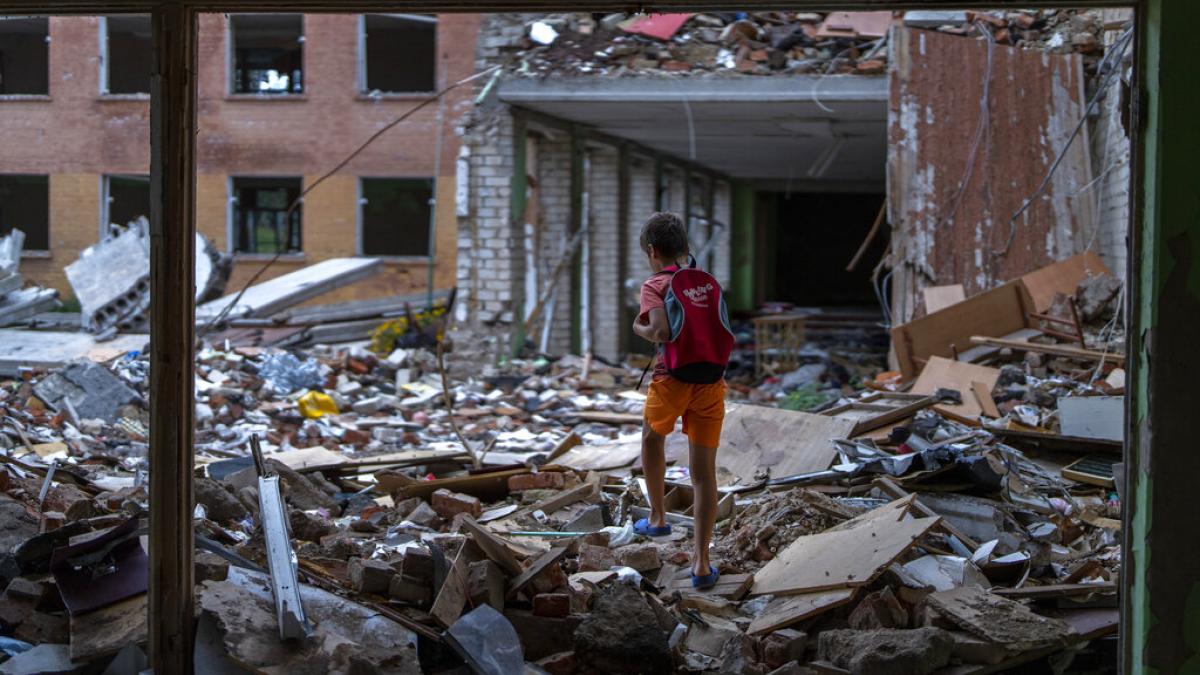
A new study shows that attacks on educational institutions worldwide surged by 40% in 2024 and 2025, with more than 8,556 recorded incidents leading to at least 10,600 students and staff being killed, injured, kidnapped, arrested, or otherwise harmed. During these two years, there were 1,912 documented cases of military or armed groups occupying schools or universities—nearly double the approximately 1,000 cases recorded between 2022 and 2023.
According to a report released on June 15 by the Global Coalition to Protect Education from Attack (GCPEA), these attacks occurred across 83 countries, with the most frequent incidents in Colombia, the Democratic Republic of the Congo, Ethiopia, Haiti, Palestine, and Ukraine. In 2024 and 2025, educational institutions in Ukraine faced around 900 attacks, while Palestine recorded at least 2,400 attacks targeting students or staff.
Lisa Chung Bender, Executive Director of GCPEA, told The Guardian that the report serves as a stark warning about the threats facing education. "The norms that once protected children are collapsing. Even the youngest are no longer safe. We’ve been moving toward this reality slowly, and if we don’t uphold basic standards, we may never be able to reverse it."
On March 18, 2025, a school in Palestine was destroyed by an Israeli airstrike. (AP)
Data indicates that in Myanmar, Nigeria, Yemen, and Cameroon—the four countries where students and staff suffered the highest casualties due to attacks on educational institutions—over 1,700 people were killed or injured. Nigeria reported over 700 abductions by armed groups, while Myanmar recorded 80 deaths and approximately 240 injuries. Professor Tejendra Pherali of University College London, who specializes in education, conflict, and peace, said the annual rise in attacks is heartbreaking. "To me, this trend isn’t accidental—it’s systemic, and the attacks increasingly show planning and strategy," Pherali added. The statistics reflect that children no longer see schools as safe spaces; they are losing not only their education but also their safety, future, and trust in the education system.
The GCPEA report highlights that in at least 11 countries globally, girls and women are targeted due to their gender. On November 17, 2025, armed militants attacked a girls’ boarding school in Nigeria, killing the deputy principal and kidnapping 25 female students. According to sources, on September 11, 2025, the Israeli military used explosives to attack Lebanon, destroying a special education school. High-powered explosives are frequently used in attacks on educational institutions, causing mass casualties and infrastructure damage, forcing many schools to close.
Amnesty International strongly condemned the killing of at least 30 people in a gunman attack on Naridon Village in Kaduna State, Nigeria, on July 27, 2026. Dozens who tried to flee were chased into the bush and slaughtered. (@AmnestyNigeria)
Kieran King of the charity War Child UK stated that attacks on educational institutions are serious violations of international law, including the Geneva Conventions. "The reality is that since 2010, the number of children living in conflict zones has increased by 60%. Over the same period, grave violations against children, especially attacks on schools, have risen by 373%." King added that countries act with impunity despite sanctions or aid cuts, worsening the situation—such as when the U.S., U.K., and others cut humanitarian funding, depriving regions of vital support. "We’re seeing the decline of multilateral systems and the normalization of political impunity for war crimes, which inevitably leads to widespread disregard for international humanitarian law—and we’re already witnessing this."
Nevertheless, Bender insists such attacks are preventable. "Countries must stop using schools for military purposes, strengthen legal protections and accountability mechanisms for attacks on education, and invest in monitoring, reporting, and early warning systems."
At the time of the GCPEA report’s release, the number of interstate conflicts reached its highest level since World War II. According to the Uppsala Conflict Data Program at Uppsala University in Sweden, 65 armed conflicts occurred globally in 2025, with 13 classified as wars. Documented conflicts resulted in over 1,000 direct deaths—highest since 1992. Casualty figures for combatants and civilians have also surged sharply, with 244,000 people killed in organized violence in 2025 alone—the second-highest figure in 30 years since the 1994 Rwandan genocide.
FACT BOX
- Source: PR Times
- Category: Survey
- Organizations: Global Coalition to Protect Education from Attack / War Child UK / Amnesty International