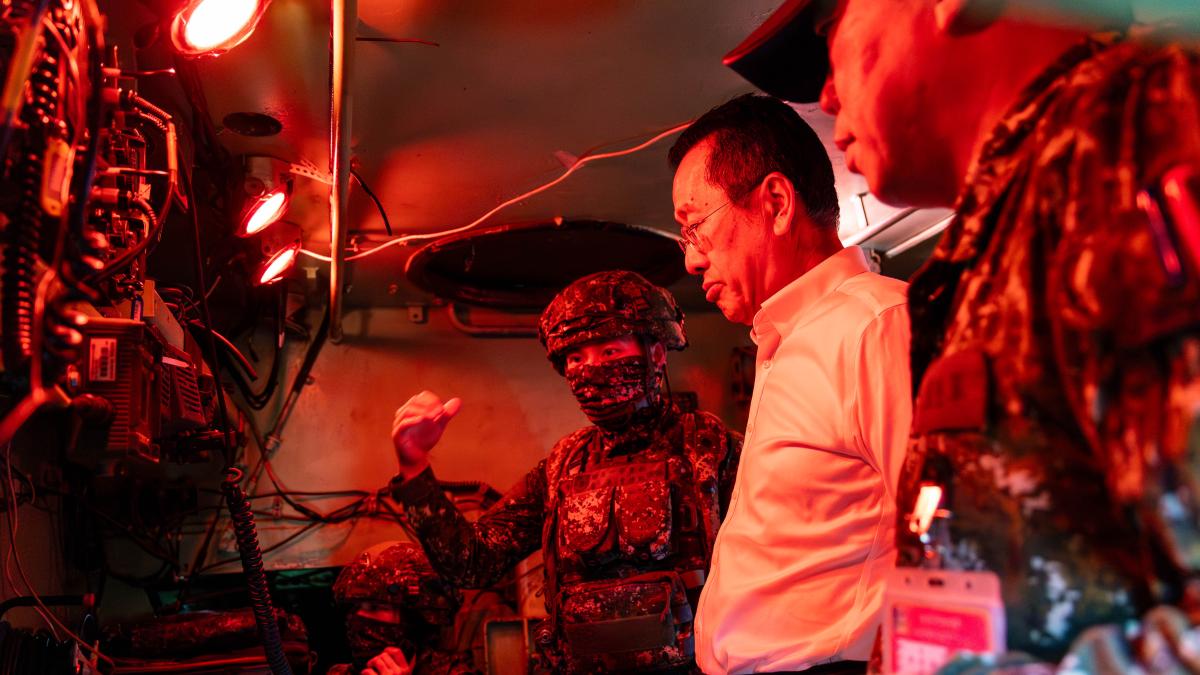
Since taking office, Taiwan's Defense Minister Kao Kuang-chi has established the Defense Innovation Office (DIO), adopting a multi-pronged approach to acquire emerging technology products. By utilizing small-batch procurement and evaluation testing as a basis for future mass production, this method marks a significant departure from the traditionally lengthy military acquisition processes. Interestingly, there is also a shift occurring in the military’s overall planning framework.
The Military Police Command previously proposed procuring the U.S.-made M-ACE AGT anti-drone system through commercial channels. The system integrates a 30mm chain gun with high-explosive ammunition, mounted on a light-duty pickup truck—commonly known as a 'pickup.' Does this indicate that pickups may soon replace the military’s current light tactical wheeled vehicles in large numbers? How, then, does the military weigh its choices between military-grade and commercial specifications?
In an interview with media outlets including Storm Media, Defense Minister Kao stated that survivability and operational flexibility are key considerations for the military. To enhance survivability, forces must move toward greater 'mobility' and even 'de-identification.' For example, in the future, the public may see many cargo trucks on the road—but some of these could actually belong to the military, even though outsiders would not be able to tell what lies inside.
To improve weapon system survivability, the military is embracing 'mobility' and 'de-identification.' For instance, vehicles may look like ordinary container trucks but serve military purposes. (Illustrative image; unrelated to specific case. Photo courtesy: Chu Shu-chuan)
Military arms procurement is no longer rigid or inflexible—any system that fits the mission will be considered.
In fact, in recent years, the military’s equipment selection has shifted from being primarily based on 'military specifications' to now including 'commercial-off-the-shelf military-grade' drones, and even using civilian vehicles directly in certain units. This indicates that the military is no longer strictly bound to military-grade standards when selecting equipment. Lieutenant General Huang Wen-chi, Director of the Strategic Planning Division at the Ministry of National Defense, pointed out that for the U.S. military, most military vehicles—including tires—are designed to adapt to various terrains because they operate in diverse global environments.
However, Taiwan and Penghu’s defense environment is relatively fixed. As such, the military no longer limits itself to acquiring only specific types of equipment. The new mindset is to evaluate 'which system or platform best suits our needs' and designate it accordingly. Whether dual-use, military-only, or purely civilian, all options are now considered within a more flexible force development framework.
FACT BOX
- Source: PR Times
- Category: News