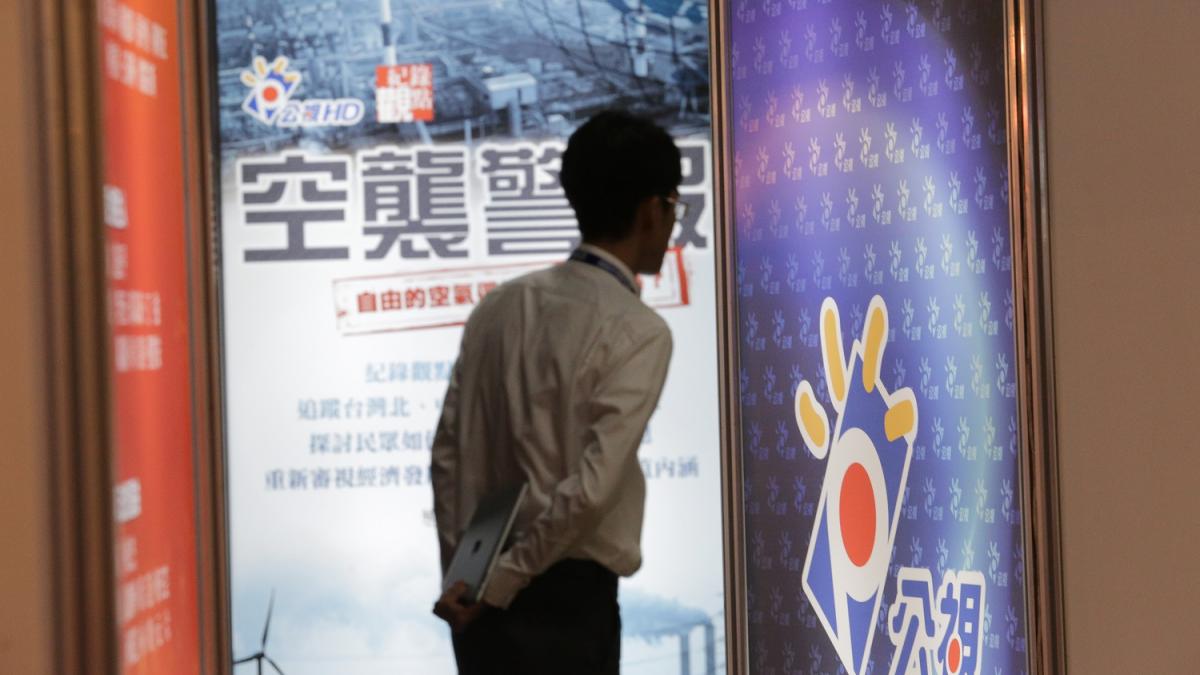
"We have to rescue public media every few years—it's exhausting." Professor Luo Shih-Hong from Chung Cheng University declined invitations to join any group or petition, emphasizing his personal viewpoint, yet sparked widespread discussion across society and social media. The 2026 (Minguo 115) budget for the Public Television Service (PTS) saw its government subsidy of NT$2.1 billion reduced by NT$1 billion in the Legislative Yuan, triggering strong opposition from the PTS board and staff, who have launched a public petition. Minister of Culture Lee Yuan posted on Facebook: "I don't understand what the opposition parties are objecting to," further fueling tensions.
"Emotional blackmail through irrational petitions—PTS is demanding more budget," countered Wang Hong-wei, secretary-general of the KMT caucus in the legislature. She listed what she called PTS's "four major wrongdoings" in recent years, asserting that under long-term control by the DPP, PTS has accumulated serious problems. She criticized the recent petition campaign for mobilizing familiar "cultural figures" from the large-scale recall movement, emotionally pressuring the public and demanding that the legislature hand over taxpayer money unconditionally—akin to a repeat of last year's recall campaign. The confrontation is sharp, with neither side backing down.
It is indeed frustrating to repeatedly have to save public media. While PTS board members have detailed their achievements over the years, they have clearly failed to directly address societal and opposition concerns. Understanding what constitutes a real answer is key in crisis communication. An effective response must include three elements: first, a conclusion—directly answering the core of the question; second, justification—providing reasons supporting the conclusion; and third, methodology—if the conclusion involves action, specific steps must be proposed to gain trust and support. The controversy surrounding PTS began as early as April with board nominations, and tensions between ruling and opposition parties have been escalating. To date, Minister Lee Yuan and PTS Chairman Hu Yuan-hui have failed to provide convincing answers.
Globally, public broadcasters face criticism during budget reviews. Yet, the UK's BBC and Japan's NHK continue to enjoy broad public support. What practices can Taiwan learn from? Retired Taiwanese ambassadors often lament the state of Taiwan's media. "TV anchors must not become political pundits," they argue, praising NHK's rigorous, neutral news delivery. While the tone may sometimes seem dull, the essence of news lies in objectivity, fairness, and avoiding sensationalism.
Consider recent BBC reporting. When former U.S. President Trump announced a Gaza disarmament plan, Hamas confirmed its acceptance to BBC. For a media outlet to gain such trust from parties involved is no small feat—it reflects years of fair, balanced, and credible reporting.
In covering Japan's 6.8-magnitude earthquake in Kumamoto, both BBC and NHK adopted a disaster-affected population-centered approach, earning admiration. In contrast, PTS's reporting on the Wanli River landslide-dammed lake leaves room for improvement.
BBC's coverage first cited Japanese Prime Minister Kishida's remarks, detailing casualties and damage, while emphasizing rescue teams' urgent efforts to save survivors trapped under rubble, offering public reassurance. It also launched a dedicated column summarizing key facts: when the quake occurred, the epicenter, risks of aftershocks causing secondary disasters, and government emergency actions including power restoration, road repairs, and stabilizing collapsed walls.
NHK's 'ONE Natural Disaster Prevention' special addressed health risks from post-quake water shortages and high temperatures, reporting medical groups urging timely and long-term government support. Animated visuals enhanced accessibility, demonstrating deep empathy for victims' psychological states.
Following the magnitude-7 quake in Kumamoto, Taiwan's President Lai Ching-te expressed concern via social media. NHK reported his message verbatim: "Taiwan and Japan are true friends who stand together in hardship. We are closely monitoring the situation and stand ready to assist at any time. We wish all affected people safety and well-being." Factual, without embellishment.
BBC and NHK deliver in-depth, wide-ranging, authentic, engaging, and narrative-rich coverage across international and local arts, humanities, sports, and religion—appealing to both elite and general audiences. Despite politicians' inherent desire to control information, these public broadcasters uphold professionalism, public service, and honesty, earning broad trust.
On the 81st anniversary of the Battle of Okinawa, NHK's July 21 special on Peace Memorial Day movingly conveyed the horrors of war and the value of peace to younger generations. In the final stages of the Pacific War, Okinawan civilians were caught in fierce combat, resulting in over 200,000 deaths—one in every four residents.
Of course, no reporting is flawless. On June 7, 2022, BBC Chinese's official Twitter account referred to Ukraine as "Bird Ukraine," drawing widespread online criticism—proof of the challenges public broadcasters face. Today, public broadcasters worldwide commonly struggle with insufficient funding.
It is said that PTS has received the same annual government subsidy of NT$2.1 billion for 26 years without adjustment. If true, rather than merely freezing or slashing the budget, the Legislative Yuan should sit down with the Ministry of Culture to address PTS's systemic and structural flaws. Meanwhile, as PTS staff launch petitions, they should reflect on how BBC journalists have historically stood up to their boards in defense of journalistic ethics and professionalism—another valuable lesson.
*Authors: Huang Bingxi (Executive Director, Zyxel Foundation), Zhang Qilu (Distinguished Professor, Department of Politics and Economics, Chung Cheng University)
FACT BOX
- Source: PR Times
- Category: News
- Organizations: BBC / NHK