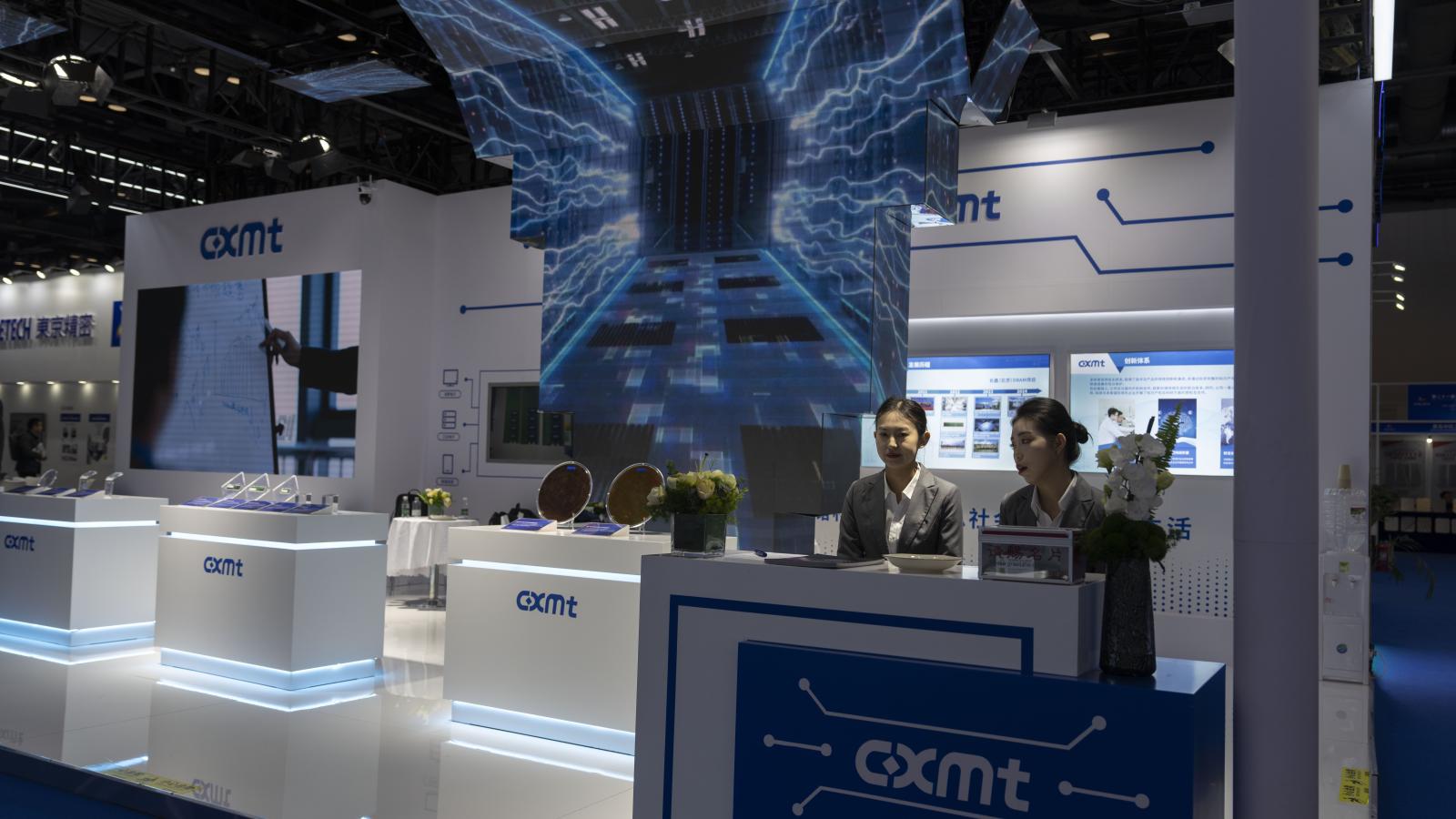
China's largest memory chip manufacturer, ChangXin Memory Technologies (CXMT), is planning to build another 12-inch DRAM wafer fabrication plant in Beijing’s Yizhuang Economic and Technological Development Zone—the site of its existing DRAM facility and also a major operational hub for JD.com.
According to Reuters, ChangXin has entered preliminary discussions with local authorities regarding at least 60 million yuan (approximately $8.3 million USD) in government support funding. Other state-backed technology firms have also expressed interest in taking equity stakes. This expansion is not merely about increasing production capacity; it reflects how Chinese local governments are fiercely competing to capture the 'strategic semiconductor dividend.'
If the project proceeds smoothly, Beijing will become ChangXin’s second major DRAM production base after Hefei, Anhui Province—indicating that China is systematically replicating its semiconductor industry cultivation model, known as the 'Hefei Model,' in its capital city.
In recent years, ChangXin has emerged as one of the most representative enterprises symbolizing China’s drive for semiconductor self-sufficiency.
The new plant will be located about 20 kilometers southeast of central Beijing in Yizhuang, adjacent to ChangXin’s current Beijing facility operated by ChangXin Integrated Electronics. Currently, ChangXin operates two 12-inch DRAM fabs in Hefei and one in Beijing, each with a monthly capacity of approximately 100,000 wafers. Combined with previously announced new plants in Shanghai and Hefei, once all facilities are fully operational, total monthly output could exceed 600,000 wafers—nearly doubling current capacity. The surge in demand for AI infrastructure, data centers, and consumer electronics is directly fueling this expansion. Following ChangXin’s $8.6 billion IPO last month—the largest in mainland China’s semiconductor history—its stock price has already risen over 13%, further strengthening its financial position.
ChangXin Memory’s LPDDR5 memory chip. (Source: ChangXin Memory official website)
This capacity expansion comes amid sustained global demand for AI servers driving the memory market upward. Although ChangXin still lags significantly behind global giants like Samsung Electronics, SK Hynix, and Micron in terms of technology, China has begun establishing a domestically scaled supply capability in mature DRAM markets, gradually reducing reliance on overseas supply chains.
Yizhuang Economic Development Zone has long been one of Beijing’s most important high-end manufacturing bases, hosting industries such as new energy vehicles, biopharmaceuticals, and advanced equipment. In recent years, it has also become a core area for Beijing’s efforts to develop its semiconductor and AI industries.
Negotiations over funding for the Yizhuang plant are still in early stages, and both scale and structure may be adjusted. The amount of support ChangXin is seeking—60 million yuan—is relatively modest compared to the multi-billion-dollar investments typically required for advanced DRAM fabs—suggesting that local funding plays more of a 'catalyst' role, while the bulk of financing will come from corporate self-funding and other state-owned capital participants.
The Yizhuang zone has previously provided funding to ChangXin’s Beijing plant through Yizhuang Capital and affiliated entities. The area also hosts other semiconductor and tech firms such as SMIC, NAURA, and Xiaomi. In recent years, it has actively pursued robotics and embodied intelligence initiatives—even hosting what was billed as the 'world’s first humanoid robot half-marathon' last year.
JD.com’s operational presence in Yizhuang gives this industrial zone a dual identity, combining e-commerce logistics with advanced manufacturing, forming a uniquely Chinese 'technology-manufacturing complex.'
Over the past eight trading days, Micron Technology rose on seven occasions, gaining approximately 18% cumulatively. The company’s market value stood at around $170 billion on Tuesday. (Image source: Associated Press)
From Land to Capital: Full-Service Support
ChangXin’s strategy aligns closely with recent high-tech industry support policies adopted by northern Chinese local governments, which often provide end-to-end services—from land allocation to capital investment. These industries represent significant revenue sources for local government finances.
Similarly, ChangXin’s rise is seen as a successful example of the 'Hefei Model': local governments use state-owned funds, land, and policy incentives to nurture strategic industries, then recoup investments and amplify influence through IPOs.
Beijing and Shanghai are equally eager, actively deploying funds and resources to attract ChangXin’s production capacity—demonstrating that local governments across China now view memory self-sufficiency as both a 'political achievement' and a matter of 'economic security.'
Amid ongoing U.S.-China tech tensions, ChangXin still trails far behind global leaders Samsung, SK Hynix, and Micron (which collectively hold nearly 90% of the market). However, within China, it has already gained pricing power and secured orders from major clients such as Tencent.
July 30, 2026, Samsung Gangnam Store in Seoul, South Korea. (Associated Press)
More Than Catching Up With Samsung: A Supply Chain Race in the AI Era
CXMT’s new fab plan truly reflects not just a single company’s expansion, but a new phase in global memory industry competition.
Rapid deployment of AI data centers has returned DRAM demand to a high-growth trajectory. Countries are increasingly treating memory as a strategic industry on par with GPUs.
As the U.S. continues tightening export controls on advanced semiconductors, China is expanding its mature-node DRAM capacity—aiming first to gain scale advantages before gradually catching up in advanced processes.
In the short term, CXMT cannot yet challenge the near-90% global DRAM market share held by Samsung, SK Hynix, and Micron. But if new plants in Beijing, Shanghai, and Hefei come online sequentially, China’s domestic memory supply capacity will grow substantially—potentially reshaping global memory market pricing dynamics and supply chain geography.
For Taiwan, memory remains a critical bottleneck for AI and high-performance computing. ChangXin’s accelerated expansion means China is advancing further along its 'de-Americanized' supply chain path. While ChangXin’s technology nodes and yields still lag behind international leaders, its pace of advancement cannot be ignored under conditions of concentrated national resources and protected domestic markets.
From an industrial layout perspective, the significance of Beijing’s Yizhuang may rival that of the new fab itself. On one end lies CXMT’s memory manufacturing capability; on the other, large platform enterprises like JD.com drive demand for AI applications, logistics, and cloud computing. Connecting them are government support, state capital, and policy frameworks.
What Beijing is attempting to build is not just another wafer fab—but a complete technology ecosystem where chips, computing power, and AI applications mutually reinforce one another.
FACT BOX
- Source: PR Times
- Category: News
- Products / services: LPDDR5