At the southeastern edge of Russia's vast territory, along its only 17-kilometer shared border with North Korea, the two countries are building their first highway bridge. This development, thousands of kilometers away, has sparked unease in Ukraine. Why? For a long time, the town of Khasan was considered one of Russia's most remote outposts. Located at the far southeastern tip of Russia, it has a population of fewer than 500 people and lies over 9,000 kilometers from Moscow. It is home to the 17-kilometer-long shared border with North Korea. Since 1959, the 'Russia-North Korea Friendship Railway Bridge' has spanned the Tumen River, which forms the border, serving as the only land connection between the two nations.
In recent years, however, a new parallel highway bridge has been under construction just a few hundred meters from the railway bridge, and it is now nearing completion ahead of schedule. This development has raised alarms in Kyiv. Ukrainian officials fear that Russia could use this bridge not only to transport trade goods but also to secretly move North Korean soldiers to the frontlines in Ukraine.
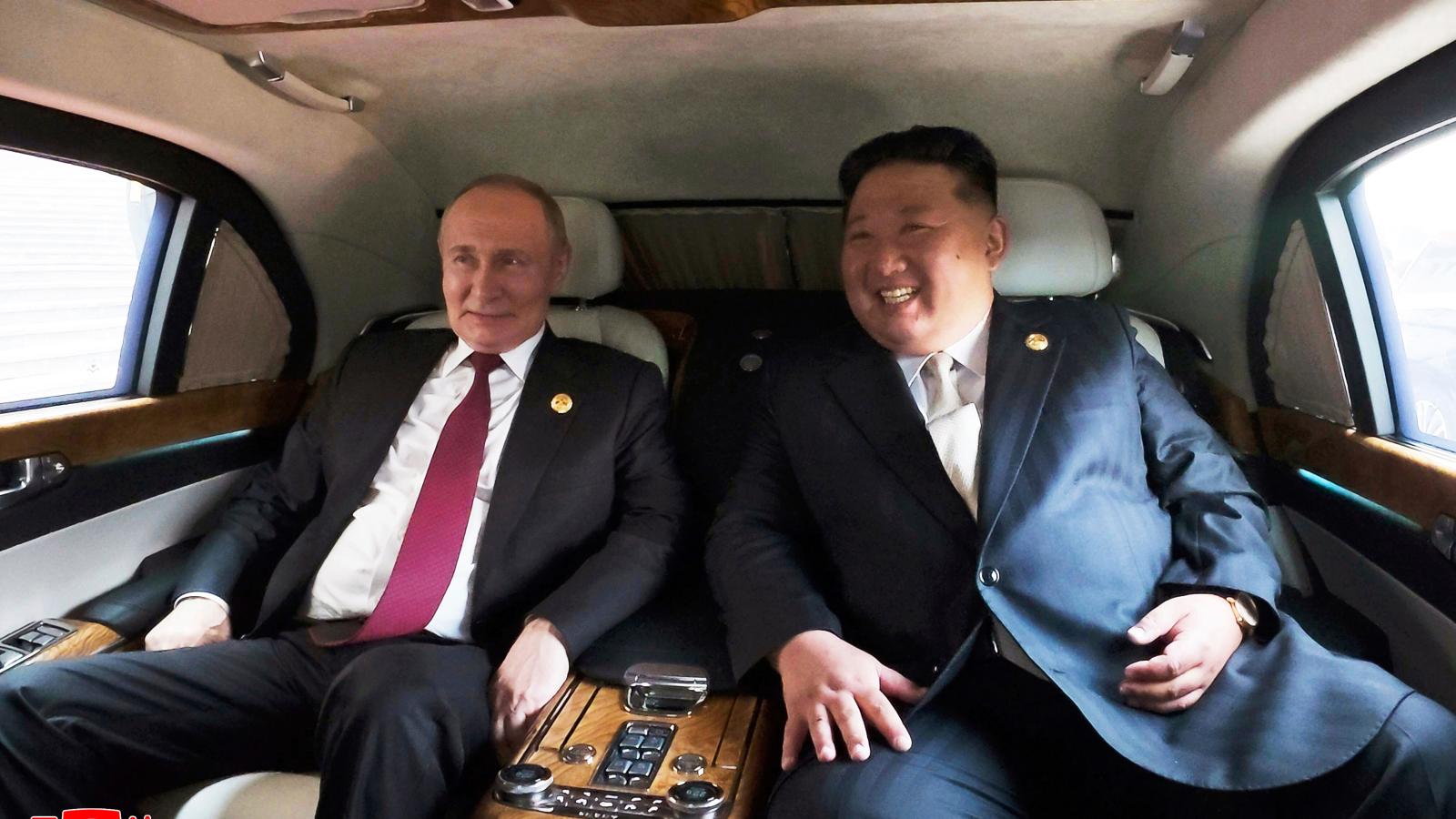
Since the outbreak of the Ukraine war in 2022, relations between Russia and North Korea have drawn increasingly closer. In 2024, Vladimir Putin and Kim Jong-un signed a strategic partnership agreement. The most significant aspect of this agreement was the deepening of military cooperation, including the provision of weapons and the deployment of North Korean soldiers to fight for Russia. The construction of this new highway bridge was also decided as part of this agreement.
Russian Transport Minister Nikitin stated in a press release that the new bridge would promote bilateral trade, logistics, and cultural exchanges. The U.S.-based Center for Strategic and International Studies (CSIS) also noted that the rapid progress of the bridge construction highlights the expansion of trade between the two countries.
But is it really about trade and tourism? The British newspaper The Guardian has questioned whether the primary purpose of this highway bridge project is civilian or economic. Official figures from 2024 show that Russia-North Korea trade amounted to only $34 million. In contrast, the construction of the bridge and surrounding infrastructure is reportedly costing $100 million.
The Ukrainian human rights organization Truth Hounds argues that the bridge is not intended to boost tourism either. After all, the region is a 125-hour drive from Moscow and still four hours by car from Vladivostok. Moreover, the heavily subsidized direct flights from Moscow to Pyongyang have seen very low passenger numbers. In 2025, fewer than 10,000 Russian citizens traveled to North Korea.
Or is it about military transport? Truth Hounds therefore believes the real reason for building the bridge is to deepen military cooperation, particularly the transport of North Korean soldiers and weapons. In mid-2024, unofficial reports from South Korea, Ukraine, and the United States indicated that North Korea had already sent between 14,000 and 15,000 soldiers to fight in Russia, primarily deployed to Russia's Kursk region, which had been briefly captured by Ukrainian forces. North Korea has also previously provided weapons support to Russia.
Truth Hounds further points out that transporting troops by rail is more susceptible to satellite surveillance than by road. Just recently, Ukrainian President Volodymyr Zelenskyy posted on X (formerly Twitter) that Russia might deploy an additional 30,000 North Korean soldiers to the battlefield.
Zelenskyy also stated that Kim Jong-un could benefit from the deepened military cooperation with Russia. The new highway bridge would not only allow resources to flow from Russia to North Korea undetected but would also enable Russia to 'help North Korea learn how to fight, improve its weapons, and gain practical combat experience.'
Additionally, Ulrich Schmid, a political scientist at the University of St. Gallen, recently told Swiss television that external analysts estimate North Korea may be seeking nuclear technology from Russia in return. Zelenskyy warned on X that all of this 'poses a threat to everyone in Asia within North Korea's missile range.'
DW Chinese has an Instagram account! Search for dw.chinese to see more in-depth图文 and video reports.
© 2026 Deutsche Welle. Copyright Notice: All content in this article is protected by copyright law. Unauthorized use without special permission from Deutsche Welle is strictly prohibited. Any improper use will result in compensation claims and criminal prosecution.
FACT BOX
- Source: PR Times
- Category: News