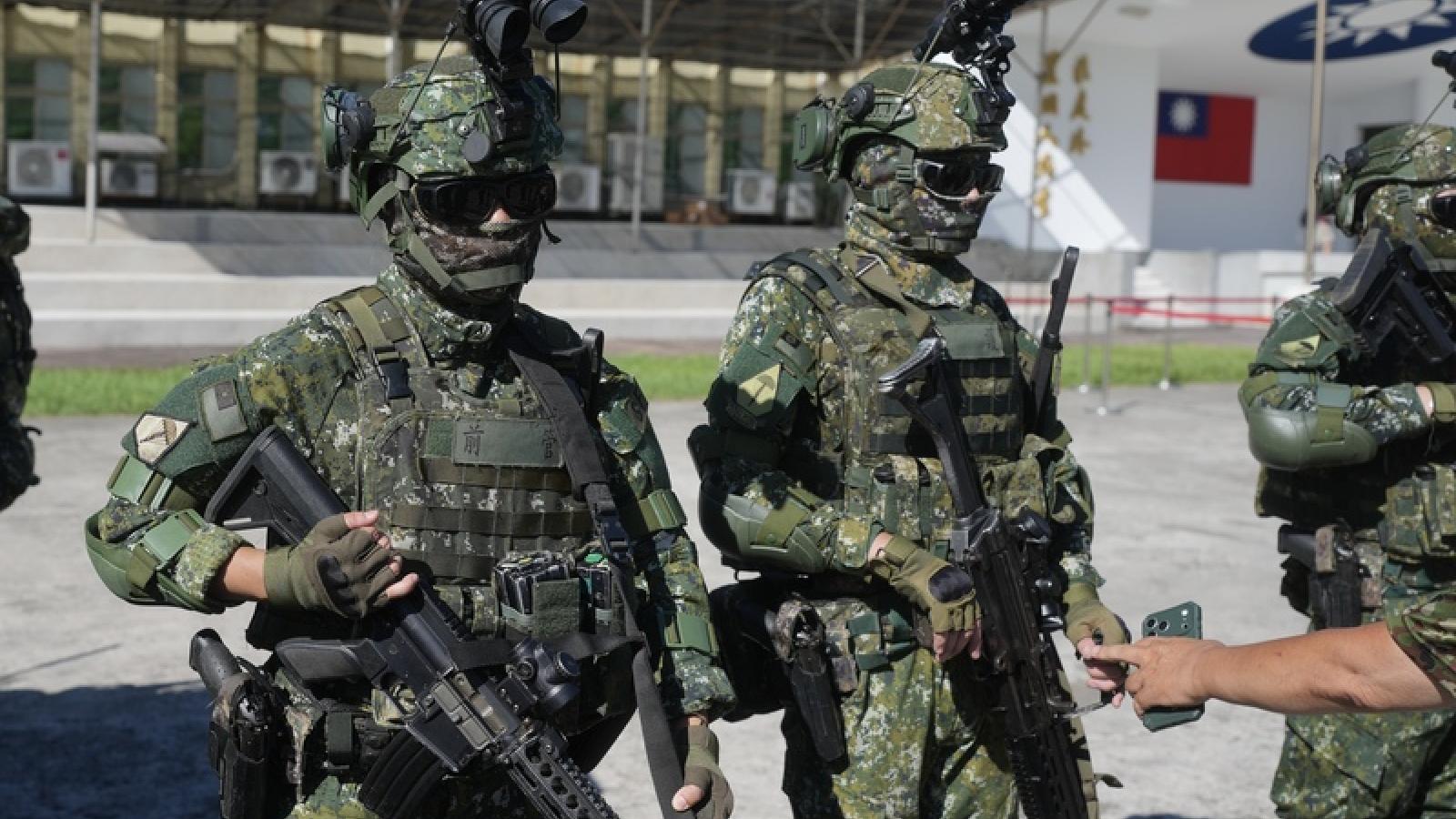
Reports have emerged that participant information from the National Defense University's 'Yuanpeng Program' may have been circulated online, drawing attention from foreign media. Although official authorities have not fully disclosed the details, and domestic media coverage remains limited, this incident is far more than a simple 'information security breach.' Rather, it exposes Taiwan's structural vulnerability to China's prolonged intelligence warfare.
In reality, cracks have appeared in Taiwan's defense education and international exchange systems, enabling sensitive information to be systematically collected, utilized, and analyzed. Regardless of whether such data is classified, it may already be fueling a 'silent war,' with strategic hostilities potentially already underway.
Established in 1971, the 'Yuanpeng Program' (full name: Yuanpeng National Development Program) has long served as a key platform for military exchanges and defense diplomacy with Taiwan's allies. Symbolizing cooperation with democratic partners, the program hosts foreign military officers, civil servants, and security personnel.
However, within this environment of 'high trust, low vigilance,' information security and counterintelligence protocols have been chronically neglected. This has created a significant gap between military education, diplomatic trust, and national defense.
China's threat to Taiwan has fully shifted toward 'gray-zone warfare.' Even seemingly minor institutional vulnerabilities can become strategic breakthroughs for adversarial forces.
Participants in the 'Yuanpeng Program' are typically mid-to-senior-level personnel from foreign military, police, defense, and security agencies. Their coursework covers Taiwan's defense philosophy, asymmetric warfare concepts, and total defense frameworks, including critical topics such as reserve mobilization and societal resilience. As a platform for democratic nations to share security experiences and strengthen collective deterrence, the program holds strategic value.
Even if such information is not officially classified, it possesses significant strategic analytical value.
China's intelligence operations against Taiwan no longer focus solely on stealing individual secrets. Instead, they actively engage in 'puzzle-style' intelligence construction—systematically gathering open and semi-open information over time. Through deep strategic analysis, every participant list, course slide, teaching direction, or exchange format can become a crucial data point for Chinese intelligence agencies to build assessments of Taiwan's military and diplomatic posture.
If Taiwan assumes 'exchange is harmless' and neglects counterintelligence reviews and information tiering, its defense education system risks becoming a gray battlefield for China's covert intelligence operations.
The real warning from the 'Yuanpeng Program' incident is not whether classified information has definitively leaked, but whether Taiwan's national security apparatus has underestimated the comprehensiveness of China's intelligence campaign.
Once sensitive information is systematically collected, analyzed, and modeled, its strategic value may far exceed that of any single classified document—even if officially denied.
If the enemy's goal is not to seize secrets but to erode resolve and manipulate judgment, the collapse of Taiwan's national defense frontlines could trigger a full-scale silent war.
*The author is a columnist and investigative writer.
FACT BOX
- Source: PR Times
- Category: News