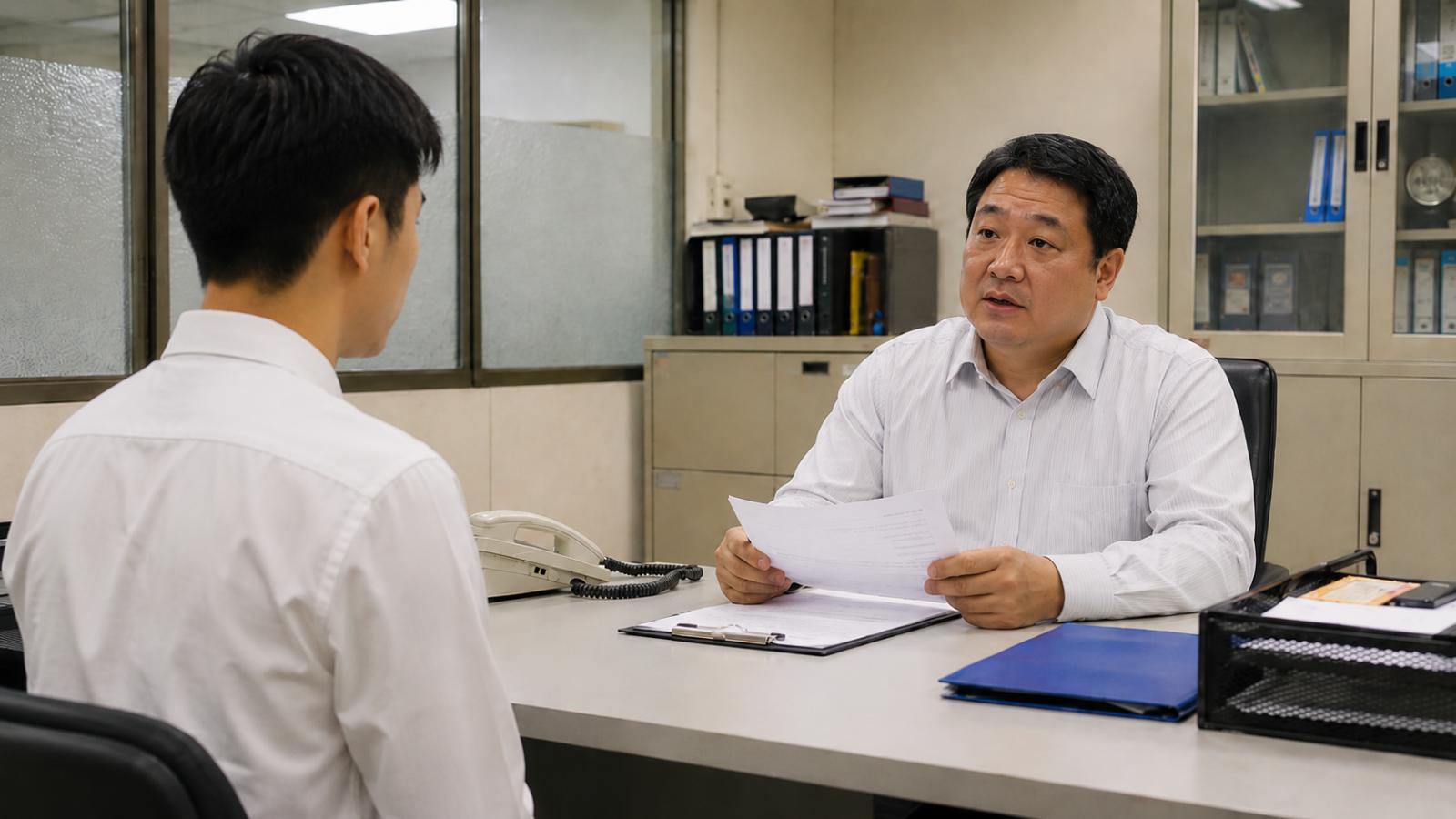
In job interviews, communication style and subtle details in speech often play a crucial role in hiring decisions, beyond just skills and professional competence.
A male netizen shared on Dcard that his supervisor revealed some candidates, despite having outstanding resumes, are rejected within five minutes of the interview starting. The main reason often lies in a common phrase many believe shows humility: 'I'll do my best.' This post quickly sparked widespread discussion online.
Rejected in 5 Minutes Despite an Excellent Resume! Interviewers Reveal the Most Common Pitfall: This Phrase Sounds Unconfident
The original poster mentioned that during a conversation with his supervisor about recent interview experiences, the supervisor frankly pointed out that while some candidates have no major issues in terms of professional ability, their verbal habits can be problematic.
Many young job seekers tend to say 'I'll do my best' or 'I'll try to do it' during interviews, thinking it shows humility or a proactive attitude. However, to management, this can easily be interpreted as 'So you're not sure if you can actually deliver?' This creates a negative impression of uncertainty and lack of confidence.
Reflecting on his four years of workplace experience, the poster agreed, noting that excessive humility or not claiming credit at work often undermines one's abilities and contributions. For example, responding to praise with 'I only handled a small part' can lead others to question your actual capabilities.
In Interviews, Present Past Experiences Accurately and Honestly
The key to a successful interview is to accurately and truthfully present your past experiences. Share exactly what you've done—no more, no less. Avoid frequently using vague phrases like 'I'll try,' 'I should,' or 'I think,' and there's no need to exaggerate. Building credibility is essential.
Don't Rush to Say 'No Questions' at the End! Experts Recommend These Two Questions to Make a Great Impression
At the end of most interviews, companies commonly ask, 'Do you have any questions for us?' The poster warns job seekers not to immediately answer 'No,' as this may miss a valuable opportunity to demonstrate initiative.
Instead, he suggests proactively asking two situational questions:
- 'What are the most important responsibilities for a new hire in the first three months?' - 'What problems does the company hope this position will solve?'
Asking such questions not only shows interviewers your interest and enthusiasm for the role but also helps you better assess whether the position aligns with your expectations.
Full discussion: Dcard
FACT BOX
- Source: PR Times
- Category: News