Majed al-Ansari, spokesperson for Qatar’s Ministry of Foreign Affairs, said on August 4 that diplomatic efforts between the United States and Iran are continuing, but no direct meetings have been arranged between the two sides. Speaking at a press conference, Ansari stated, "We can confirm that efforts with all parties are ongoing. At this moment, we are seeking to resolve issues through diplomatic means."
He further explained that all relevant regional countries are cooperating to prevent escalation of tensions. "The mediators include Qatar, Pakistan, and now Oman, which has recently joined; all are working together on this issue," Ansari emphasized. Qatar’s priorities include "avoiding conflict escalation," "reopening the Strait of Hormuz," and "reopening diplomatic channels among all parties." "What we least want to see is a major escalation of conflict in the region," he said.
Ansari noted that Qatar’s mediation efforts have reached a "fairly advanced stage," but this does not yet include direct dialogue between U.S. and Iranian representatives. "Currently, we have no arrangements for direct talks. However, if negotiations can resume as soon as possible, we hope to achieve a significant agreement," he said, without providing a specific timeline.
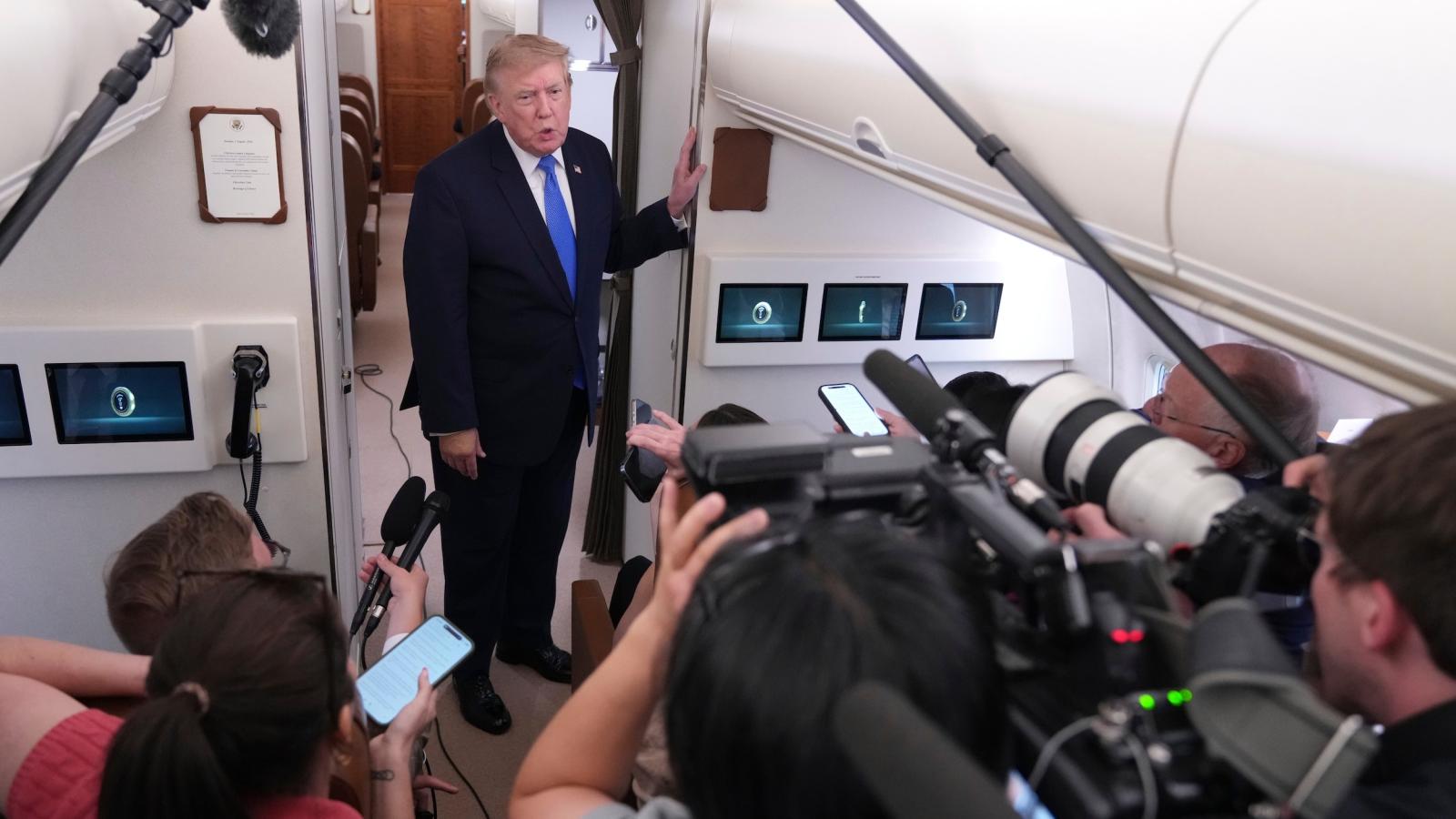
Ansari’s remarks contrast sharply with recent public statements by former U.S. President Donald Trump. On the evening of August 1, Trump posted on Truth Social that the U.S. is "fully prepared" to take military action against Iran with "military terror, power, and strength not seen since World War II," but that Iran and other Middle Eastern countries have requested a delay in attacks because "the basic framework of an agreement has already been agreed upon." According to Trump, this preliminary deal would include the "immediate, complete, and full opening of the Strait of Hormuz" and the "end of Iran’s nuclear threat."
On August 2, Trump further stated, "There is currently a Strait of Hormuz agreement, and next will come a nuclear agreement—or you could call it Iran’s denuclearization." He claimed Iran is "very strongly" requesting the resumption of peace talks and said, "Talks begin tomorrow afternoon—we’ll see what happens." At the same time, Trump noted Iran has a history of privately requesting negotiations while publicly denying them.
On August 3, Trump again emphasized that talks are underway and warned it is "their last chance to sign a good document." "Negotiations are happening now. We began dialogue at Iran’s request, with the support of Saudi Arabia, the United Arab Emirates, and Qatar," he said. The current focus of discussion is the "full opening of the strait tomorrow," which he described as the first phase, with nuclear issues to be discussed in the second phase. Trump also rejected Iran’s demands for tolls and "ransom" payments for passage through the Strait of Hormuz, stating, "I won’t let them charge. If someone is going to charge, we’ll charge. We have full control."
On August 3, Trump also posted on Truth Social criticizing Iran’s leadership for their "incredible two-facedness": "They request meetings—some even say they’re begging—negotiations start, future meetings are scheduled, but then they publicly and proudly declare that no discussions have taken place, nothing has been discussed, and they’re only dealing with ‘Oman.’"
In response to Trump’s claims, Iran’s Foreign Ministry stated on August 3 that there are currently no negotiations with the United States, and that Iran is only discussing a fee-based scheme for safe passage through the Strait of Hormuz with Oman. According to The New York Times, citing senior Iranian sources on Monday, Iran and Oman have nearly reached an agreement on control and toll mechanisms for the strait. Under the reported plan, ships entering the Persian Gulf would sail along Iran’s coast, while departing vessels would use Omani waters, and both countries would share tolls collected from international shipping, nominally for "environmental impact" and "security" expenses.
U.S. officials reportedly told The New York Times they are skeptical Trump would accept such an arrangement, though there are rumors that if the strait is fully reopened and Trump’s denuclearization concerns are addressed, he might tolerate a joint toll-collection model between Iran and Oman.
Reuters reported on August 4, citing a senior Iranian source, that "Tehran is unlikely to change its position," insisting on controlling the strait and collecting fees, with allowing Oman partial control over outbound shipping lanes being the only concession Iran is willing to make. The source said Iran has rejected Oman’s proposal for equal control over the entire strait, citing unresolved "security concerns" in Tehran.
Analysts suggest the key reason Iran rejects equal control is that if Oman fully controls its territorial waters, ships could completely avoid Iranian influence. By requiring all vessels entering the Persian Gulf to use Iranian waters, this issue is resolved.
FACT BOX
- Source: PR Times
- Category: News