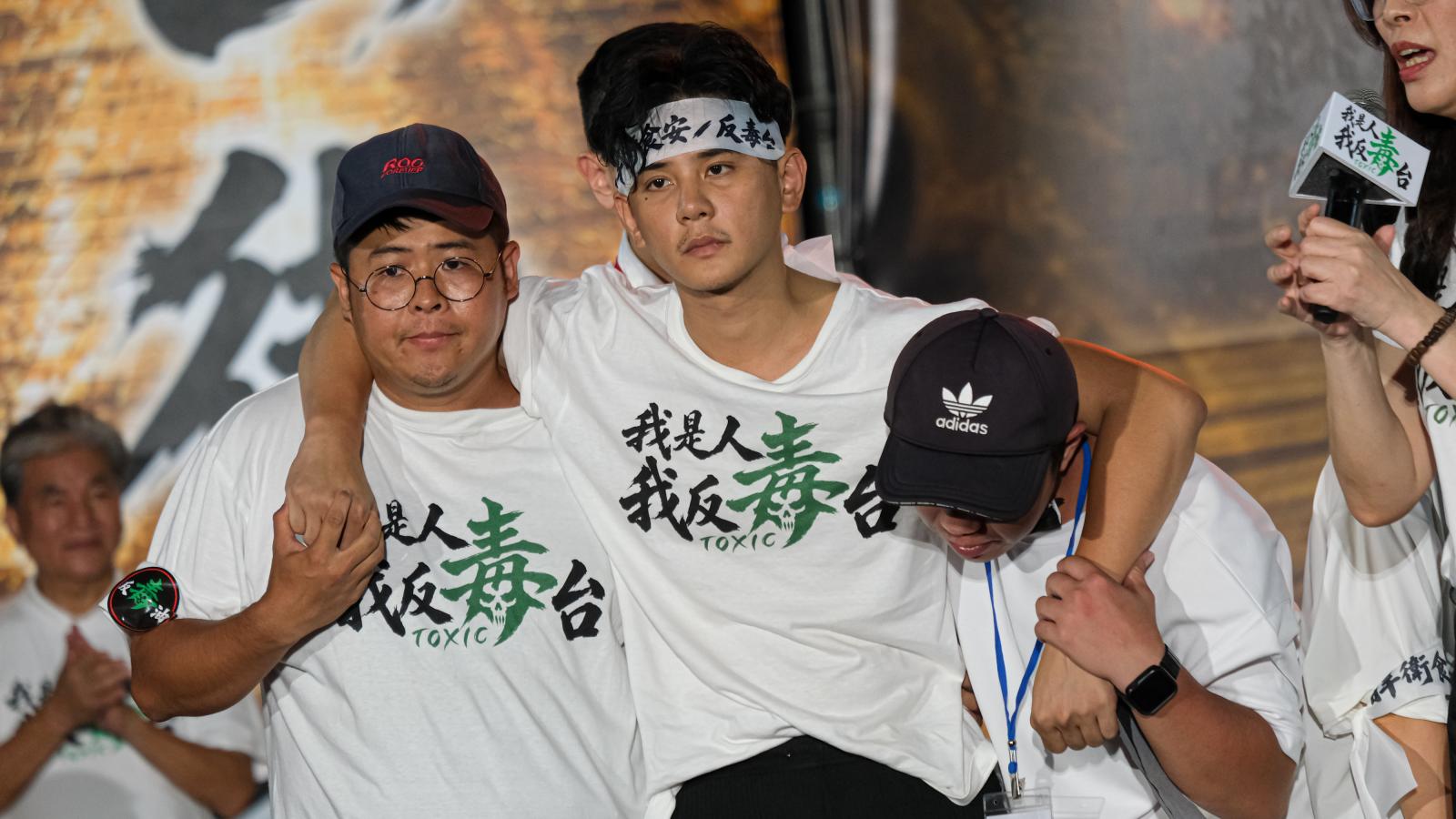
In response to food safety concerns over oil contaminated with carcinogenic benzopyrene, Taipei City Councilor Yang Zhidou led four young activists—Lai Yiren, He Yuankai, and Zhang Jiaxin—in a hunger strike at Ketagalan Boulevard. On the critical fourth day, I received a message indicating that the participants' vital signs were unstable. As a cardiac surgeon, I immediately rushed to the site to conduct emergency diagnosis and treatment. However, afterward, both I and Dr. Su Yifeng were reported.
Becoming a physician requires mastery of the 'Hippocratic Oath' and the 'Geneva Declaration,' adopted in 1948 by the World Medical Association in Geneva, Switzerland, later known as the 'Physician's Oath.' Taiwan also has its own version of the 'Physician's Oath,' which states: 'I will never allow considerations of religion, nationality, race, political opinion, or social status to intervene between my duties and my patients...'
Hunger strikes are an extremely intense form of protest, used as a tool of 'political nonviolent resistance.' Protesters stake their health and lives to confront oppressors. As their physical and mental conditions visibly deteriorate, public sympathy is often aroused, placing immense pressure on the authorities.
However, the process of fasting is extremely painful. After just one day without food, glycogen stores are depleted, blood sugar drops, cold sweats and general weakness occur. The body's lack of energy leads to bradycardia, orthostatic hypotension, severe dizziness, and headaches. In the medium to long term, the body begins burning fat and producing ketones, triggering autophagy and reduced thyroid function. This results in mental confusion, fatigue, irritability, and loss of decision-making ability—any lapse in attention can endanger life.
On July 22, the crucial fourth day of the hunger strike, I was attending legislative questioning. Immediately after the session ended, I received news that the youths were unwell. I decided to head straight to the hunger strike site at Ketagalan Boulevard. After speaking with others on-site, I learned that the four young people were suffering from headaches, dizziness, and low spirits—their health was clearly deteriorating.
As a physician, I could not stand by and do nothing. With no other medical personnel present, I immediately performed auscultation, measured blood pressure, blood glucose, and blood oxygen levels to assess their conditions. I confirmed symptoms of hypotension and hypoglycemia caused by fasting, but these were still within manageable limits given the youths' baseline health. I advised them to diligently replenish water and electrolytes to alleviate headaches.
In 1878, political prisoners in St. Petersburg launched a collective hunger strike to protest the Tsar's inhumane imprisonment. Gandhi used hunger strikes as the 'ultimate weapon of non-cooperation,' successfully awakening public conscience and contributing to India's independence. The Irish Republican Army staged hunger strikes in British prisons, drawing strong international condemnation of Prime Minister Thatcher's hardline policies. In Taiwan, figures such as Shih Ming-te, Tsai Tong-horng, and Lin Yi-hsiung have also conducted hunger strikes, leaving a lasting mark in history.
Within protest spaces, hunger strikes carry strong moral authority, powerfully demonstrating self-sacrifice and serving as the final political weapon against state power. Physicians providing emergency care at hunger strike sites are protected under the International Human Rights Law (IHRL) and the World Medical Association's (WMA) International Code of Medical Ethics. They must be free to independently fulfill their medical duties without fear of legal punishment, police intimidation, or restrictions on movement.
Coincidentally, I recently learned that Ko Wen-je's wife, Chen Peiqi, provided emergency care to a child with abdominal pain on a high-speed train in Beijing, only to be attacked online by the 'Blue Bird' movement. I must ask President Lai Qingde, also a physician: Do you still remember the 'Physician's Oath' you once swore? Must even emergency medical care be politicized and weaponized? Do you truly accept this?
FACT BOX
- Source: PR Times
- Category: News