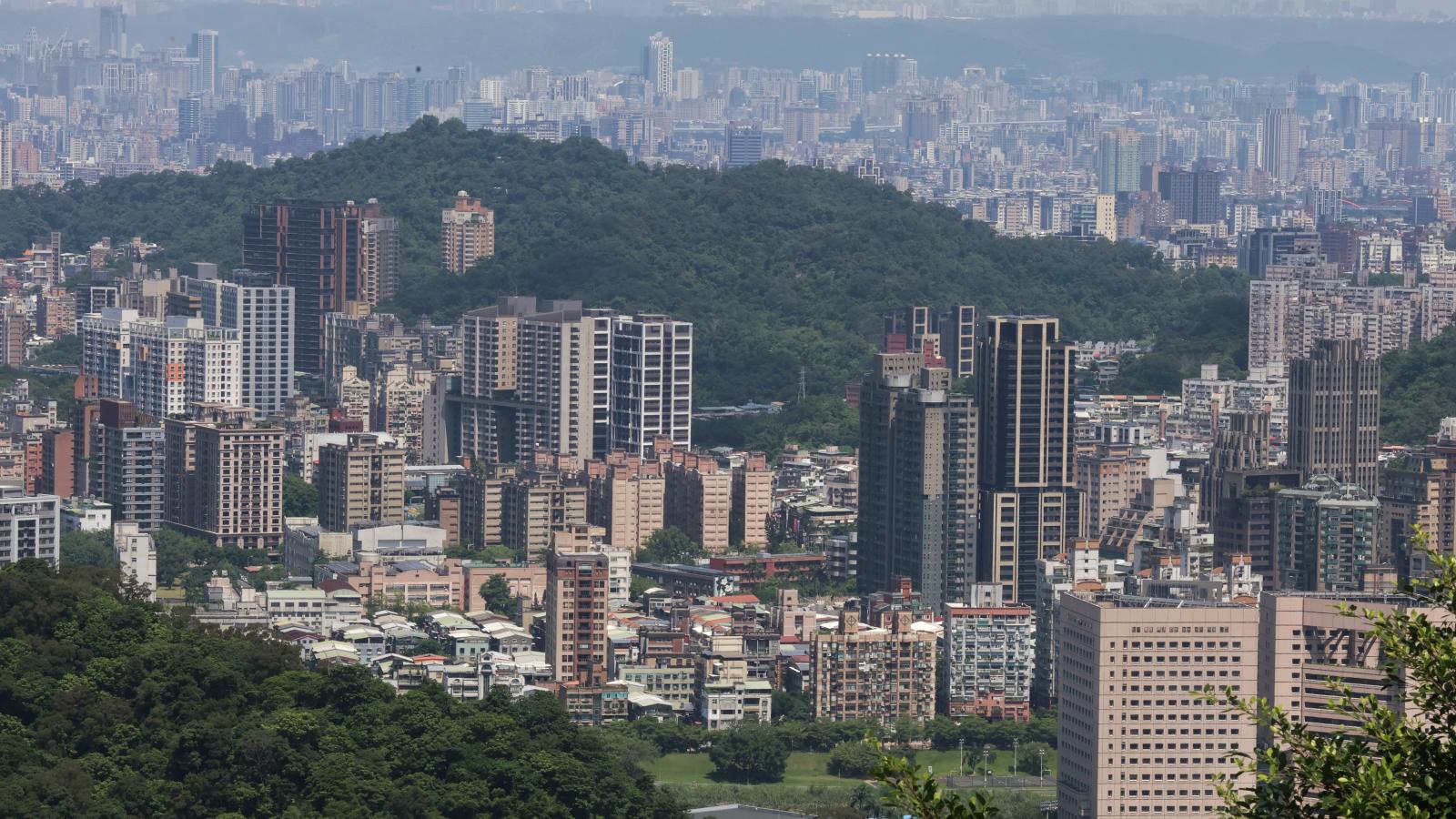
Taiwan's Han Kuang 42 military exercise began on the 5th, launching a 10-day, 9-night continuous live drill. However, the U.S. military strategy website 'War on the Rocks' reported that Chinese military personnel have proposed a concept called 'paralyzing Taipei,' using three tactics—military blockade, precision strikes, and cognitive attacks—to simultaneously cripple city operations and civilian psychological defenses.
How could the PLA quickly capture Taipei?
The report states that Chinese military researchers published a study in March 2025, describing how to rapidly seize and control Taipei. By cutting off external aid, restricting mobility, and destroying operational systems, the plan aims to comprehensively weaken Taipei's recovery capacity and ultimately destroy the Taiwanese people's will to fight.
Although this concept has not yet become official Chinese military doctrine, it is a significant indicator of how Beijing is actively incorporating 'comprehensive national warfare' and 'cognitive domain operations' into its future military planning toward Taiwan.
What is 'Large-Scale Urban Total Incapacitation Warfare'?
The study introduces a new concept called 'Large-Scale Urban Total Incapacitation Warfare,' which integrates military firepower with cognitive operations to simultaneously disable city functions and civilian morale. China views 'comprehensive national warfare' as a national security strategy, requiring not only the military but all Communist Party members to cultivate capabilities for future conflicts, enhancing cognitive warfare capabilities through military-civil fusion.
In recent years, China's Ministry of State Security has repeatedly urged party members to 'transform institutional advantages into combat effectiveness.' The 2025 national security policy explicitly states the need to win the 'comprehensive national warfare.'
Chinese military researchers have deeply studied the Russia-Ukraine war. They note how the U.S. significantly enhanced Ukraine's combat effectiveness through economic sanctions, Starlink satellite communications, intelligence sharing, information disclosure, and cyber capabilities. Some Chinese analysts even view the U.S.'s early public assessments of the conflict as a deliberate 'cognitive smoke screen' to mislead Russian judgment, believing that America successfully used information warfare to induce Russia into underestimating Ukraine's strength.
Is Beijing trying to replicate U.S. information warfare capabilities?
The report notes that Beijing internally recognizes it currently cannot fully replicate the American model. It lacks the international alliances needed to drive global sanctions, does not possess advantages like oil, the dollar system, or Starlink, and lags far behind the U.S. in strategic information dissemination and disinformation capabilities. Therefore, it must continue strengthening these areas through military-civil fusion.
What are the three main tactics of 'Paralyzing Taipei'?
The core of the 'paralyze Taipei' concept consists of three operational strategies: military blockade, precision strikes, and cognitive attacks.
First, military blockade. China would surround Taipei, cutting off the flow of external supplies and information, preventing outside aid from entering. It would launch precise 'hard attacks' on command centers and communication nodes, combined with 'soft measures' such as cyberattacks, electronic jamming, distributed denial-of-service (DDoS) attacks, and AI-generated deepfakes to weaken the operations of Taiwan's military communications, news media, and social media platforms.
Second, precision strikes. China plans to use unmanned vehicles, long-range artillery, and special forces to conduct decapitation strikes targeting Taiwan's commanders, key facilities, and critical personnel. It may even seize power grids and maintenance stations through force or bribery to facilitate subsequent amphibious operations. The plan also includes attacking military-supporting civilian infrastructure such as airport runways, substations, and wastewater treatment plants, while deliberately avoiding destruction of hard-to-rebuild post-war facilities like power plants, reservoirs, and air traffic control towers—preserving conditions for future takeover.
Third, cognitive attacks. Beijing would use algorithmic content promotion, deepfakes, AI-generated content, and social media infiltration to massively spread pro-China information on platforms like Meta and TikTok, tailoring different messages for military and civilian audiences in Taiwan.
Such cognitive warfare would be coordinated with China's already-established influence operations on Taiwanese and U.S. social media platforms, simultaneously undermining public trust in the government, portraying Beijing as just, and accusing Taiwan's leaders of incompetence, aiming to rapidly collapse resistance and achieve cessation of hostilities.
FACT BOX
- Source: PR Times
- Category: News
- Organizations: War on the Rocks