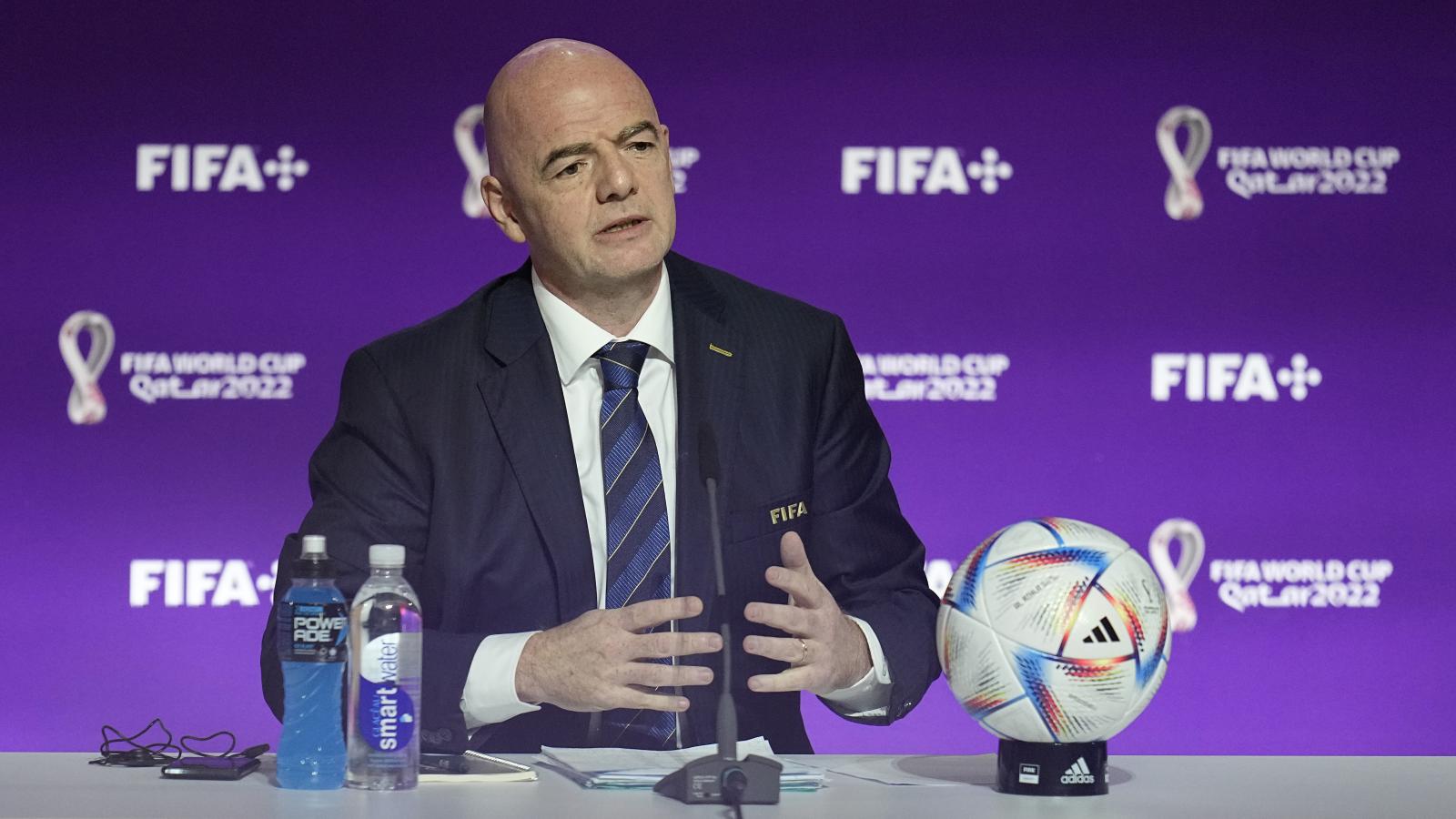
FIFA issued a statement on August 5, publicly apologizing for the failure of its plan to sell certain commercial rights and equity stakes of the World Cup to outside companies, admitting serious errors in execution.
Despite attempts to project unity, with senior officials at a crisis meeting in Rabat, Morocco reportedly offering 'full support' to President Gianni Infantino, his leadership faces unprecedented scrutiny amid sustained criticism from Europe’s top leagues, political figures, and internal executives.
The crisis originated from FIFA’s proposal to establish a commercial subsidiary called 'FIFA Forward Enterprise' (FFE), aiming to monetize World Cup revenues and sell equity. The plan triggered immediate backlash across football, criticized as undermining the sport’s integrity and lacking transparency.
Following the high-level meeting in Rabat, Morocco, FIFA acknowledged it had 'made mistakes' and admitted that 'the entire decision-making process should have been handled differently.' FIFA stated it has sent apology letters to the FIFA Council and all member associations, pledging a thorough review to 'ensure such errors do not happen again.' The organization explicitly confirmed that the FFE commercial licensing and equity sale proposal has been 'formally withdrawn and will no longer be discussed.'
Notably, FIFA Secretary General Mattias Grafström previously described the episode in an internal email to staff as a 'regrettable and condemnable series of events,' distancing himself from the initiative. However, FIFA emphasized in its latest statement that Grafström and members of the Management Committee expressed support for Infantino during the Rabat meeting, while Infantino reaffirmed his confidence in the Secretary General, attempting to project executive solidarity.
Despite these damage-control efforts, external pressure remains intense. The 'European Leagues' alliance — comprising England’s Premier League, Spain’s La Liga, Italy’s Serie A, and other top-tier competitions — issued a firm statement on August 5, calling the FFE plan 'highly dangerous' and highlighting deep-seated concerns about FIFA’s organizational governance, internal culture, and decision-making mechanisms.
The alliance stressed: 'FIFA needs governance reform more than ever to ensure all stakeholders have a formal role in major decisions shaping football’s future.' It also issued a stern warning regarding rumors of FIFA expanding the World Cup to 64 teams, declaring it would fully resist any 'expansion or creation' of new tournaments unless fundamental reforms are implemented, stating bluntly, 'We cannot allow FIFA to continue making destructive unilateral decisions.'
Additionally, legendary footballer Luís Figo, former star of Real Madrid and Portugal’s national team, publicly condemned Infantino, accusing him of 'tarnishing the dignity of the presidency' and demanding his resignation.
The political fallout has reached government levels. Mark Carney, Prime Minister of Canada — co-host of the 2026 World Cup — stated on Wednesday that Infantino’s failure to consult senior advisors beforehand constituted a 'fatal' governance failure. Carney declared: 'I have personally lost confidence in Mr. Infantino.'
FIFA’s internal ranks are also deeply divided. Arsène Wenger, FIFA’s Chief of Global Football Development and renowned former manager, has distanced himself from the FFE plan. Infantino’s senior advisor Carlos Cordeiro resigned last week. Chief Operating Officer Kevin Lamour openly criticized the president, saying the lack of transparency made employees feel 'deceived.'
UEFA exerted the strongest political pressure, having previously voted to boycott the World Cup if Infantino pushed forward with the FFE plan. Although Infantino ultimately retreated, UEFA emphasized it has lost trust in FIFA’s current leadership — widely seen as laying the groundwork for a challenger in the March 2025 FIFA presidential election.
CONCACAF also criticized FIFA’s current leadership, stating it 'no longer places football first.'
Amid the ongoing controversy, UK media reported that Infantino may have secretly promised Morocco the right to host the 2030 World Cup final in exchange for re-election support. The 2030 tournament will be jointly hosted by Spain, Portugal, and Morocco, with Morocco planning to build the 115,000-seat King Hassan II Stadium in Casablanca to bid for the final, while Spain has strong contenders in the home stadiums of Real Madrid and Barcelona.
In response, a FIFA spokesperson firmly denied the claims: 'Assertions that the FIFA President has made any commitment regarding the host location of the 2030 FIFA World Cup final are entirely false and misleading. Any such decision will be made by FIFA in due course through proper procedures.'
Infantino is expected to run for a fourth — and final — term in the March election. However, with rising internal dissent and external allies cutting ties, the governance crisis sparked by this financial plan has cast serious uncertainty over his re-election path.
FACT BOX
- Source: PR Times
- Category: News
- Organizations: Premier League / La Liga / Serie A
- Products / services: FIFA World Cup / FIFA Forward Enterprise (FFE)