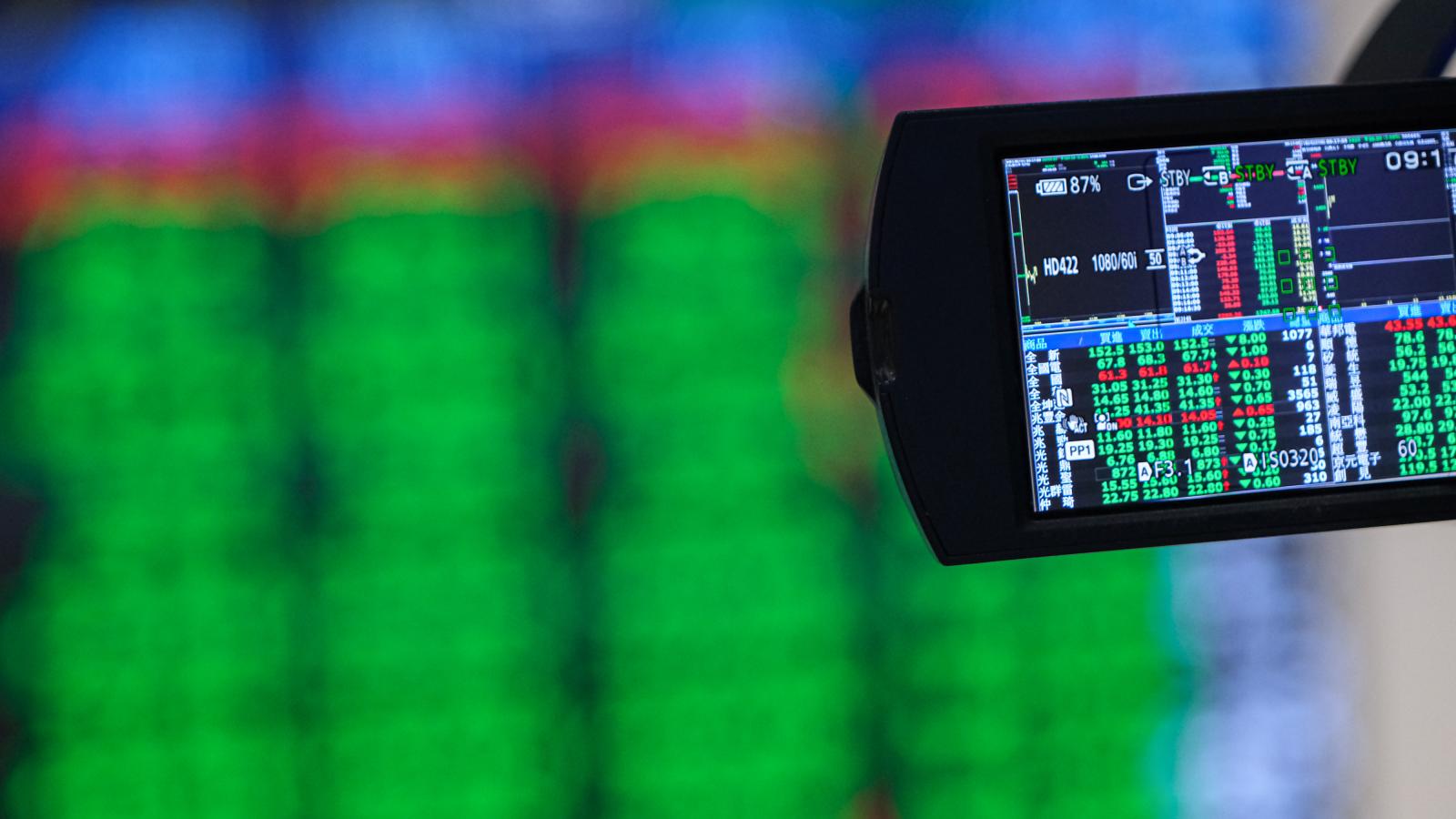
After suffering a sharp selloff and intense volatility, Taiwan's stock market has seen gradual recovery in investor confidence recently. However, analyst Lin Chang-hsing warned investors on the financial program "Wealth Road" that the failure of U.S. government bond yields to decline may signal another interest rate hike this year—and such a hike could mark the bottom of this stock market cycle. Lin emphasized that Q3 to Q4 is a critical period for investors. While crude oil markets face no major crisis, the key concern is why U.S. Treasury yields remain elevated. Are these stubbornly high yields hinting at one more rate hike in 2024?
Why can't the U.S. afford consecutive rate hikes? Lin predicts that if a rate hike occurs, it might indeed be the market's bottom. If the U.S. dares to raise rates—or actually does so—markets will likely plunge sharply, and that single selloff could finally reveal the true floor. Why? Because the U.S. lacks the fiscal capacity for sustained tightening. With foreign debt possibly reaching $38 trillion (approximately NT$1,224 trillion), and already burdened by massive debt, soaring Treasury yields are unsustainable for the U.S. economy.
Lin explained that former President Trump’s persistent rhetoric was strategic theater—aimed at controlling the petrodollar system, which holds greater geopolitical importance. Once oil pricing and the Strait of Hormuz are stabilized under dollar dominance, Trump would then pivot inward to manage domestic CPI (Consumer Price Index). After stabilizing inflation, the next phase would involve reversing market expectations—from rate hikes back to no hikes, potentially even forecasting rate cuts next year.
What is the petrodollar system? It originated from a secret agreement between former U.S. Secretary of State Henry Kissinger and Saudi Arabia: Saudi Arabia prices its oil exports in U.S. dollars in exchange for American security guarantees and military support. This arrangement has secured the dollar’s dominant role in global trade for half a century.
Lin stressed that the most accurate indicator to watch is U.S. Treasury yields. The current 10-year yield stands at 4.63%, while the 2-year yield has reached 4.2%—both alarmingly high. These levels must be addressed; otherwise, capital markets will remain hesitant to make bold commitments. There is no immediate threat in the crude oil market, making short positions in oil viable for now.
Should investors profit from bond volatility? Lin shared that he avoids U.S. Treasuries and instead invests in non-investment-grade bonds. With no advantage in government bonds currently, he advises against betting on bond price swings. Holding ETFs like Yuanta 20-Year U.S. Bond or Cathay 20-Year U.S. Bond is futile—he argues investors only benefit from USD appreciation, not real bond gains. Lin focuses on short-term and high-yield (junk) bonds, targeting interest income rather than price fluctuations, while also profiting from dollar strength.
What are non-investment-grade bonds? Also known as "high-yield" or "junk bonds," these are issued by companies or institutions with credit ratings below investment grade—specifically, below BBB- by S&P or Baa3 by Moody’s. Due to higher default risk, issuers offer higher interest rates to attract investors.
Lin noted that after an 8,000-point drop, the broader market has started to rebound. Investors may wonder if this is an "N-shaped" correction. While various scenarios are possible, scenario analysis is essential. If inflation remains strong, leading to consecutive rate hikes and economic recession, a market crash would be logical. But if this is merely a valuation correction, once adjustments complete, fundamentally strong stocks will lead the recovery.
More exclusive insights from Feng Media: • If the Fed raises rates in September, will joint U.S.-Japan yen intervention fail? • Yen carry-trade unwind risks unresolved—will the Fed hike in September? Five consecutive rate holds deepen market anxiety • Could a Fed rate hike trigger a global stock crash? Ruan Mu-hua predicts chain reactions: better to let destruction run its course
FACT BOX
- Source: PR Times
- Category: News