In contemporary Taiwanese society, terms such as 'spiritual growth' and 'mind-body-spirit healing' are appearing more frequently in daily life. When career bottlenecks, family pressures, and personal anxieties converge, many people turn to spiritual outlets, giving rise to a rapidly expanding 'spiritual market.' Within this market, one can observe a progression from one-day courses and weekend workshops to professional certifications, mentor training, and even further into 'worship'-style organizations and groups—this marks a significant stage in the commercialization of spirituality.
First, the initial expansion can be observed through course formats. According to reports, 'spiritual growth' courses in Taiwan have become a rapidly growing business. Sociologists point out that many mind-body-spirit courses promote 'potential development' and 'spiritual awakening,' claiming to offer healing and empowerment.
On the other hand, an investigation by the financial section of United Daily News reveals strong demand among young people for 'self-awareness' and 'self-exploration.' Tools such as tarot cards, Western astrology, life numerology, and MBTI are particularly popular among Taiwan's younger generation, with many investing considerable monthly expenses to participate in related courses.
While these course formats may appear legitimate—or even part of personal growth—dynamically, their relationship with spiritual commercialization involves not just supply and demand expansion, but also processes of commodification, systematization, and branding. As one analysis titled 'How Does the Mind-Body-Spirit Industry Make Money?' points out, spiritual activity mentors, fortune tellers, life numerologists, crystal shops, and meditation studios constitute the typical model of the mind-body-spirit industry.
In Taiwan, such course models are rapidly spreading through social media, online platforms, lectures, and mentor training programs.
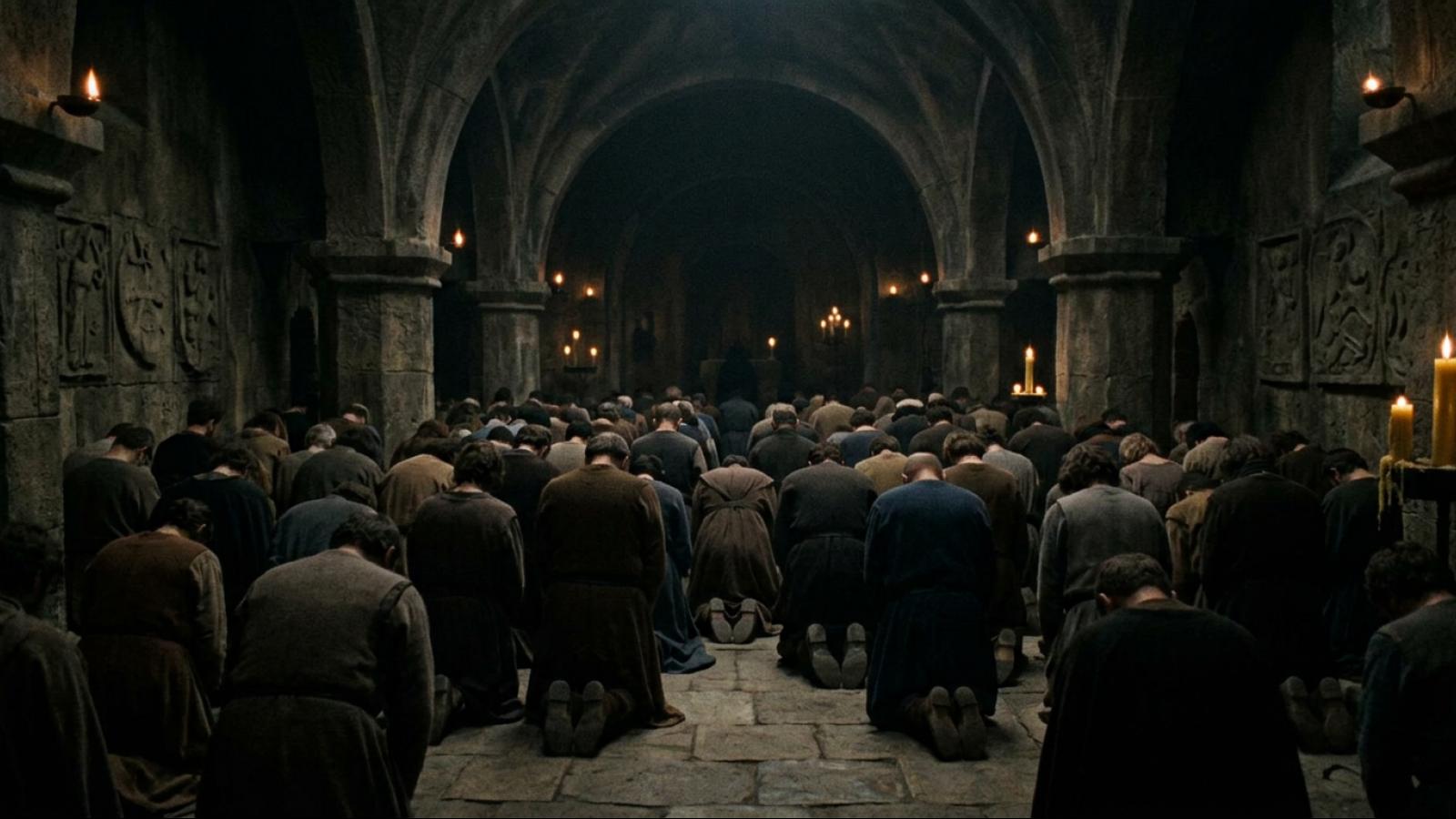
When these courses extend from 'personal growth' to 'group practice' or 'communal living,' the market boundary further approaches 'worship'-style or highly committed spiritual groups. Here, 'worship' does not refer solely to traditional religious rituals, but rather to the state in which followers/participants invest increasing amounts of time, money, and even lifestyle into the organization. Social observations indicate that such organizations often center around a 'spiritual mentor' or 'practice group,' offering not just courses but forming a daily communal life, and developing interpersonal networks and belief structures that are difficult to disengage from.
For example, an article titled 'Taiwan's Spiritual Practice Trend Is in Full Swing' notes that after attending a spiritual course, many people are not merely learning techniques or knowledge, but are drawn into a life narrative of 'letting go of past regrets and embracing present freedom.'
When such narratives become institutionalized and systematized, they may form relatively closed groups with high demands for loyalty. Thus, the transition from courses to worship essentially involves a shift in role from 'participant' to 'member/follower.'
In this transformation, mechanisms of financial and resource flow are often implicitly or explicitly embedded. For instance, one report notes that some spiritual courses charge tens of thousands, even over 100,000 New Taiwan Dollars, yet organizers often lack psychological or medical credentials, and the claimed healing effects lack professional validation.
Additionally, other reports indicate that participants are induced by rhetoric such as 'investing in your spirit' or 'spiritual upgrade,' ultimately committing large sums of money, with risks of high-pressure sales and psychological dependency. Thus, the expansion of Taiwan's spiritual market is not simply 'more courses,' but rather a supply chain from 'course consumption' → 'spiritual growth experience' → 'commitment to practice groups/communities.' This chain includes several noteworthy nodes: course packaging, mentor branding, financial models, group control, and trust mechanisms. For example, 'life numerology' courses not only teach content but also include crystal sales and entrepreneurship coaching, creating a 'spirituality + finance' linkage.
From an academic perspective, this model intersects with the dynamics of new religious movements or problematic sects internationally. Their organizational structure often begins with 'meeting spiritual needs,' then shifts toward controlling members' time and lifestyle, eventually forming a loyalty system centered on the organization, with internal mechanisms for financial flow, donations, and even living arrangements. Thus, the spiritual practice space is both a market and a form of organizational power structure.
In practical cases in Taiwan, victim accounts related to the previously mentioned TCOC (Taiwan Christian Outreach Center) indicate that it constructs a highly controlling system through institutions such as 'discipleship training,' 'tithing,' and 'spiritual hierarchy.' Although TCOC itself is a religious organization, its operational model offers insights into the 'institutionalization of spiritual practice' within the spiritual industry. Comparing this experience with spiritual/course systems reveals that once 'practice' becomes institutionalized, organized, and commercialized, followers' involvement extends beyond attending classes to encompass their entire life, time, money, and relational networks.
This shift from courses to worship also implies increased regulatory difficulty. The course stage may still fall under consumer behavior, categorized as educational or training services; however, once it enters stages involving group commitment, faith pledges, lifestyle changes, and financial transfers, its nature may blend with religion or even belief circles, potentially leading to preferential treatment or punishment, barriers to leaving, and emotional pressure among members. Taiwan's 'regulatory vacuum' in this area is also worth noting.
Further explanation: with the rise of social media, online platforms, and online courses, the geographical and temporal boundaries of the spiritual market have been greatly expanded. People no longer participate in courses only in physical spaces but can enter spiritual practices or communities through live streaming, online groups, and private chat groups. This 'virtual communal practice + community stickiness' model reduces physical space limitations while increasing accessibility and reach of courses/groups. This expansion not only enlarges the scale of the spiritual market but also enhances its level of organization and branding.
Under this backdrop, while Taiwan's spiritual market satisfies many people's needs for spirituality, healing, and belonging, it also harbors potential risks. When courses transform into groups, if transparent financial mechanisms, voluntary exit pathways, personal autonomy safeguards, and external oversight mechanisms are lacking, victimization scenarios may easily arise: excessive payments, group dependency, or even personal control and financial exploitation. The previously mentioned temple murder case and temple fundraising scandal serve as warnings—when spiritual spaces extend from courses to groups, and from 'growth experiences' to 'full commitment,' clear boundaries and vigilance are needed.
In summary, Taiwan's spiritual market is undergoing a transition from 'consumption of courses' to 'practice groups/faith systems.' In this process, course design, branded mentors, marketing, financial flows, group control, trust mechanisms, and exit barriers all become key elements shaping its industrial characteristics.
Cover of 'The Violence of Faith: A Group of Taiwanese People's Cult Awakening.' *Author Ping Xie Sanren (real name Wang Chaoqun), senior media professional, currently runs the YouTube channel 'Observation Window 2.' This article is excerpted from the author's new book 'The Violence of Faith: A Group of Taiwanese People's Cult Awakening' (China Times Publishing).
FACT BOX
- Source: PR Times
- Category: Survey