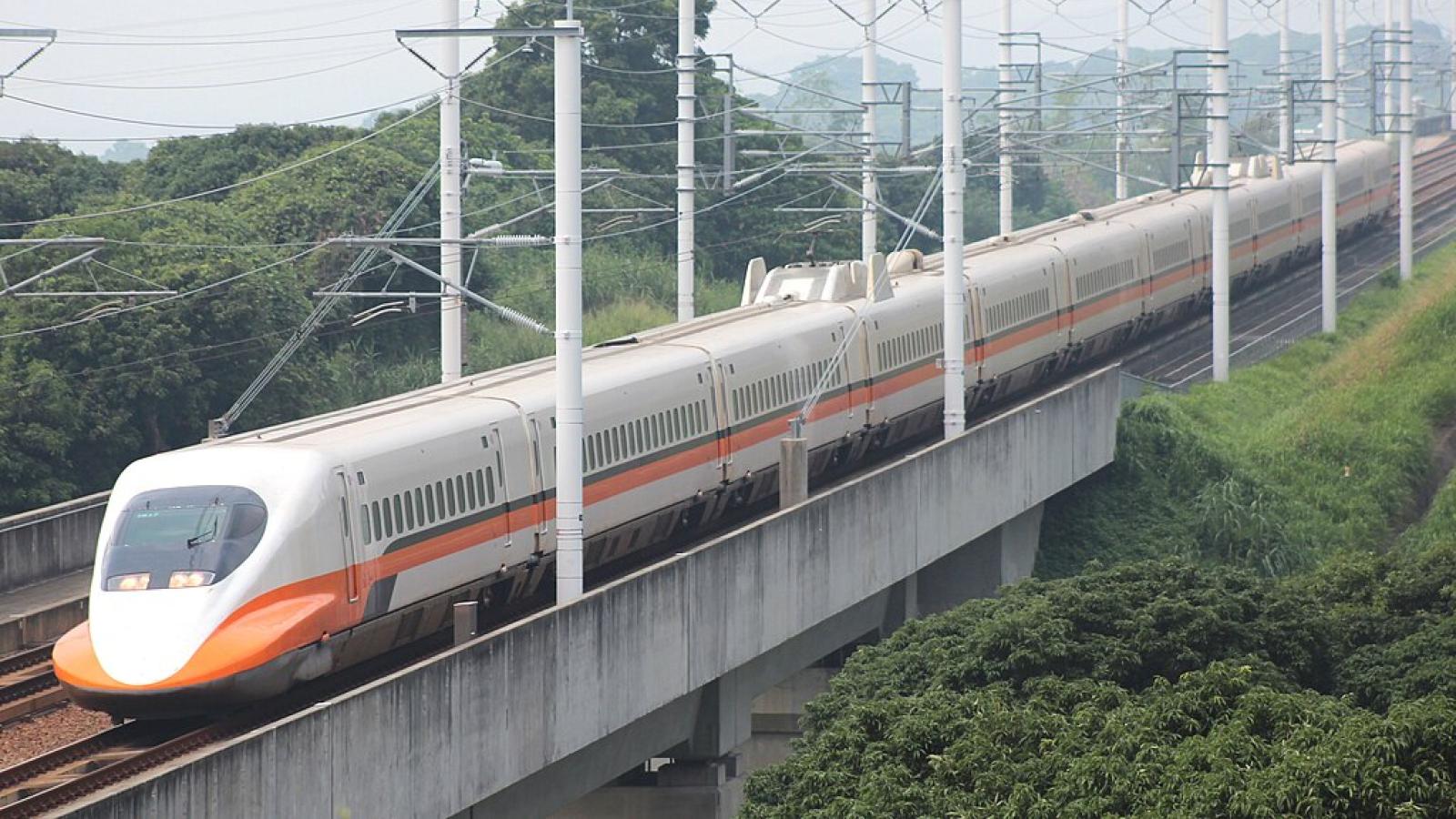
With four months remaining until the 2026 local elections, Executive Yuan Premier Cho Jung-tai officially approved the 'High-Speed Rail Extension to Yilan Project' during a cabinet meeting on July 23, with a total budget exceeding NT$352.1 billion. The plan involves extending 60.6 kilometers of track from the HSR Nangang Station to the new Taiwan Railway station 'County Government Center Station,' where the Yilan HSR Station will be co-located. According to the schedule, construction could begin as early as 2029, with completion and service commencement targeted for 2036. Once operational, the journey from Taipei Station to Yilan via HSR will take only 28 minutes.
The North-Yilan HSR, with an average construction cost exceeding NT$5.8 billion per kilometer, has been defended by Transportation Minister Chen Shih-kai, who compared it to the NT$7.8 billion per kilometer for Taipei Metro's Wanda Line and NT$7.7 billion for New Taipei Metro's Circular Line, stating it is 'not particularly high.' The Executive Yuan has positioned the project as a 'new starting point for transportation resilience in eastern Taiwan.' However, prior to and following the approval, former Transportation Minister Hao Chentan submitted a 500-page petition to the Ministry of Environment, while former Executive Yuan Senior Advisor Chang Ching-sen, a lifelong DPP member, reportedly became so angry he threatened to leave the party.
Why has this costly infrastructure project accelerated under President Lai Qing-te's administration? And why has the entire decision-making system failed to apply the brakes despite continuous warning signals along the route? Behind the scenes, it appears that powerful political backing—particularly from the DPP's influential 'Xinliu' faction—has shielded the project from effective opposition.
FACT BOX
- Source: PR Times
- Category: News