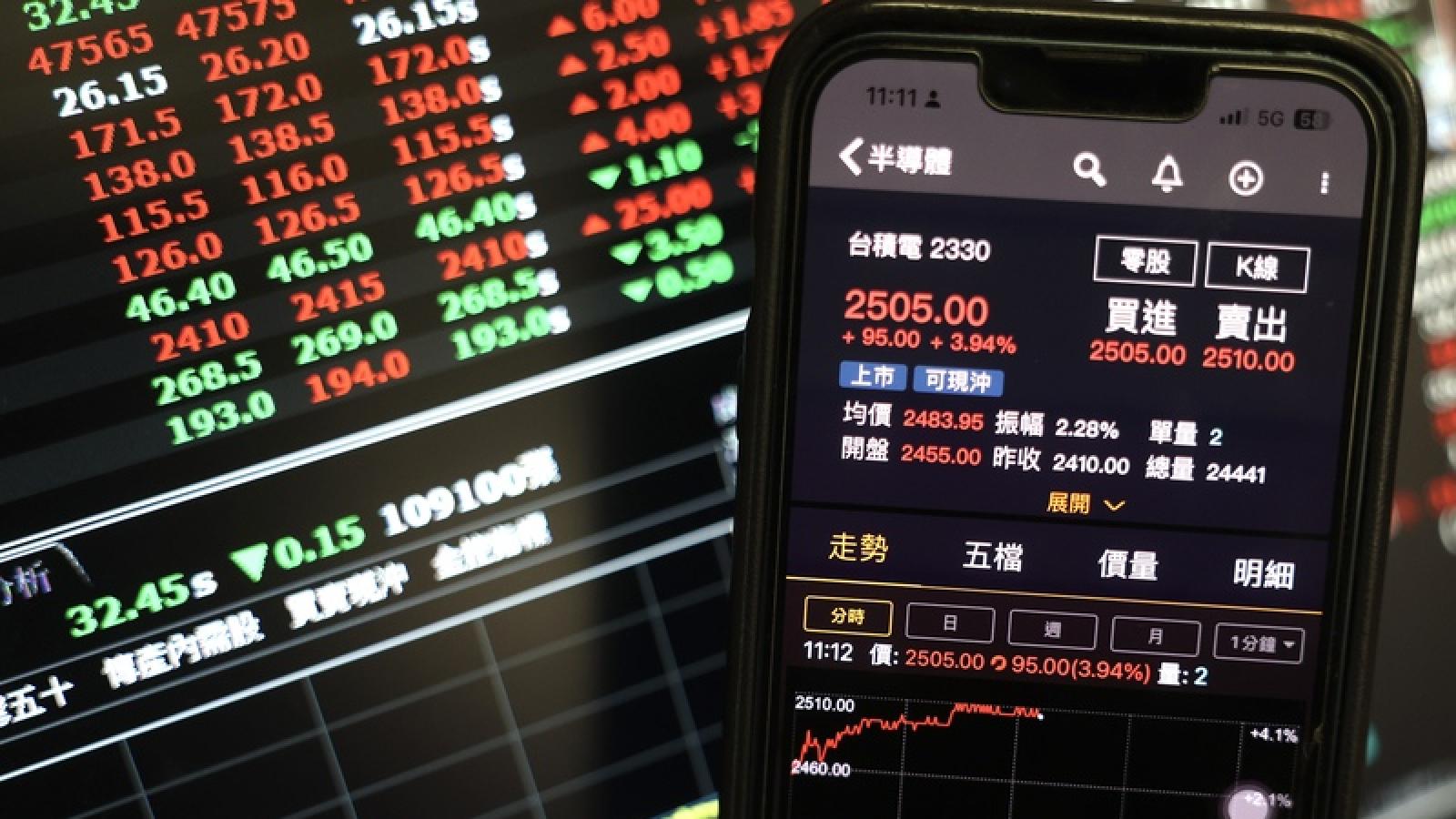
Jennifer, 35, who works at a cryptocurrency company, was once an ordinary office worker who never paid attention to Taiwan’s stock market. But as her colleagues began boasting about earning millions of Taiwanese dollars from single stocks, combined with inflation and stagnant wages, she grew increasingly anxious. Eventually, she decided to enter the market. Her mindset mirrors that of many young Asians: "Relying on a single salary makes even daily life and retirement planning feel suffocatingly stressful."
According to CNN, the artificial intelligence (AI) boom has dramatically increased demand for data centers and semiconductors, causing share prices of TSMC, Samsung Electronics, and SK Hynix to surge over 50%, 100%, and 150% respectively since the beginning of 2026. These massive gains have naturally attracted tens of thousands of novice Asian retail investors. The number of new accounts opened at the Taiwan Stock Exchange (TWSE) has reached its highest level since 2022, while Korean retail investors engaging in aggressive margin trading have pushed borrowing volumes to record highs.
This retail investor frenzy reflects a collective anxiety among East Asia’s younger generation regarding their economic realities. Despite strong economic growth in Taiwan and South Korea, slow wage growth and persistently high housing prices leave many ordinary workers feeling deeply deprived.
Taiwan’s stock market rose 1,250.94 points, closing at 44,611.6, a 2.88% increase. This surge followed positive U.S.-Iran negotiations, raising hopes for the reopening of the Strait of Hormuz, which led to falling international oil prices. Meanwhile, record highs on Wall Street drove optimism in Taiwan’s market.
Yun Jung In, CEO of Fibonacci Asset Management, said in an interview that Koreans traditionally favor real estate investment. However, the 20- and 30-somethings who missed the 2010s property price surge now face a reality where homeownership is completely out of reach. Seeking better prospects, many turned to cryptocurrency trading—only to suffer heavy losses. Now, with Samsung and SK Hynix shares skyrocketing, these young people see renewed hope and view the two tech giants as their last chance for upward mobility.
To attract foreign capital and stimulate markets, South Korea opened trading of "single-stock leveraged ETFs" in May this year, allowing retail investors to double their exposure—and thus amplify both gains and risks.
A 39-year-old well-known fitness influencer, Choi Eun-chong, shared his painful lesson with foreign media. Hoping to buy a home in downtown Seoul, he started by investing in U.S. tech giants, then moved to leveraged trades on Tesla, Palantir, and domestic Korean tech stocks. After experiencing the thrill of earning $140,000 (approximately NT$4.51 million) in just a few days, he became completely addicted. When the market reversed, he fell into a vicious cycle of doubling down, eventually pouring all 700 million won (about NT$15.85 million)—his life savings accumulated over 13 years—into the market. He now faces massive debt.
Last month, as the Korean stock market corrected sharply, dropping more than 40% from its peak, countless other highly leveraged retail investors like Choi suffered margin calls and liquidations. After Choi publicly declared bankruptcy on his YouTube channel, the video garnered over 500,000 views, with comment sections flooded by young investors trapped in multi-million-won debt spirals.
Both Taiwan and South Korea exhibit extreme concentration in their stock markets, where a small number of dominant firms heavily influence overall indices. As of June, TSMC accounted for 42% of Taiwan’s total market capitalization. Samsung and SK Hynix together represent over 50% of the KOSPI index’s market value. Any volatility or news involving these three companies can easily trigger broad market swings.
Moreover, SK Hynix’s plan to list American Depositary Receipts (ADRs) on Nasdaq in a $26.5 billion (approximately NT$854.4 billion) deal has created a 24-hour uninterrupted trading chain linking Taiwan, Korea, and the U.S. Many traders now use early U.S. market movements and Korean market shifts as indicators to predict Taiwan’s market direction.
A Taiwanese finance scholar told CNN that when retail margin balances hit historic highs, any market pullback could easily spark mass panic, triggering sell-offs and cascading margin liquidations—even leading to a full-scale market crash. "When the market becomes extremely overheated, and people dream of getting rich overnight—some even quitting jobs to become full-time investors—it’s clearly not a healthy social phenomenon."
Facing criticism from lawmakers who mock the Korean stock market as an "online casino," the government has taken steps to prevent further retail investor harm. When the market experienced consecutive sharp declines, the Finance Minister personally apologized, acknowledging that the introduction of high-risk leveraged ETFs on individual stocks had not undergone sufficient evaluation, and offered a public apology. Financial regulators immediately raised the minimum margin requirements for retail investors trading leveraged ETFs and suspended new product listings in an effort to forcibly cool down speculative trading fever.
FACT BOX
- Source: PR Times
- Category: News
- Organizations: Fibonacci Asset Management