While the AI boom hasn't cooled down, the global tech industry’s next focus is quietly shifting toward defense technology. The United States is advancing the Golden Dome Defense Initiative, targeting satellite detection, missile tracking, radar sensing, artificial intelligence, communication networks, and interception systems to build a multi-layered defense network spanning from space to low altitudes.
As U.S. official budgets continue to rise, the Congressional Budget Office has also warned that when factoring in the next twenty years of R&D, deployment, and operations, total spending could far exceed current estimates. This massive infrastructure demand is reshaping global supply chains for satellites, communications, sensors, drones, and low-altitude defense systems.
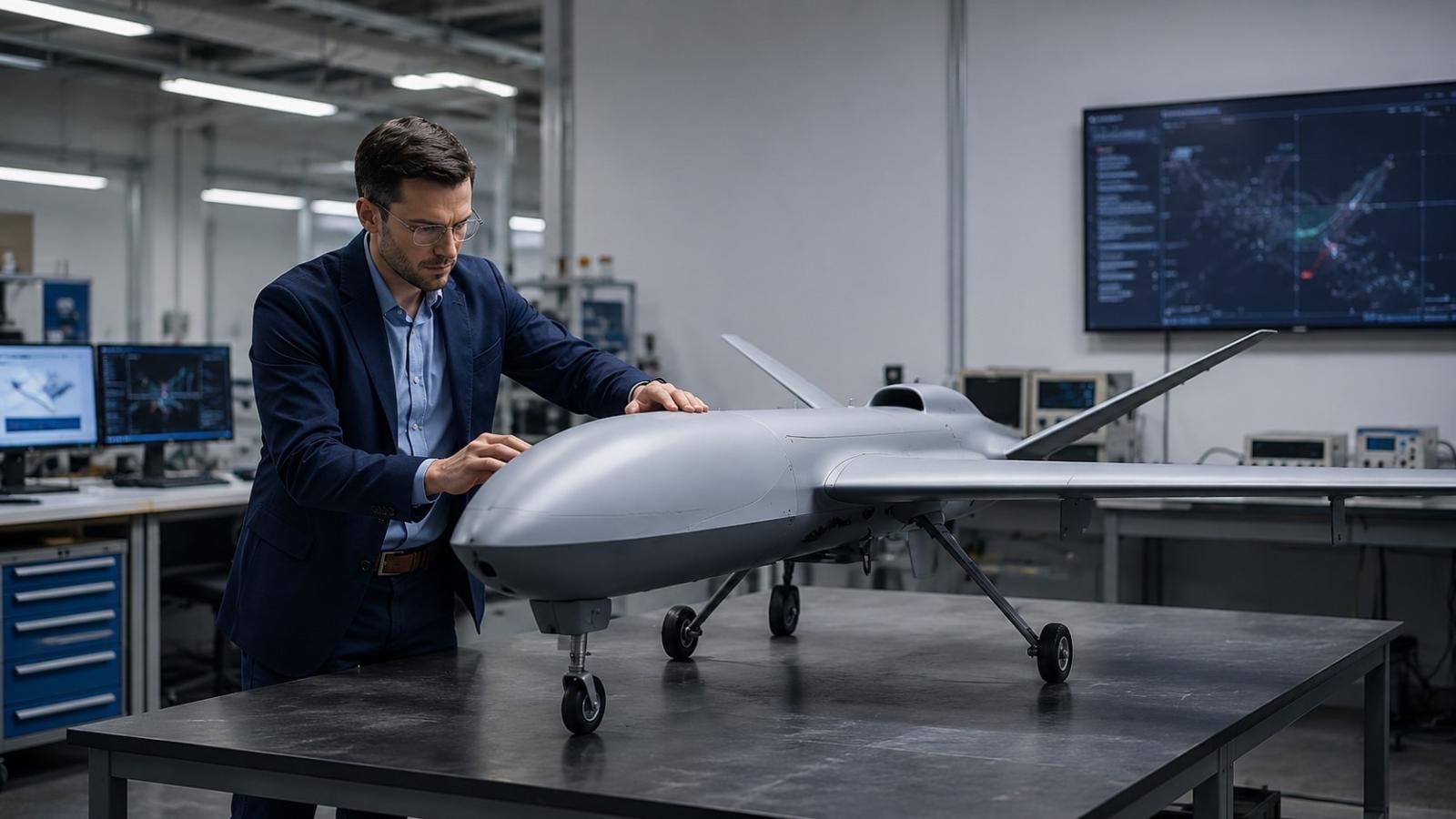
After AI, defense technology may become the next major focal point for the global tech industry. Among these, drones will be a contested domain. (Image: Yuan Chuang Precision)
Golden Dome moves beyond policy slogans — missile-tracking satellite procurement begins
In July this year, the U.S. Space Force announced that L3Harris and Sierra Space would each manufacture a new batch of missile warning and tracking satellites, indicating that related projects have begun transitioning from conceptual planning to actual procurement.
Although these projects are not the full-scale prime contracts for the entire Golden Dome system, they closely align with Golden Dome’s emphasis on space-based sensing, real-time tracking, and cross-domain command requirements. This has made satellite manufacturers, communication equipment providers, and system integrators key players in the market spotlight.
Domestic precision automotive parts manufacturer Yuan Chuang Precision is leveraging its existing capabilities in precision manufacturing of automotive components, molds, metal processing, and mass production management to enter drone manufacturing and supply chain services. Shown here is Yuan Chuang Precision’s headquarters. (Image: Yuan Chuang Precision)
The drone battlefield is reshaping the defense industry landscape — Taiwan’s manufacturing strength seizes positioning opportunities
The Russia-Ukraine war and Middle East conflicts have rapidly elevated the importance of drones, anti-drone systems, and low-altitude defense. The Taiwanese government continues to promote a democratic drone supply chain and a non-red supply chain, comprehensively strengthening key technologies and manufacturing capabilities from flight control, communications, navigation, AI payloads to full-scale production.
The Executive Yuan has designated unmanned vehicles as a key industry, expanding the domestic supply chain through defense procurement, international cooperation, cybersecurity testing, and verification mechanisms. The Ministry of Economic Affairs also emphasizes combining Taiwan’s strengths in ICT, semiconductors, and precision machinery to capture orders from global trusted supply chains.
Zhengda enters near-Golden Dome communications; Guanxi Electric targets low-altitude countermeasures
Taiwanese manufacturers’ strategic moves are clearly accelerating. Zhengda Tactical Technology, a subsidiary of Zhengda, recently signed a framework cooperation agreement with state-authorized defense suppliers in the Middle East and Gulf region system integrators, focusing on near-Golden Dome communication systems, technical testing, manufacturing facility setup, and global supply chain collaboration.
Guanxi Electric is investing in drone turbojet engines and anti-drone systems to capture the low-altitude defense market. Yuan Chuang Precision is also planning to leverage its existing capabilities in automotive components, precision molds, metal processing, and mass production management to evaluate entry into drone manufacturing and supply chain services.
Yuan Chuang Precision provides comprehensive drone system solutions based on prior accumulated manufacturing experience. (Image: Yuan Chuang Precision)
Manufacturing advantages entering defense tech — international certification becomes key to winning orders
Industry analysts note that while large European and American defense contractors dominate overall system design and integration, Taiwan’s true strengths remain in precision manufacturing, electronic components, communication equipment, and flexible mass production capabilities.
Whether Taiwanese manufacturers can obtain international certifications, comply with export controls and cybersecurity requirements, and establish stable delivery capabilities will determine if they can convert conceptual appeal into actual orders. As the Golden Dome initiative accelerates, Taiwanese enterprises are officially stepping onto the new赛道 of defense technology and the low-altitude economy.
FACT BOX
- Source: PR Times
- Category: News
- Organizations: L3Harris / Sierra Space