As tensions persist across the Middle East, Iran and Oman have made notable advances in talks concerning a commercial shipping framework for the Strait of Hormuz—the strategic gateway to the Persian Gulf—with both sides poised to reach an agreement soon. This development is seen as potentially paving the way for renewed ceasefire negotiations and nuclear talks between the U.S. and Iran.
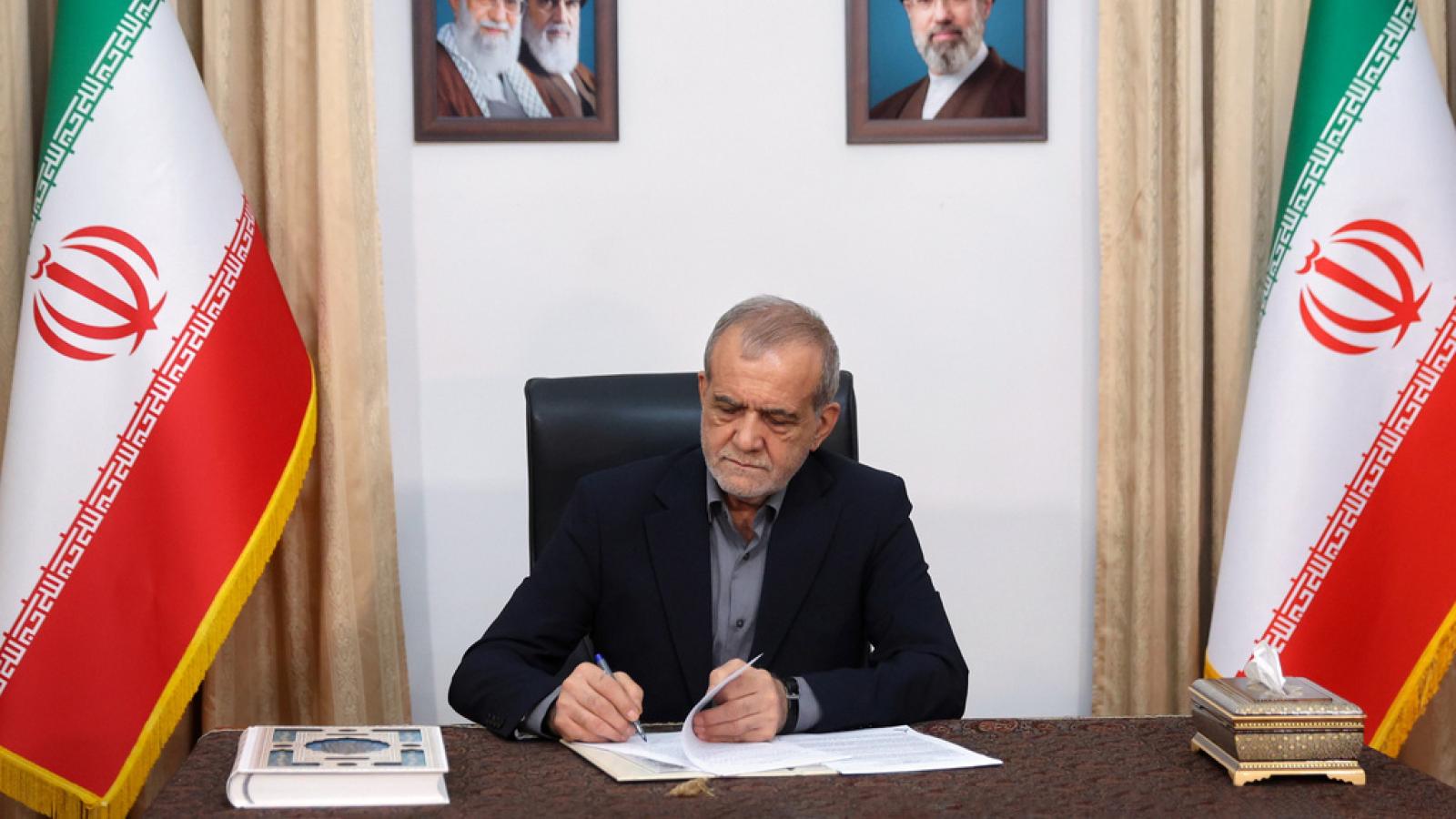
However, concerns remain high regarding the internal workings of Iran's leadership. On August 5, Iranian President Masoud Pezeshkian admitted in a national television interview that establishing direct contact with the country's Supreme Leader, Mojtaba Khamenei, is currently 'extremely difficult.'
The new Supreme Leader's absence from his father's funeral marks the first such omission since taking office, with officials citing intelligence leak prevention
Following the February 'Operation Epic Fury' airstrike carried out by the U.S. and Israel, which resulted in the death of former Supreme Leader Ayatollah Ali Khamenei, his son Mojtaba Khamenei immediately succeeded him. Reports indicate Mojtaba was also injured in the same attack, although details about the severity of his injuries vary. Since assuming office, he has never appeared publicly or released any audio or video messages, communicating externally only through signed written statements—even skipping his father's funeral last month.
Tehran municipal media outlet Al-Mashhari reported this week that the official reason for withholding Mojtaba's voice and image is stringent security protocol. Iranian authorities fear foreign intelligence agencies could conduct acoustic analysis using voiceprints, background equipment noise, or ambient sounds from recordings to determine the Supreme Leader's precise location or physical condition.
Despite external doubts about the new leader's authority, President Pezeshkian publicly defended Mojtaba, stating their interactions are highly effective and emphasizing that the Supreme Leader demonstrates great goodwill and rigorous logic. Pezeshkian added that the current unconventional political situation has created opportunities for malicious actors to distort the Supreme Leader's image, though he did not specify who these actors might be.
Oman mediates strait passage agreement; Iran secures greater maritime management rights
On the diplomatic and military front, Iranian Foreign Ministry spokesperson Esmaeil Baghaei confirmed on August 5 that Tehran and Muscat have reached consensus on the geographic coordinates of the proposed shipping lanes and are now finalizing and reviewing a joint statement. Baghaei stated that the joint declaration—containing both parties’ core considerations and agreements—will be formally announced shortly, provided no third party interferes. Iranian Deputy Foreign Minister Kazem Gharibabadi also noted that nearly all outstanding differences have been resolved, placing the final agreement 'on the verge of signing.'
According to details revealed by Israel’s Channel 12, the transitional agreement is initially set for a 60-day trial period. During this time, vessels entering the Persian Gulf will navigate along Iran’s side of the strait, while outbound ships will travel along Oman’s side, with no tolls charged. Additionally, both sides will work to clear naval mines from the main channel within the first 30 days. Once the main channel is cleared, two-way traffic will resume, and Iran and Oman will continue negotiating a permanent mechanism. If implemented, this new arrangement would grant Iran greater control over commercial maritime traffic in this strategic waterway than it held before the conflict.
Nevertheless, Iranian officials remain cautious about the 'full reopening' of the strait. Both Baghaei and Gharibabadi emphasized that U.S. military blockades and threatening maneuvers in the region remain the biggest obstacles to safe navigation. They insist that the U.S. must first fulfill its commitments under the June memorandum of understanding before basic conditions for reopening the waters are met.
Trump threatens military action; Iran denies direct U.S.-Iran talks
Regarding the breakthrough at the Strait of Hormuz, President Donald Trump stated on the evening of August 4 that negotiations were progressing smoothly and predicted clearer outcomes within 48 hours. Speaking in Las Vegas on August 5, Trump reiterated that the U.S. had previously prepared to launch the largest military strike since World War II, after which Iran proactively contacted Washington seeking negotiations. Trump emphasized that while he prefers reaching an agreement to avoid casualties, he will never allow Iran to possess nuclear weapons.
In an interview with Fox News, Trump issued a stern warning, stating the Strait of Hormuz must reopen soon—or Iran will face extremely severe military consequences. He added that if Iran backtracks during negotiations, the U.S. will act without hesitation.
Despite repeated signals from the U.S. suggesting ongoing contact, Iranian officials continued to deny any direct negotiations with the U.S. on August 5, stressing that all current discussions are limited to bilateral consultations between Iran and Oman. While the Iran-Oman shipping framework agreement is nearing completion, critical uncertainties remain: whether Iran will use the reopening of the strait as leverage to extract further concessions from the U.S., whether the arrangements will satisfy Trump’s demands to prevent large-scale military conflict, and whether communication barriers between President Pezeshkian and the Supreme Leader will affect the approval and implementation of the final agreement—all key variables shaping the trajectory of Middle Eastern affairs.
FACT BOX
- Source: PR Times
- Category: News