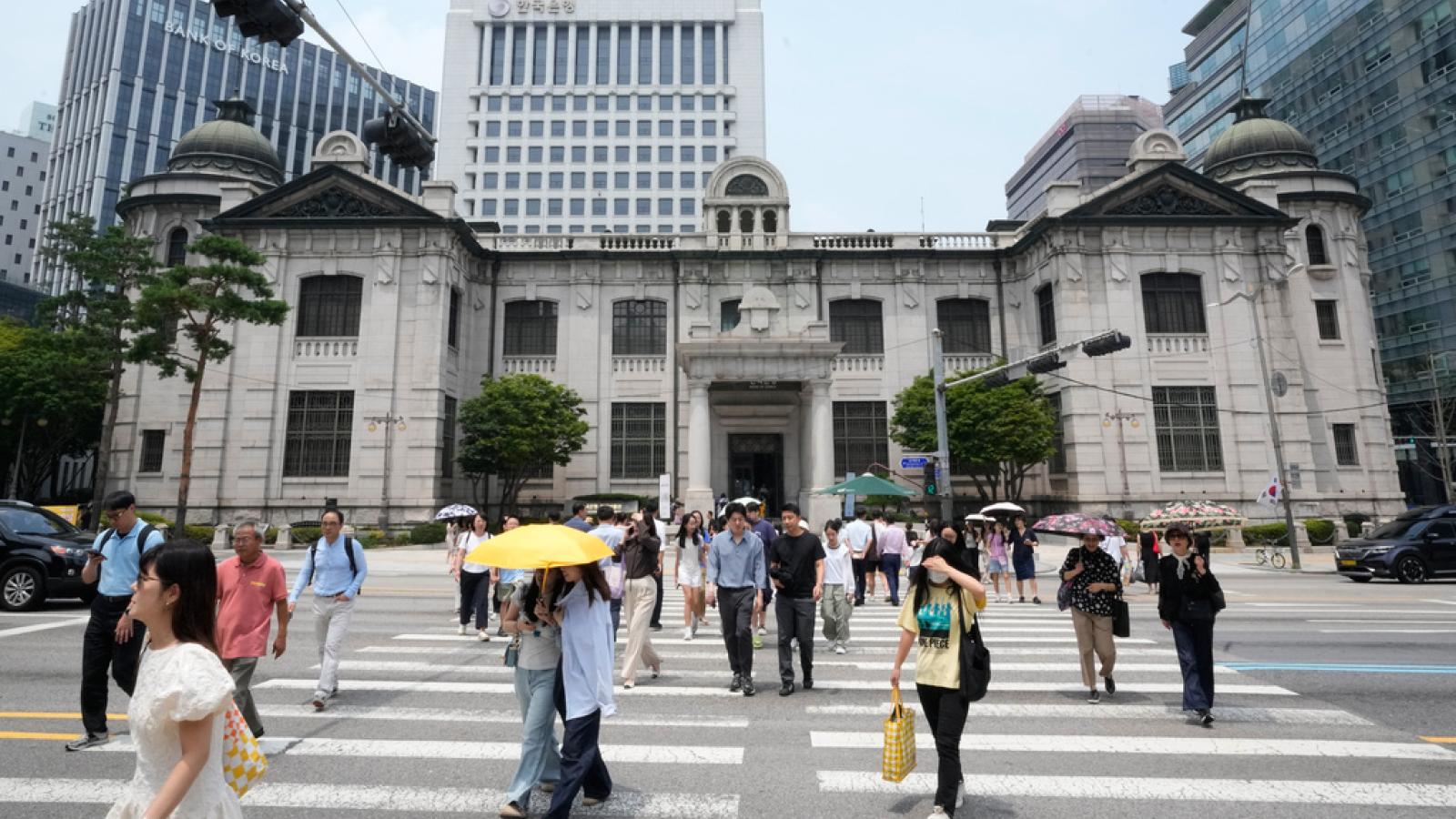
South Korean Prime Minister Han Duck-soo announced at a national policy coordination meeting that the government has set a goal to reduce traffic accident deaths by 30% by 2030. To achieve this, the government plans to expand the AI pedestrian signal automatic extension system, increase right-turn signals, and use data and advanced technology to reduce the occurrence of large and repeated accidents. South Korea had 2,549 traffic fatalities last year, averaging about 7 deaths per day. The government aims to prioritize reducing deaths among vulnerable road users such as pedestrians.
Regarding the issue of insufficient pedestrian crossing time, Han Duck-soo stated, 'We will prioritize reducing deaths among vulnerable road users such as pedestrians.' The government will expand the introduction of the AI pedestrian signal automatic extension system, which extends pedestrian crossing time based on actual traffic conditions. Right-turn signals will also continue to be added. For large and repeated accidents, South Korea will use data and advanced technology to identify high-risk factors and expand support for devices to prevent accidental pedal depression. The government will also improve systems to identify drivers with physical or cognitive limitations earlier.
Regarding the reform of the used car market, Han Duck-soo pointed out that consumers often have difficulty accurately assessing vehicle conditions, leading to long-standing distrust in the market. In the future, used car advertisements will be required to display the total transaction price, including all fees. At the same time, the South Korean government will require used car buyers and sellers to take responsibility for vehicle defects and further strengthen the responsibility of used car trading platforms. Han Duck-soo stated that the goal of these reforms is to protect consumer rights and restore public trust in the used car market.
The meeting also discussed the 'AI Basic Medical Strategy.' Han Duck-soo stated, 'Ensuring that people can receive necessary medical services in a timely manner, regardless of where they live, is a fundamental right that the state must guarantee.' In the future, AI will be used to fill gaps in medical resources in local and necessary medical and public medical services. The South Korean government plans to use AI to support medical services in areas with insufficient medical resources, and to link emergency patient transfers with hospital selection to ensure the golden hour of treatment. At the same time, the government will integrate scattered medical data to build a national-level medical data platform as the foundation for developing 'Korea-type sovereign medical AI.'
FACT BOX
- Source: PR Times
- Category: News