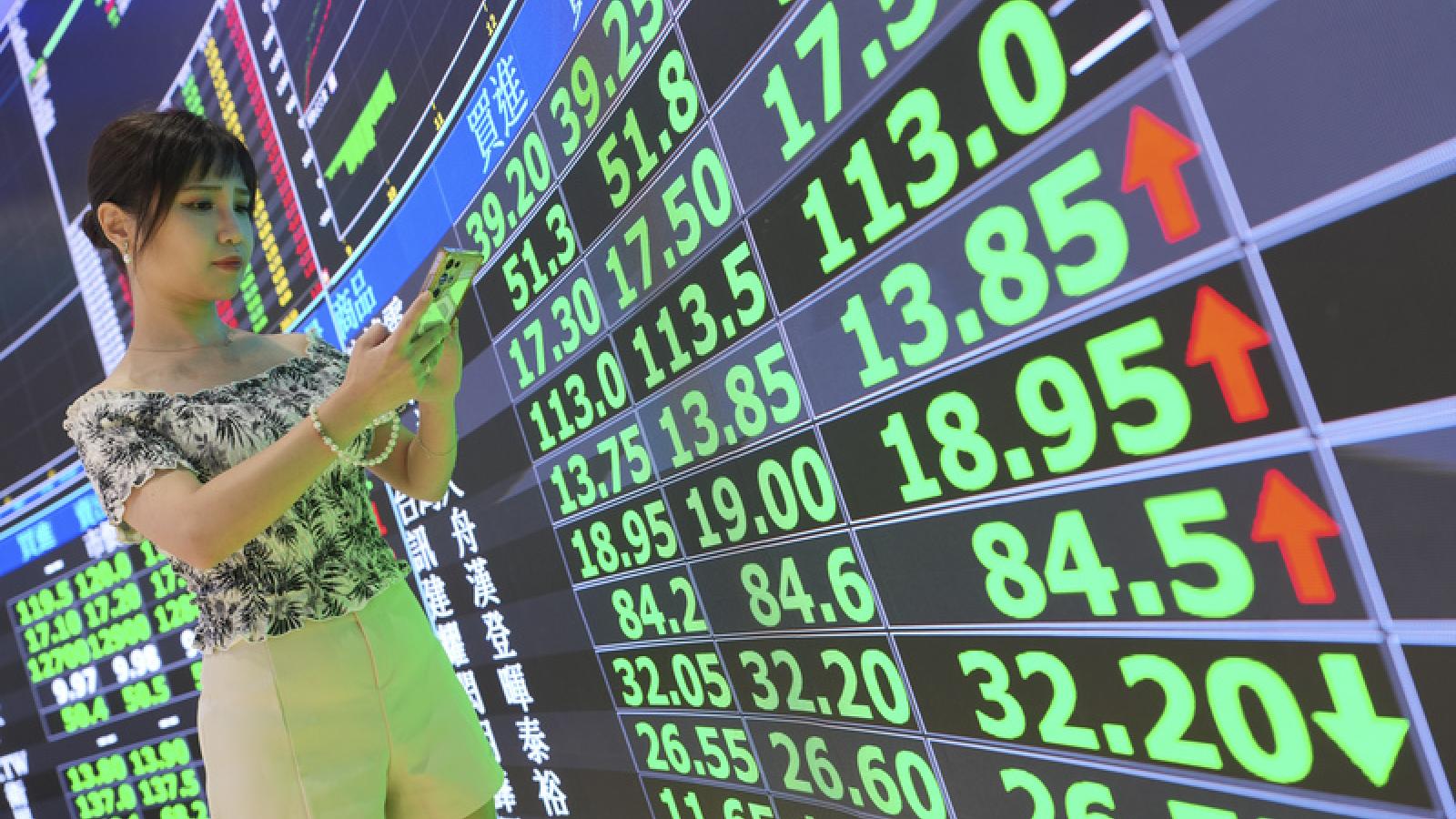
Every morning at 9 o'clock, the heartbeats of millions of people across Taiwan begin to race in sync with the red and green numbers flashing on stock trading software screens. When President Lai Ching-te declares in a public speech that the Taiwan stock market has reached 40,000 points and its market value has broken records, packaging this impressive report card as a 'shared economic miracle for all,' the entire island unknowingly steps into an extremely dangerous collective frenzy. This is not the beginning of prosperity; rather, it is more like a 'feast on quicksand' woven from policy propaganda, fiscal dependence, and social anxiety. Absurd Dialogue: 'Your salary is low, why don't you invest in stocks?' In today's Taiwan, such shocking conversations often occur at gatherings of friends: When young people complain about low salaries, barely having any money left after deducting rent and food, someone will inevitably retort with a straight face: 'Taiwan has the world's most powerful semiconductor company, TSMC! The stock market has risen so much, why don't you invest? Don't you have confidence in Taiwan? Making money in the Taiwan stock market would increase your income, wouldn't it?' This seemingly caring 'suggestion' reveals the deepest value distortion in today's Taiwan - the 'collapse of labor returns' is blamed on 'not being speculative enough'; 'structural low wages' are packaged as 'not having enough financial acumen,' and 'not loving Taiwan.' However, wages and stock profits are two entirely different things. Wages represent the pricing of 'effort and productivity' by the real economy; stocks reflect the capital market's gambling on 'future expectations.' When a society starts to popularize the idea that 'you can't make money from work because you don't invest in stocks,' it is almost declaring the death of the value of real labor. Even more cruelly, low wages have already deprived young people of their capital, not even allowing them to buy a share of the high-quality stock TSMC, and on top of that, they have to endure the accusation that 'you're poor because you don't understand investing.' Is the ultimate answer of this society to encourage everyone to abandon their professions and collectively bet in the financial market? The Treasury's Accomplice: A Meat-Cutting Game Called 'Sharing' This mindset of replacing 'distribution issues' with 'participation issues' naturally spreads from the government's policy rhetoric. Facing the younger generation's criticism that they can't afford high-priced tech stocks and that the stock market's rise only benefits others, DPP Secretary-General Hsu Kuo-yung casually points out that the government obtains tax revenue from the stock market, which is then returned to the people through rental subsidies and social welfare, and asks in return: 'Haven't you benefited?' The securities transaction tax is a 'flow tax' that must be paid even when selling at a loss, completely different from capital gains tax that shares corporate profits and stock profits. According to the Ministry of Finance's records, the actual securities transaction tax collected in the first half of 2026 was 333.6 billion yuan, far surpassing previous records. A large portion of these continuously incoming funds actually comes from the blood, sweat, and tears of retail investors who are painfully cutting losses in the market. The treasury uses the tax revenue from retail investors' losses to issue subsidies, then turns around and tells the people: 'Look, the stock market has surged, you've all benefited!' The government's responsibility to address low wages and distributive justice is washed clean in this rhetoric. Dangerous Gambling: Day Trading Becomes the 'Rational Choice' for the Young Even stock guru Warren Buffett has recently issued stern warnings in his shareholder letters: today's financial markets are more like a 'casino' than when he was young, filled with short-term speculation and gambling-style asset allocation. Many high-valued assets do not truly create long-term value, only displaying frenzy and violent fluctuations. This 'casino-like' madness is fully exposed in the Taiwan stock market. Even though most listed companies reported impressive high-growth performance in July, the market is like a roller coaster with failed brakes - in just one month, it consecutively set records for the largest single-day drop and the largest single-day rise. Out of 22 trading days in July, 14 days had high-low differences exceeding 1,000 points. When the salary increases from steady work can never catch up with the soaring housing and commodity prices, entering the financial market to chase asset prices becomes a forced breakthrough for small citizens who are desperate about reality. The nearly 200,000 day-trading army every day and over 50% of retail trading volume reflect the severe distortion of social psychology. Stock market newcomers see their friends making half a year's salary in the stock market in just a few months, and the 'FOMO' (Fear of Missing Out) atmosphere is rampant, leading them to actively engage in high-leverage operations through credit loans, home equity loans, and margin trading. When extreme volatility becomes the norm, retail investors dance on the edge of leverage. Taking the standard margin trading ratio of 6 for Taiwan-listed stocks as an example: brokerage borrowing 60%, investor's own funds only 40%, the initial leverage is as high as 2.5 times. If the stock price fluctuates by 10%, the investor's capital gains and losses will immediately be magnified to 25% (not yet including the 6-7% annualized interest cost). If it's credit plus margin trading, the leverage multiple is even larger. This gamble has a fatal 'mismatch of terms.' The initial maintenance rate for margin purchases is approximately 166% to 167%, but under the daily 10% price limit and the daily high-pressure washing with thousands of points, retail investors who have opened leverage will face a margin call and forced liquidation as soon as they are hit by two consecutive limit-down days, with the maintenance rate dropping below the 130% warning line. Although management knows that even good financial reports require caution and not panic selling during downturns, in such huge fluctuations, many families who have put their mortgages and retirement funds on the line cannot maintain rationality and are often forcibly liquidated in the turbulent waves, with years of savings vanishing in an instant. Under the Song and Dance: The Disappearing Warning Lights The Lai administration has tightly tied 'stock market rise' with 'government performance,' so this grand show naturally cannot tolerate bad news spoiling the party. Thus, we witnessed an absurd scene: when the market fell into severe correction in mid-to-late July, and retail investors were struggling on the edge of forced liquidation, the historical data of the maintenance rate of private investment platforms was suddenly removed and updated. The official used the 'average safe maintenance rate' including institutional legal entities and short positions to loudly sing an empty city tune, covering up the bloody reality that small and medium-sized stock retail investors had been forced to liquidate. This approach is like a driver in a storm driving at high speed, finding the engine overheating warning light on the dashboard too glaring, and simply smashing it. Blocking bad news cannot stop the storm from coming. When investors lose objective data and can only trade 'blind boxes' in the fog, blind panic will spread like a plague, causing the market to completely lose its self-regulating ability in an environment full of rumors. Escaping Virtual Prosperity, Don't Build Skyscrapers on Quicksand We must soberly recognize that although Taiwan has world-leading wafer manufacturing capabilities, at the end of the day, we are still at the very end of the American AI value chain and production chain. Relying 100% on the assumption of unlimited capital expenditure expansion by global tech giants is like building skyscrapers on quicksand. Current Taiwan is mistaking 'virtual inflation of financial assets' for 'robust real economy.' When the market rises: benefits are politicized and packaged into dazzling propaganda and achievements. When the market falls: the despair of forced liquidation and the evaporation of assets are completely privatized, leaving countless broken families to silently swallow the losses. Covering the dashboard cannot prevent accidents from happening. The Lai administration must stop numbing the public with the false glory of 'song and dance,' and instead turn to substantial tax reform, strict regulation of high-risk leverage, and let funds flow back to the real economy and housing justice. A healthy country should ensure that those who work diligently can afford rent, support their families, and retire stably with their salaries; it must not force young people to abandon their professions and engage in a national gambling game on the dangerous quicksand.
FACT BOX
- Source: PR Times
- Category: News