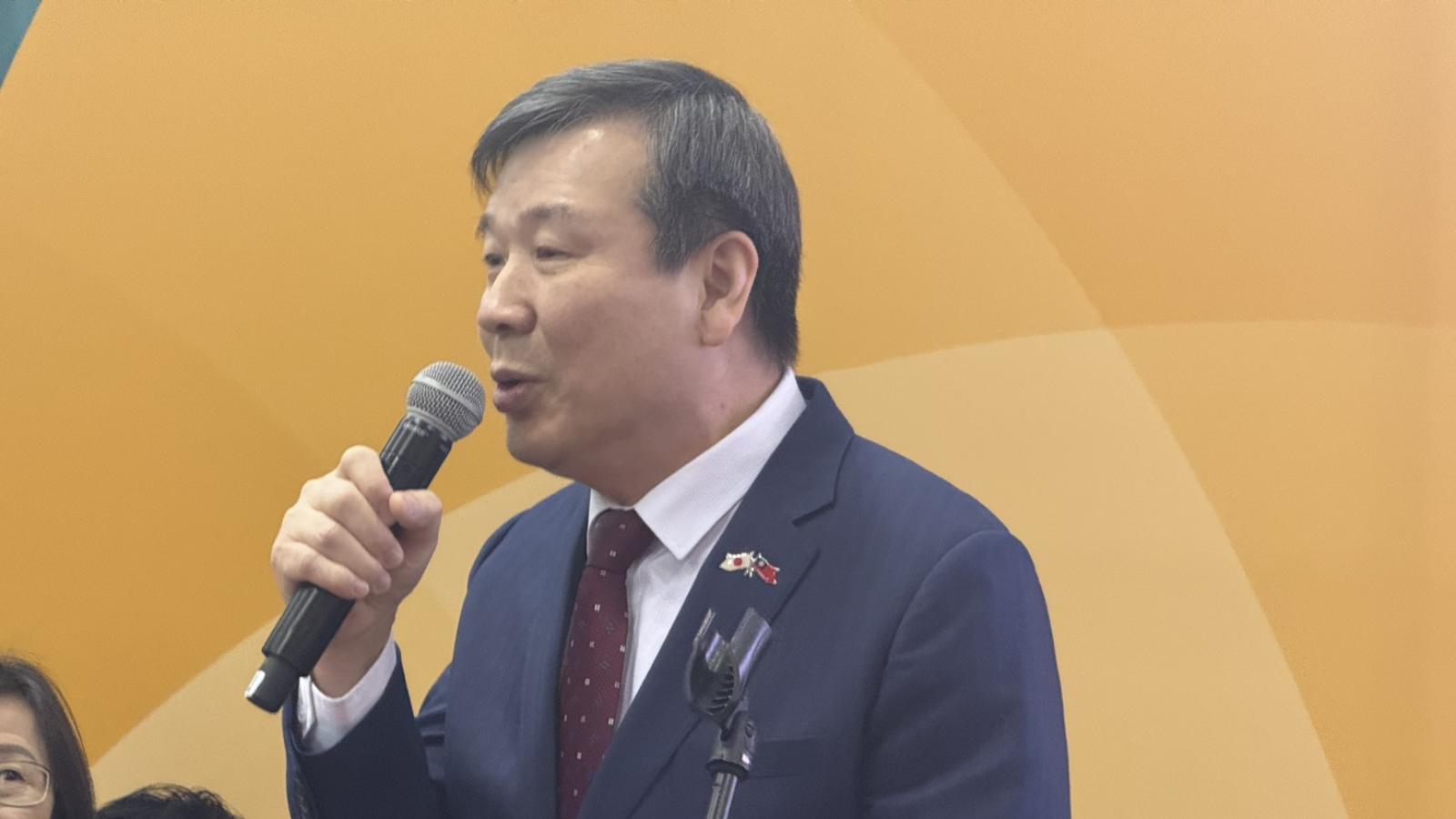
Taiwan's Representative to Japan, Lee I-yang, attended the Hiroshima Peace Memorial Ceremony today (6th) with five other members of the Taiwan delegation, including Taipei Economic and Cultural Representative Office in Osaka Director-General Fan Chen-kuo, alongside representatives from 126 countries and regions worldwide. This marks the second time Taiwan has participated in the Hiroshima Peace Memorial Ceremony after the war, following its first official attendance last year on the 80th anniversary of the atomic bombing.
Lee stated that 81 years ago today, the first atomic bomb in human history was dropped on Hiroshima, killing 140,000 people and leaving countless hibakusha (atomic bomb survivors) suffering lifelong radiation injuries. The ceremony mourns the souls of the victims and comforts those harmed by the bombing. He joined representatives from other nations in strongly calling for a world free of nuclear weapons and the pursuit of lasting peace.
Lee emphasized that humanity must learn from the tragic costs of war to prevent such disasters from recurring, transforming the collective memory of suffering into a shared international force for peace and stable development. He noted that many Taiwanese were among the victims—working, studying, or serving as Taiwanese Japanese soldiers in Hiroshima at the time—and expressed Taiwan's profound condolences and sympathy to the victims and their families.
Lee pointed out that while the world pursues lasting peace, China—seeking to alter the peaceful status quo across the Taiwan Strait and destabilize peace and stability in the Indo-Pacific region—is expanding its nuclear arsenal at an alarming pace, posing the gravest threat to global peace. According to research by internationally respected think tanks such as the Stockholm International Peace Research Institute (SIPRI), the Federation of American Scientists (FAS), and Japan's Sasakawa Peace Foundation, China is expanding its nuclear weapons faster than any other country and is the only one among the five Nuclear Non-Proliferation Treaty (NPT)-recognized nuclear-weapon states (the United States, Russia, the United Kingdom, France, and China) significantly increasing its nuclear arsenal. China had 410 nuclear warheads in 2023, which has now risen to 610, and is projected to reach 2,000 by 2035—matching the nuclear stockpiles of the United States and Russia.
Lee stressed that the Hiroshima Peace Memorial Ceremony symbolizes the global pursuit of peace, but the international community must confront the reality that China, the greatest potential destroyer of world peace, is using nuclear expansion to threaten peace. The tragedy of nuclear disasters must never be repeated. Like-minded democratic nations must unite and use collective strength to defend the global stable order and achieve true, lasting peace.
Today, the Taiwan delegation was seated in the diplomatic corps section, adjacent to ambassadors and delegation members from diplomatic allies Paraguay and the Holy See, as well as Israel, India, and Armenia. Lee exchanged greetings with the ambassadors of Paraguay, Haiti, the Holy See, India, and other nations accredited to Japan.
FACT BOX
- Source: PR Times
- Category: News