Recently, a young boy in Chiayi died within three days after his A-type influenza infection rapidly worsened. Similar severe pediatric cases have also been reported in Hong Kong, raising concerns among parents. Dr. Li Bing-Ying from the Department of Pediatric Infectious Diseases at National Taiwan University Children’s Hospital warns that the greatest threat of influenza lies not just in fever, but in its potential to quickly develop into severe complications such as pneumonia or encephalitis—even within hours. Disease progression can occur not only day by day, but even hour by hour.
Influenza Is No Longer Just a Winter Illness — Summer Outbreaks Must Not Be Overlooked
Previously, the public widely believed influenza was only a concern during autumn and winter. However, Taiwan has experienced multiple summer influenza outbreaks in recent years, showing that the virus can circulate year-round and is no longer confined to winter. With increased summer travel, camps, tutoring classes, and various indoor activities, human contact becomes more frequent, creating greater opportunities for influenza transmission. Doctors warn that even during hot summers, individuals should remain vigilant if symptoms appear and should not delay seeking medical care simply because 'it’s not flu season.'
Sudden High Fever and Body Aches Are Key Differences
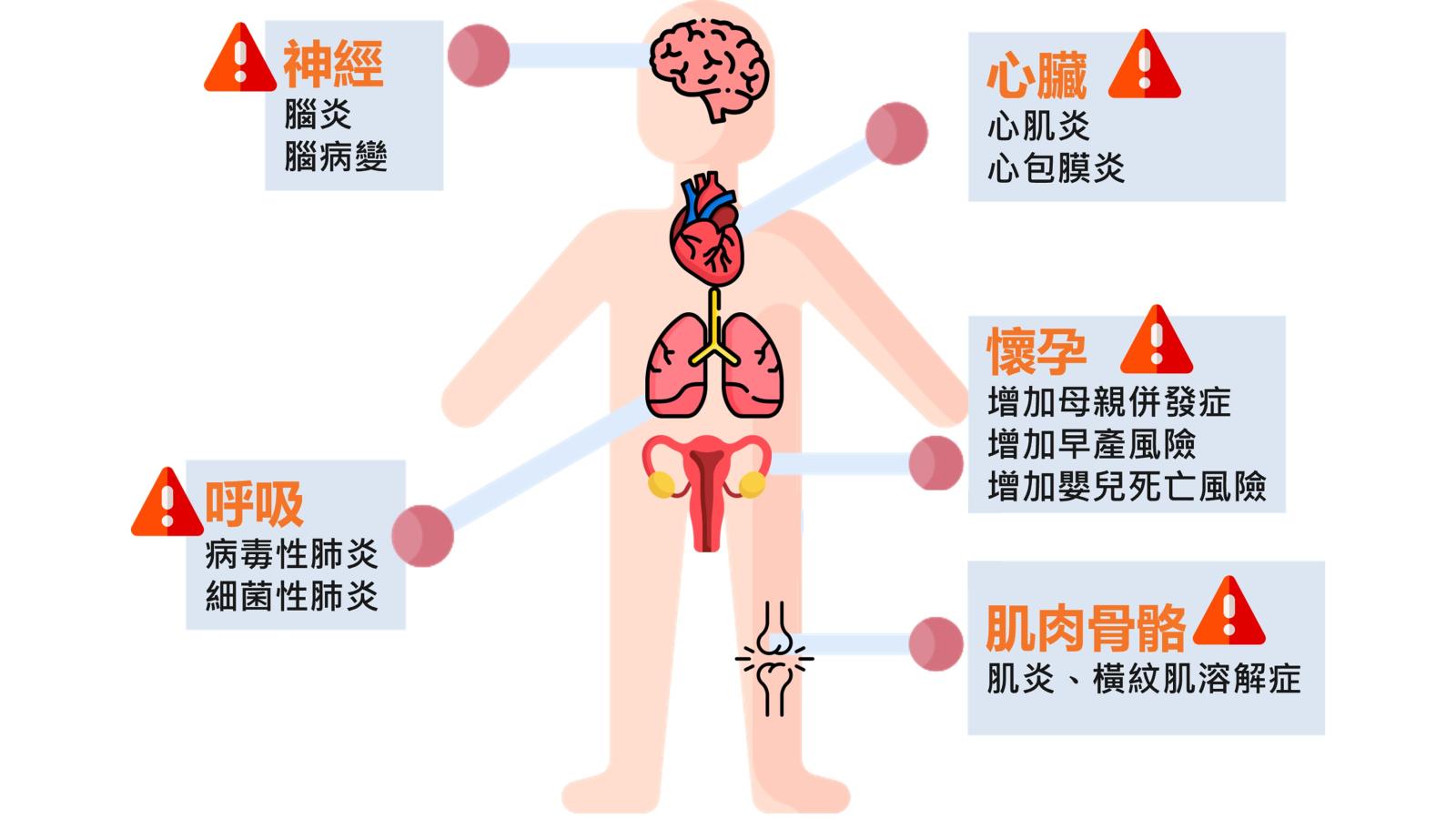
Many people mistake influenza for the common cold, but there are clear distinctions. Common colds typically develop gradually, with symptoms like runny nose, nasal congestion, or sore throat. In contrast, influenza often strikes suddenly, with high fever, body aches, headache, extreme fatigue, and weakness appearing rapidly—symptoms that may last one to two weeks. Children may also experience gastrointestinal symptoms such as nausea, vomiting, or diarrhea when infected. Doctors emphasize that influenza is not merely a respiratory illness; it can trigger systemic inflammation, potentially leading to severe complications like pneumonia, encephalitis, or myocarditis. High-risk groups include young children, adults over 65, pregnant women, and those with chronic diseases. However, recent years have also seen healthy young adults developing severe cases, so no age group should let their guard down.
Multiple Treatment Options Available — Early Medical Care Within the Golden 48 Hours Is Crucial
Doctors stress the importance of the 'golden 48 hours' in influenza treatment. Studies show that the earlier patients receive medical evaluation and appropriate intervention, the better the chances of suppressing viral replication and reducing the risks of worsening symptoms and severe complications. Therefore, when children show suspected flu symptoms, relying solely on fever reducers and observation is insufficient—prompt professional medical consultation is essential.
Currently, several antiviral medications are clinically available, including Tamiflu (Oseltamivir), Relenza (Zanamivir), and Xofluza (Baloxavir). Dr. Li Bing-Ying notes that these drugs differ in mechanism of action, administration methods, and suitable patient groups, with formulations including oral, inhaled, and injectable forms. Physicians must assess each patient’s age, severity of illness, and overall health to determine the most appropriate treatment plan.
Doctors Urge Vigilance — Never Treat Influenza as Just a Common Cold
Dr. Li Bing-Ying emphasizes that influenza is far more than 'just a bad cold.' Recent domestic and international pediatric severe cases demonstrate how flu conditions can deteriorate rapidly within a short time. Influenza outbreaks may not end with the season—they could continue in waves. Taiwan is currently facing a situation where both influenza and the novel coronavirus are circulating simultaneously. Regardless of age—children, young adults, or seniors—anyone exhibiting flu-like symptoms should stay alert, seek timely medical evaluation, and follow medical advice for proper treatment to reduce the risks of severe illness and complications.
FACT BOX
- Source: PR Times
- Category: News