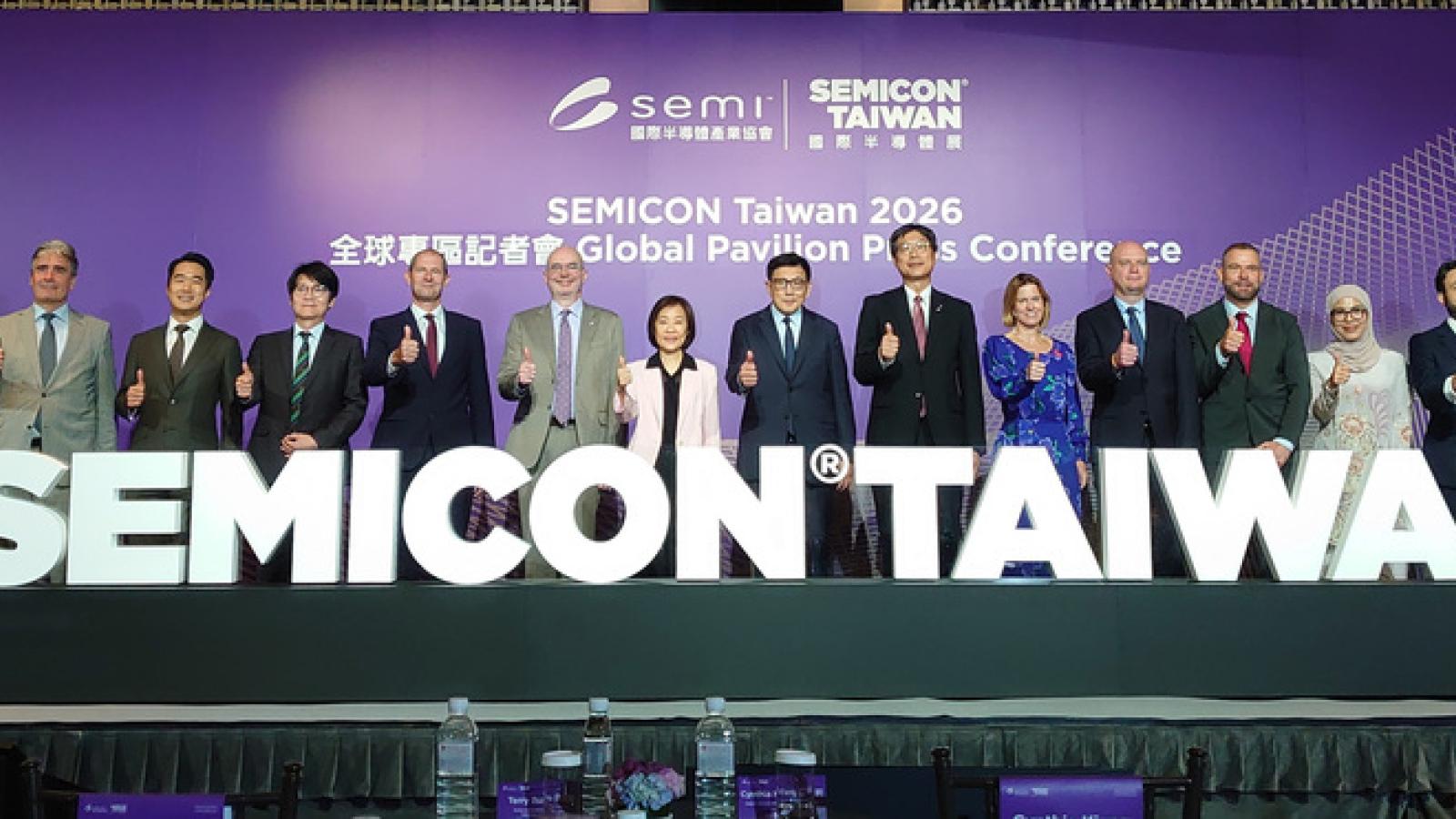
Costa Rica, a Central American nation that severed diplomatic ties with Taiwan 19 years ago, is once again turning its attention to Taiwan's semiconductor industry. SEMICON Taiwan 2026 will be held from September 2 to 4 at the Taipei Nangang Exhibition Center, and the latest official list of national pavilions reveals that Costa Rica will establish a national pavilion for the second consecutive year. In recent years, Costa Rica has been actively investing in the semiconductor sector, hoping to find investment and cooperation opportunities through Taiwan’s complete chip supply chain, even though the two sides no longer have formal diplomatic relations—industrial exchanges continue to grow.
Costa Rica severed ties with Taiwan in June 2007 and established diplomatic relations with China. In 2025, however, the country made its debut at the SEMICON Taiwan national pavilion, led by PROCOMER (Costa Rican Foreign Trade Promotion Agency), the agency responsible for attracting foreign investment and promoting exports. SEMI confirmed last year that Costa Rica was one of the first-time national pavilion participants that year.
This year, Costa Rica again appears on SEMICON Taiwan’s official list. SEMI notes that in 2026, a total of 18 countries will participate in the global pavilion, with booth numbers increasing from 62 in 2023 to 220—an increase of over 250%, both setting new records. Japan leads with 51 booths, while Germany and the Netherlands have participated for five consecutive editions.
Why Focus on Taiwan?
Costa Rica’s push toward Taiwan’s semiconductor industry is tied to its national industrial strategy. In March 2024, the Costa Rican government released the 'Roadmap to Strengthen the Costa Rican Semiconductor Ecosystem,' aiming to transform the country into a regional semiconductor hub through talent development, foreign investment attraction, and industrial upgrading. The local semiconductor industry currently creates approximately 5,000 direct jobs.
Manuel Tovar, Costa Rica’s Minister of Foreign Trade, has directly highlighted Taiwan’s importance. According to reports from 'Central America 360,' he stated during a congressional briefing that about 60% of the world’s chips are manufactured in Taiwan, with around 90% of high-end chips also produced there. In response to criticism over PROCOMER’s engagement with Taiwan, Tovar firmly stated, 'PROCOMER will go if necessary, regardless of who likes it or not,' emphasizing that his responsibility is 'to create job opportunities for the Costa Rican people.'
Setback for Semiconductor Ambitions? Intel Consolidates Assembly and Test Operations in Costa Rica
However, Costa Rica’s semiconductor ambitions have not been without challenges. In July 2025, Intel announced a restructuring of its global manufacturing footprint, deciding to consolidate its assembly and test operations in Costa Rica into larger facilities in Vietnam and Malaysia—posing a challenge to Costa Rica’s goal of becoming a semiconductor hub.
Nonetheless, Intel emphasized that Costa Rica remains an important site, with key engineering teams and corporate functions continuing to be based locally.
Amid Intel’s production realignment, Costa Rica has not slowed its semiconductor investment outreach. From its first delegation to Taiwan in 2025 to its second national pavilion this year, the country’s actions demonstrate that in the context of global semiconductor supply chain reconfiguration, Taiwan—with its complete semiconductor cluster—remains an indispensable market for Costa Rica in seeking technological, supply chain, and investment partnerships.
FACT BOX
- Source: PR Times
- Category: Event
- Organizations: Intel / PROCOMER