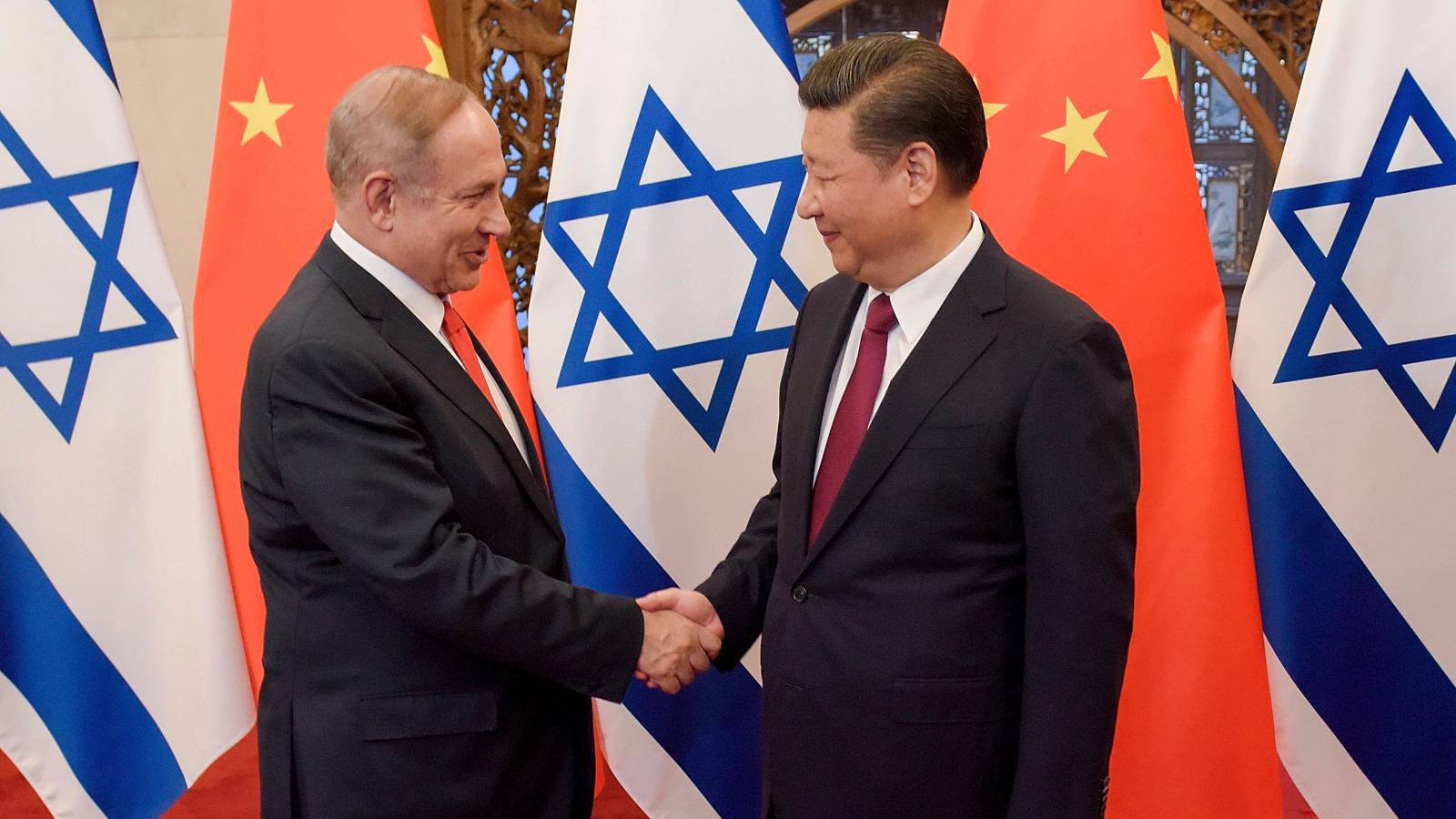
From the "cooperation is just getting hot" in 2014 to the formal withdrawal in 2026, Israel is losing an important diplomatic foothold in southwestern China. According to an announcement by the Israeli Ministry of Foreign Affairs, the Israeli Consulate General in Chengdu will officially cease operations from July 15, 2026, and will no longer provide visa and other consular services. Israeli citizens and foreigners needing such services will have to go to other official Israeli representative agencies in China.
Israeli Consul General Han Jadi posted a farewell message on social media on the 5th, stating, "With the end of my term, the Israeli Consulate General in Chengdu will also officially close."
On November 17, 2014, the Israeli Consulate General in Chengdu officially opened. According to reports from the Sichuan Provincial Government at the time, this was the fourth consular institution established by Israel in China after Shanghai, Guangzhou, and Hong Kong, with jurisdiction over Sichuan, Chongqing, Guizhou, and Yunnan. The Sichuan government at the time described the establishment of the consulate as a "bridge of friendship from China's western region to Israel," reflecting the expectations of both sides for cooperation in economy, agriculture, technology, and culture.
From "China's Western Window" to withdrawal from Chengdu
China and Israel formally established diplomatic relations in 1992. By the 2010s, one of the key words in Sino-Israeli relations was cooperation in technology and innovation. The bilateral relationship data of the Israeli Consulate General in Chengdu also lists 2014 as an important milestone: in addition to the establishment of the Chengdu consulate, the Sino-Israeli Innovation Cooperation Committee was also launched in the same year.
Located in the "Dongjiao Memory" art district in Chengdu, transformed from a state-owned factory in the 20th century (photographed by Tian Chang)
For Israel, Chengdu is not a replacement for Beijing, but a "regional hub." Behind it is the vast market of southwestern China, as well as the demand for agricultural technology, water-saving technology, medical care, biotechnology, innovation and entrepreneurship, and urban development in Sichuan, Chongqing, Yunnan, and Guizhou.
In 2013, the trade volume between Sichuan and Israel reached 6.5 billion US dollars, with a year-on-year increase of 40.9%. Chengdu and Haifa, Israel, have also established an international friendship city relationship.
This time, the official reason for the closure given by Israel is to streamline regional bases in the central and western regions and prioritize the concentration of resources on the Israeli Embassy in Beijing and the Consulate General in Shanghai.
Consul General Han Jadi's farewell message mentioned that the "Rongcheng" (the diplomatic alias for Chengdu, Guangzhou is Hui, Beijing is Jing) years are unforgettable experiences in his diplomatic career, and the friendship between the two sides will be cherished in the heart. However, on Chinese social media, the reaction was lukewarm or even cold—some associated it with budget and military expenditure pressure after the Palestinian-Israeli conflict.
Closure does not mean breaking off diplomatic relations, but it does represent the reallocation of diplomatic resources
It is worth noting that this is essentially different from the closure of the U.S. Consulate General in Chengdu in 2020. At that time, the U.S. first demanded the closure of the Chinese Consulate General in Houston, and China then notified the U.S. to revoke the establishment and operation permit of the Chengdu consulate based on the principle of reciprocity. The U.S. lowered the flag and closed the consulate within 72 hours, and there were even onlookers and patriotic songs on the scene. That was a passive closure under intense diplomatic competition.
When Israel opened the consulate in 2014, Sino-Israeli relations were relatively stable, and there was room for cooperation between the two countries in the fields of technology, agriculture, and innovation. After the war between Israel and Hamas broke out in October 2023, the situation in the Middle East deteriorated sharply; since then, Israel has been in continuous conflict with Iran, Hezbollah in Lebanon, and other parties. China has repeatedly called for a ceasefire and focused on civilian safety in multilateral forums such as the United Nations, with its stance clearly diverging from that of the current Israeli government.
The most special aspect of Sino-Israeli relations is that the two countries can maintain high interaction in the economic and technological fields, but their political and strategic interests are not completely consistent.
In particular, after the intensification of U.S.-China technological competition, if Israel wants to deepen high-tech cooperation with China, it will inevitably have to consider its strategic relationship with the United States at the same time.
Chengdu becomes a typical window for China's opening up to the outside world in the southwestern region after Shanghai and Beijing
Sichuan is one of the provinces with the most concentrated population, economy, and technological resources in western China, and Chengdu is the provincial capital of Sichuan. Therefore, when foreign countries set up consulates general in Chengdu, they are not only serving Sichuan, but also using Chengdu as a diplomatic foothold radiating to multiple provinces in the southwest.
Chengdu ranks third in the number of consular institutions on the Chinese mainland, second only to Shanghai and Guangzhou. This city has been the location of diplomatic agencies from the United States, Australia, Germany, France, Canada, and other countries. In recent years, there are still more than ten consulates general from Germany, South Korea, Singapore, Turkey, Brazil, and other countries operating here. The departure of the Israeli consulate will make this western hub lose one direct window to the Middle East.
In China's diplomatic map, Chengdu has long played the role of a diplomatic hub in the southwest. The foreign exchanges of Sichuan, Chongqing, Yunnan, and Guizhou in the southwestern region have long taken Chengdu as an important node, and the jurisdiction of foreign consulates in Chengdu often crosses a single province and city.
FACT BOX
- Source: PR Times
- Category: News