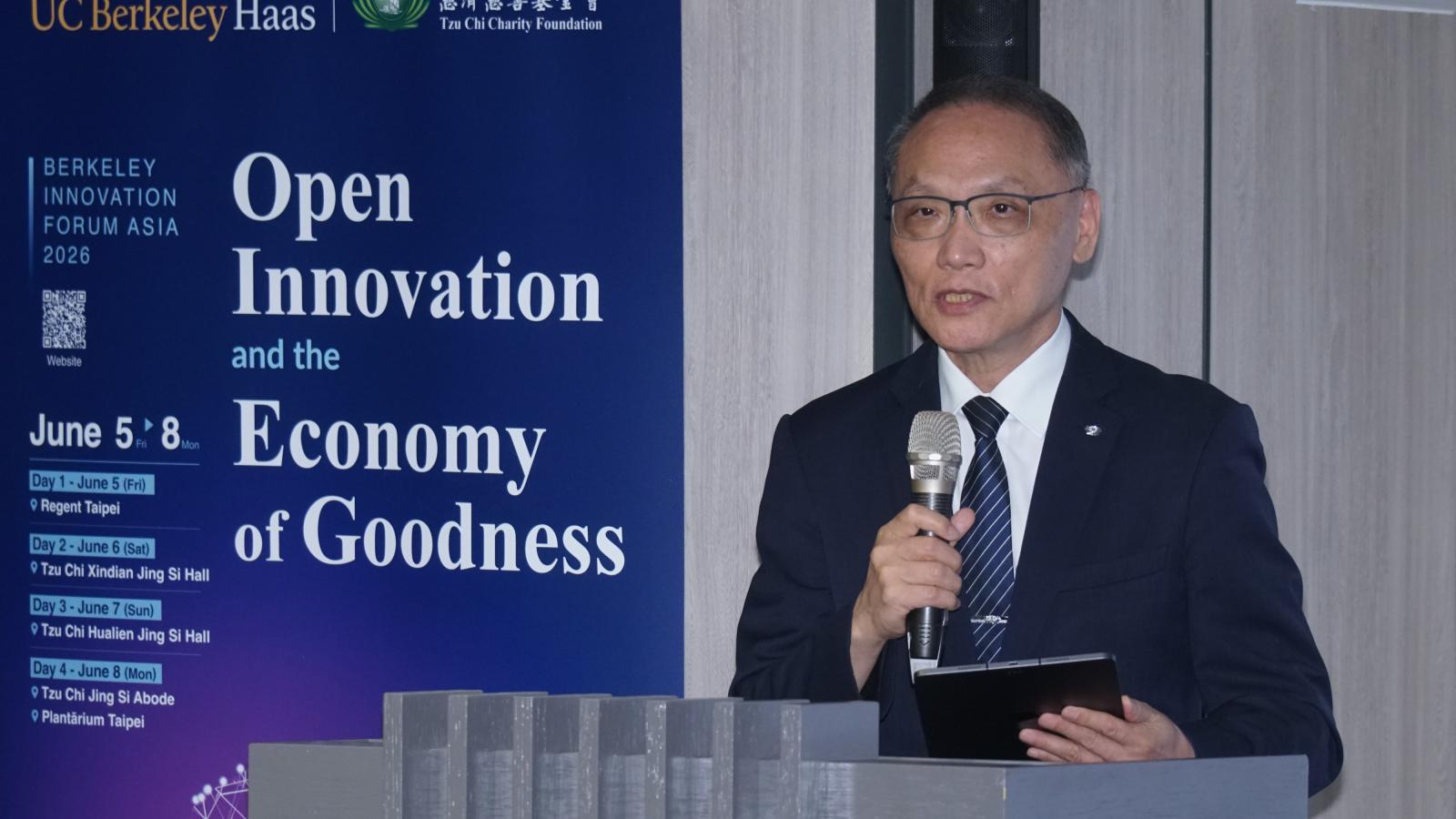
The Tzu Chi Foundation has come under intense scrutiny after revelations that it lost over NT$10.6 billion (approximately USD 300 million) in a 2021 scam involving the procurement of 5 million doses of the BNT vaccine. Former Executive Yuan official Ker Ching-sen posted on Facebook today (9th) questioning who should bear primary responsibility for the loss. Citing details from the prosecutors’ indictment, Ker argued that Yen Po-wen, then CEO of Tzu Chi, should take full managerial responsibility and resign. He also urged Tzu Chi to immediately establish an independent external investigation committee to clarify facts, assign accountability, and reform internal systems—not only asking, “Why were we deceived?” but also, “Why was Tzu Chi so easily deceived?”
During the pandemic, Taiwan faced a critical vaccine shortage. In response, Tzu Chi sought to procure 5 million doses of the BNT vaccine and entrusted the task to Yu Da Company, led by Chen Yu-hsuan, paying over NT$1 billion in commission fees. However, the deal was later exposed as a fraud following an investigation by Taichung District Prosecutors’ Office.
Ker highlighted a crucial signal from July 19, 2021: Yen Po-wen reported that in the procurement proposal submitted to the Master, costs included not only the vaccine price but also “liaison fees” and “cold chain logistics fees.” The Master reportedly questioned, “Why are there these latter two components?” Ker emphasized this as a critical red flag: “The Master noticed abnormal expenditures and raised concerns.”
The problem, Ker noted, was that Tzu Chi only sought clarification from the party receiving the fees—whose explanation was naturally self-serving. Yen Po-wen and senior executives accepted it without conducting cross-verification with third parties such as the government, TSMC, or Foxconn. This failure to perform due diligence (DD) was, according to Ker, the primary reason for the deception.
Ker further questioned the payment timeline. On July 1, 2021, the government approved Tzu Chi’s special procurement plan, mirroring the TSMC and Foxconn/Yonglin model. The first batch of BNT vaccines arrived on September 2, 2021, and all 5 million doses were delivered by January 27, 2022. Yet, the NT$10.6 billion (USD 300 million) commission was paid in installments from July 2021 through March 2022—after all vaccines had arrived.
During this period, Tzu Chi’s administrative team should have clearly understood that the government’s special arrangement had already succeeded and the intermediary provided no actual service. Why, then, did they continue paying such a massive commission?
Ker stressed that it was unreasonable to expect an 85-year-old religious leader to personally oversee such complex transactions. Credit checks, contract verification, payment validation, and risk control are the core responsibilities of a professional administrative system. Once the Master raised concerns, the administrative team had a duty to investigate thoroughly. If even these tasks fall to the Master, what is the purpose of having a CEO, legal, finance, and audit departments?
While Ker stated he believes in Yen Po-wen’s personal integrity and that criminal liability should be determined by the judiciary, he insisted that administrative responsibility cannot be evaded. Paying such a large sum without effective verification, even after a warning from the Master, constitutes a major governance failure.
Ker emphasized that the administrative system exists precisely to protect decision-makers from fraud. As the top executive, Yen Po-wen must take full responsibility and resign—not as a judgment on his character, but as an act of accountability to society. Furthermore, Tzu Chi must immediately establish an independent external investigation committee to fully clarify the contracting, due diligence, payment, acceptance, and tracking processes, hold others accountable, and actively reform its decision-making and internal control systems.
FACT BOX
- Source: PR Times
- Category: News