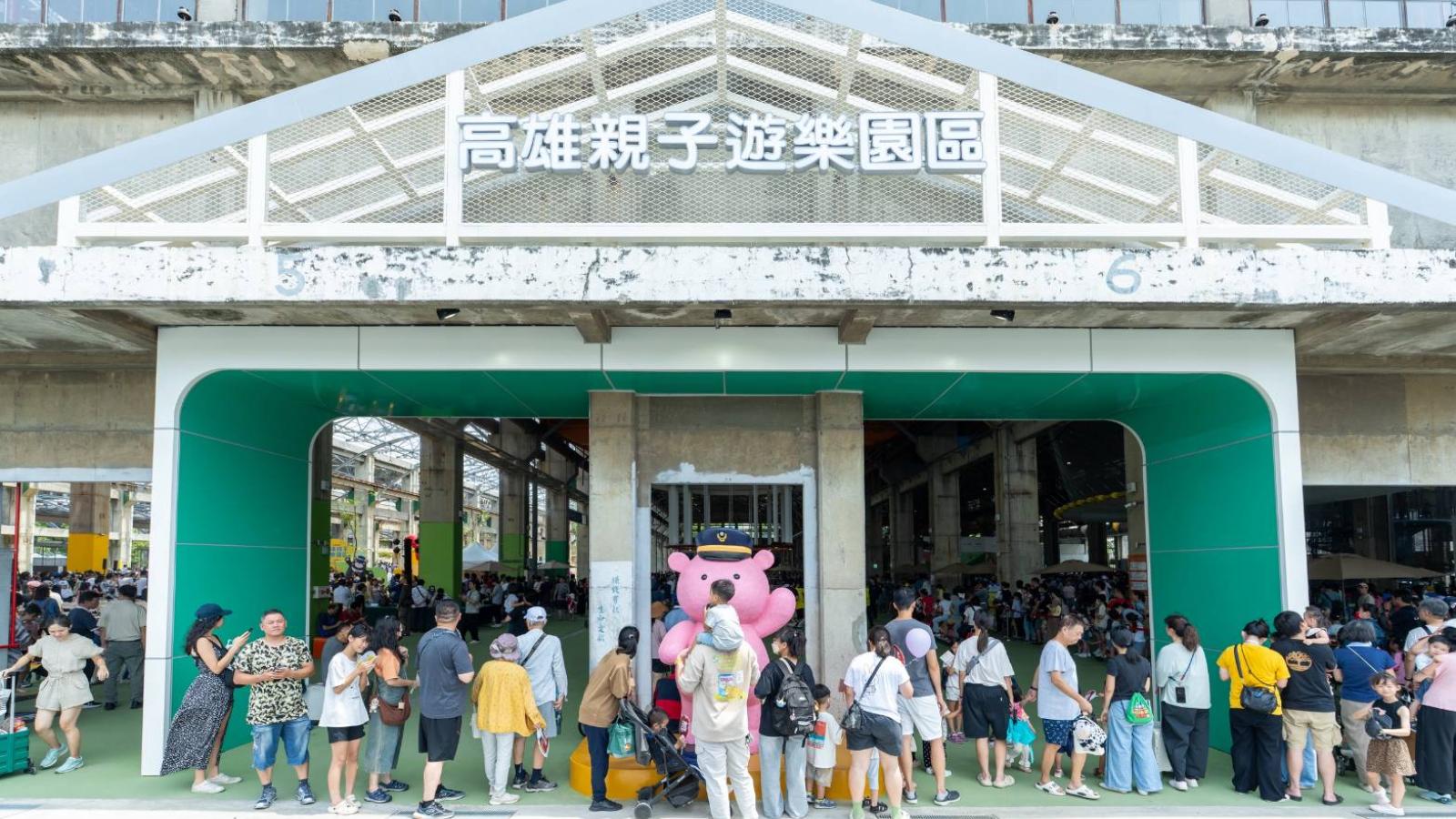
Kaohsiung’s old railway plant has undergone a stunning transformation! The largest family amusement zone in Taiwan, the 'Kaohsiung Family Amusement Zone,' officially opened yesterday (8th), drawing over 30,000 visitors on its first day. Foot traffic at the nearby Kaixuan Wuchang Light Rail Station surged 20 times compared to regular days, demonstrating strong public anticipation for this new family-friendly recreational space. TRA Chairman Cheng Kuang-yuan personally attended the opening ceremony and praised the urban plan amendment, thanking the Kaohsiung City Government team for their long-term commitment. He highlighted how the plan allowed the historic plant to regain its urban significance—preserving precious railway heritage while transforming it into a public space nurturing the next generation.
Kaohsiung Mayor Chen Chi-mai stated that the 28-hectare TRA Kaohsiung Depot holds cherished memories for many locals. With urban planning changes and land revitalization, the site has finally opened its gates to the public. While preserving its high-ceiling steel structures and railway industrial character, the park introduces over 30 age-specific and zoned recreational facilities. These include Taiwan’s first 'Overhead Crane Cloud Net Play Structure,' as well as climbing walls, parkour courses, and roller sport slopes—ensuring the historical site isn’t just preserved but becomes a dynamic urban stage for children to explore, play, and grow.
This urban transformation from 'plant' to 'family park' was not achieved overnight. The urban planning amendment process for the TRA Kaohsiung Depot began in 2014 (Year 103), driven collaboratively by Kaohsiung’s Urban Development Bureau, Land Administration Bureau, Transportation Bureau, and Public Works Bureau. After nearly a decade of coordination, the plan passed review by both the Ministry of the Interior and the Kaohsiung City Urban Planning Commission in 2025 (Year 114). The first phase of the urban plan amendment was officially announced and implemented on June 30 this year, marking a pivotal step in revitalizing the historic site.
According to the Urban Development Bureau, through this urban plan amendment and land回馈 mechanism, TRA returned approximately 12.6 hectares of land. The city acquired 2.84 hectares for lease as light rail depot space, saving the municipal budget approximately NT$17.81 million annually. Additionally, 9.76 hectares were designated as public facility land, gradually converting the formerly closed-off railway area into shared public space for citizens.
Moreover, TRA donated 2.65 hectares of social welfare facility land along with the existing 'Freight Car Workshop' building. The city government will re-plan and revitalize these assets, skillfully integrating 70 years of railway industrial history with modern recreational facilities. Former workshops that once echoed with train repairs now serve as playful spaces where children run, climb, and play—transitioning historical architecture from mere 'preservation' to active 'utilization' and giving urban memory a renewed life.
The enthusiastic crowds on opening day underscored the success of this urban transformation. Over 30,000 people visited the park, and daily entries/exits at the Kaixuan Wuchang Light Rail Station increased about 20-fold compared to normal days—not only meeting family leisure demand but also demonstrating the synergistic benefits of integrating public transit with large-scale public infrastructure.
The Urban Development Bureau emphasized that the birth of the Kaohsiung Family Amusement Zone represents a triple-win outcome from collaboration between the city and TRA in revitalizing state-owned assets: TRA released land while preserving valuable railway culture; the city created land and financial benefits through integrated urban planning and public construction; and citizens gained a high-quality public space combining historical culture, recreation, and family interaction.
Moving forward, the bureau will continue collaborating with city departments and central agencies, using urban planning as a key tool for urban transformation to revitalize idle or underutilized land. By preserving history, improving transportation, and creating family-friendly recreational spaces, every piece of land in Kaohsiung will be optimized to build a more livable and compassionate city.
FACT BOX
- Source: PR Times
- Category: Event