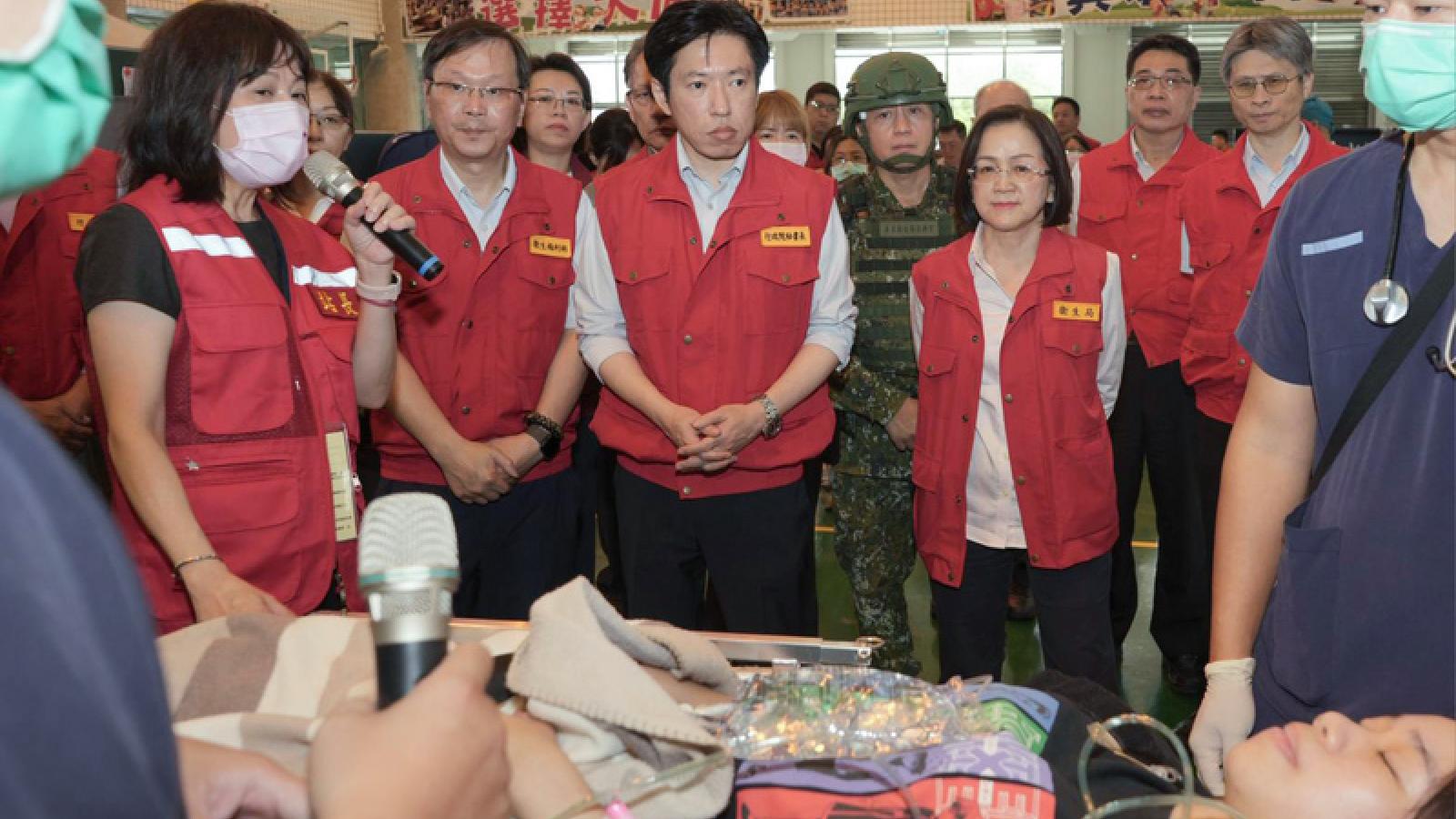
Around the dinner table, a family suddenly starts discussing urban resilience drills. The father asks, "If war really breaks out, should we stock up on a few extra cases of water at home?" The mother follows up: "Should we keep some cash on hand? If the power goes out, will ATMs and mobile payments still work?" The child is even more direct: "If it's really this dangerous, shouldn't we leave Taiwan?" What began as a casual conversation about a thirty-minute air raid drill quickly turns into a discussion about war. This is perhaps the most awkward position for the government. It wants the public to understand the risks of war, but doesn't necessarily want people to actually start imagining war. It wants citizens to support national defense, civil protection, and whole-of-society defense resilience, but it doesn't want 23 million people waking up each morning wondering when a missile might fall. As a result, we see a peculiar form of preparedness unique to Taiwan. War is serious, but drills should not overly disrupt daily life. The threat is severe, but society should remain calm and peaceful. The public must have crisis awareness, but not so much that they start asking, "Is war really drawing closer?" This is not merely an administrative contradiction—it is a political dilemma. Because once people truly feel the immediacy of war, the next question is no longer "Where is the nearest shelter?" but "How did Taiwan get to this point?" The following questions may be: Why are cross-strait relations becoming increasingly tense? Does the government have the ability to reduce risks? Will my child have to go to war? What happens to our home, job, and savings? When such questions arise, national security shifts from a government-led campaign to a political judgment made by voters—and ultimately, it may become a matter of votes. Thus, the government faces a highly delicate political equation: it must convince the public that war is possible to gain support for preparedness, but it cannot let the public truly believe war is imminent, or else they may start questioning who is responsible for escalating the risks. Therefore, drills must be held—but preferably lasting only thirty minutes. Alarms must sound, but cities must not fall into real chaos. Roads must be closed off, but not for too long. People must enter shelters, but commercial activities should not be significantly disrupted. We are simulating war, but managing public opinion. This inevitably raises another sensitive question: In recent years, as Taiwan actively promotes "whole-of-society defense resilience," is this effort primarily for domestic audiences—or is it also meant for the United States? The U.S. has consistently urged Taiwan to strengthen its self-defense capabilities, with close attention paid to military reforms, reserve mobilization, civil defense, energy, communications, and the resilience of critical infrastructure. From Taiwan's own interests, such preparations are certainly necessary and should not be opposed simply because they are supported by the U.S. The problem arises when national security begins to serve a "showcase" function—when things start to subtly change. The central government sets plans, local authorities conduct drills, agencies assemble on time, officials inspect the scene, media capture footage, and finally, a press release announces, "The drill was successfully completed." The procedures are complete, the results impressive. Washington sees Taiwan demonstrating its determination to defend itself, and the government proves it is seriously advancing societal resilience. But the real question we should be asking is not what Washington sees, but what the family around that dinner table has learned. Do they know where to get information after a blackout? Do they know where to reunite if cell towers go down? Do they know how much cash they need at home if ATMs stop working? Do they know what to do if an elderly family member runs out of chronic medication? Real war involves more than just power and water outages. When social media suddenly floods with rumors that a reservoir has been contaminated or a city is about to evacuate, and AI-generated fake presidential speeches and false Ministry of Defense orders spread like wildfire, can people tell which messages are real? This is the true challenge urban resilience must answer. Urban resilience should not merely test whether people "follow orders," but whether the city itself "can survive." Therefore, future drills should gradually increase stress tests on cities: simulating partial communication blackouts, electronic payment failures, surges in medical demand, transportation system failures, logistics disruptions, and even large-scale disinformation attacks. More importantly, unscripted scenarios should be introduced to some extent. Because real enemies don’t follow the government’s prepared drill schedule. What truly needs to be tested is whether the government can still command after the script disappears, whether people can still access information when the internet goes down, and whether society can maintain basic operations when normal order collapses. Of course, no one advocates that drills should be more disruptive to be successful, nor is it necessary to deliberately cause large-scale blackouts or water cuts for realism. But the government must at least be honest with the public. If it truly believes the risk of war is high enough to require nationwide preparedness, it should let the public understand the real consequences war could bring, rather than simultaneously shouting "whole-of-society resilience" while packaging war as an administrative exercise that doesn’t affect commutes, disrupt business, and ends precisely after thirty minutes. Taiwan certainly needs to show the U.S. that it is willing to defend itself. But even more importantly, it needs to make its own people understand what, exactly, they are defending. Because it is not Washington that will bear the brunt of missiles, nor American officials who will face water shortages, blackouts, internet outages, and severed family connections. It is ordinary families sitting around dinner tables across Taiwan. Therefore, societal resilience must not merely be a demonstration of resolve for allies or a political achievement for voters. True resilience should ensure that after finishing dinner, that family does not just fear war, but clearly knows what to do if it happens tomorrow. The most important question the government must face is not how to "successfully complete" a drill, but a much harder one: If the public truly understands how terrifying war is, is the government ready to answer the question—beyond teaching us how to dodge missiles, how much effort have you actually made to ensure missiles never fly here in the first place? This is the unavoidable exam that urban resilience drills must ultimately face! *Author is a Ph.D. in Management
FACT BOX
- Source: PR Times
- Category: News