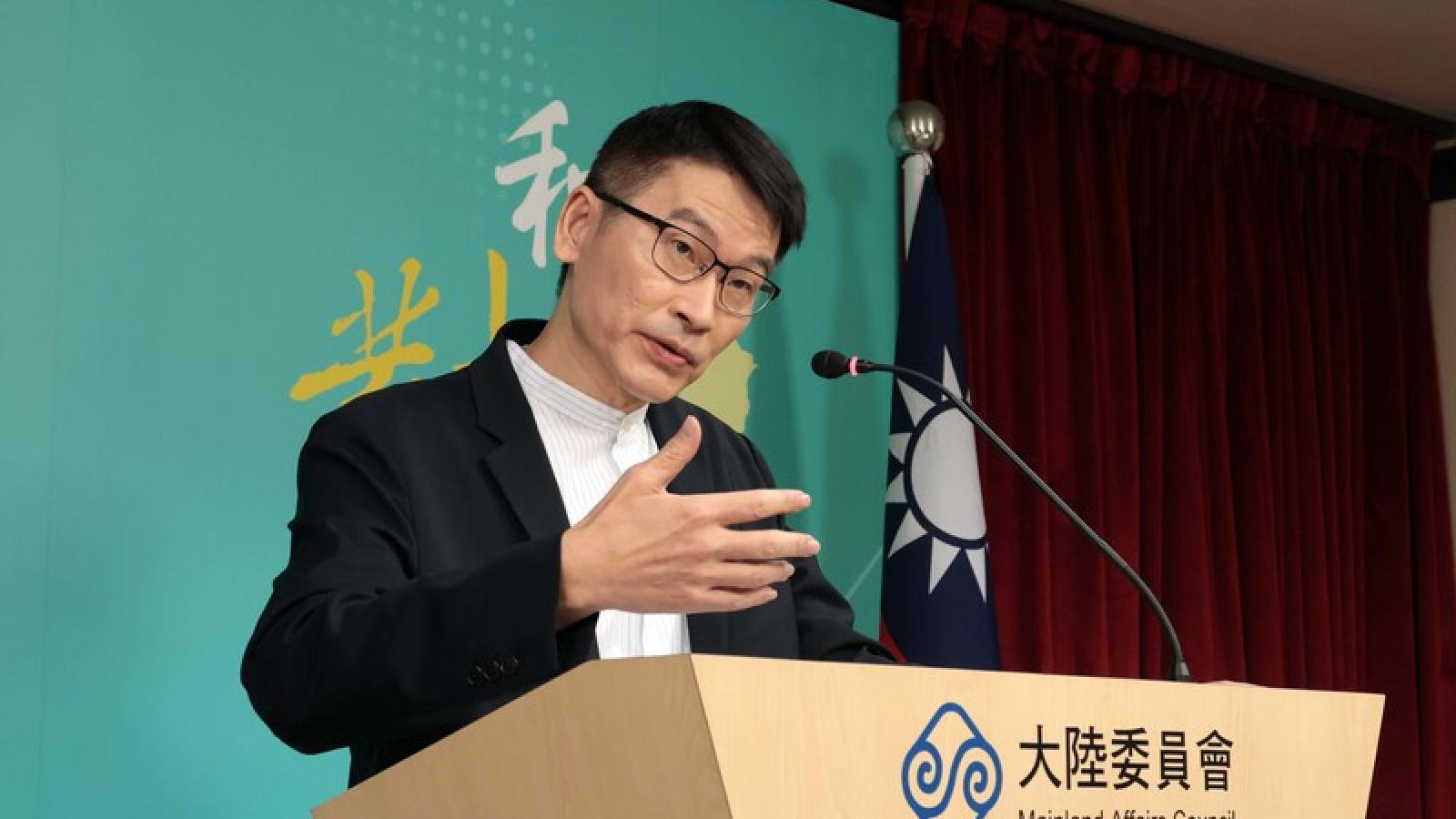
Six years ago, the DPP-led Tsai administration removed iQIYI (Taiwan site). Last year, the DPP's Lai administration banned Xiaohongshu. This year, the Lai government has further blocked 'Taiwan Youth e-Home.' Regulatory authorities, from the NCC and the Ministry of the Interior to the Mainland Affairs Council (MAC), have acted with a single command, progressively shrinking the open internet space. This move might have gone unnoticed had it not been for a public dispute between MAC Deputy Minister Liang Wen-chieh and media scholar Lo Shih-hung, who questioned the legality of the website ban. Without this controversy, few would have known what 'Taiwan Youth e-Home' actually is, how much harm it poses to Taiwan, or why the government took such drastic measures.
What is the Lai administration afraid of—iQIYI, Xiaohongshu, or Taiwan Youth e-Home?
Simply put, 'Taiwan Youth e-Home' is a platform providing information on studying, employment, and entrepreneurship in mainland China for Taiwanese youth. It is hosted under 'China Taiwan Website,' directly managed by the Taiwan Affairs Office (TAO) of China's State Council. The TAO is not only a 'united front' unit but also the 'verbal sparring partner' of Taiwan's MAC. Very few people in Taiwan browse the 'China Taiwan Website'—perhaps only a handful, including MAC's monitoring staff. How attractive could 'Taiwan Youth e-Home' really be to Taiwanese youth? How threatening could it be to the government's 'resist China, protect Taiwan' policy? It's hard to assess. First, young people genuinely seeking opportunities in mainland China use provincial or municipal job platforms, not a centralized national one. Second, the site launched in mid-July and was blocked within half a month—most people never had a chance to access it.
Why did the MAC take such a heavy-handed approach against such a minor platform? It's difficult to explain. Was it angry that its 'sparring partner' could create such a flexible youth-targeted platform? Or frustrated by its own increasing rigidity? Or genuinely fearful that youth are drifting away from the DPP government? These reasons are less important. What matters is that the MAC's actions and demeanor are increasingly resembling those of the very 'sparring partner' it criticizes—this is the real reason for the growing disconnect with young people. The DPP deliberately ignores this, perhaps due to prolonged power leading to bureaucratic numbness.
Six years ago, the Tsai administration spent significant effort finding a 'legal basis' to ban iQIYI. Eventually, the Ministry of Economic Affairs amended the 'Cross-Strait Relations Act' to add a 'Prohibited Business Activities List,' banning Chinese OTT platforms from operating in Taiwan. The administration even retroactively applied this to iQIYI Taiwan, which had operated for three years. The case resulted in an acquittal in the first trial but a conviction in the second, with appeals still ongoing. Yet, the popularity of mainland Chinese dramas in Taiwan has only grown since iQIYI's removal. If the MAC viewed iQIYI as 'cultural unification warfare' and sought its elimination, then the past six years have been a failure.
Can a single official's statement shut down a website? The 'Taiwan Youth e-Home' ban reveals concerns about digital authoritarianism.
The Lai administration, perhaps seeking to appear tougher than Tsai's, targeted Xiaohongshu, a platform with reportedly 200–300 million active users. In December last year, the Ministry of the Interior invoked Article 42 of the 'Anti-Fraud Crime Prevention Act,' declaring an 'emergency,' and ordered internet providers to block domain resolution and access to Xiaohongshu for one year. Without a VPN, the app and website became inaccessible in Taiwan. The Criminal Investigation Bureau claimed Xiaohongshu was linked to over 1,700 fraud cases last year, causing nearly NT$250 million in losses. Critics pointed out that most online fraud occurs on Facebook and LINE, yet Xiaohongshu was singled out. Still, at least there was an attempt to justify the action legally.
Eight months later, MAC Deputy Minister Liang Wen-chieh suddenly announced that 'Taiwan Youth e-Home' was being blocked for publishing job openings and school admissions from mainland China and offering online resume submission—violating Article 23 (assisting mainland schools in recruitment), Article 33 (job intermediation), and Article 34 (advertising) of the Cross-Strait Relations Act. After coordination with relevant agencies, domain resolution had been stopped. Liang cited the 2019 precedent when NCC blocked a '31 Measures' website. But Liang's justification reflects a misunderstanding of the law.
First, cross-strait separation means the Cross-Strait Relations Act should regulate only Taiwanese citizens. iQIYI Taiwan can be regulated, but its Singapore international site cannot. Mainland recruitment is mainland's affair. If a Taiwanese university assists in such recruitment, it may be illegal. But 'Taiwan Youth e-Home' is a mainland website—Taiwan has no jurisdiction to 'prosecute' it. So why could Xiaohongshu be blocked? This is the core legal controversy. Scholars argue that while the Act provides grounds for penalties, it does not authorize full website blocking. The 2019 '31 Measures' site was blocked because China attempted to register a '.tw' domain, which NCC prevented. But the '31 Measures' content itself cannot be erased from the internet—information about them exists across websites, including those of Taiwan's state-owned banks.
Turning moderate scholars into enemies: The DPP's absurd loss of judgment
This isn't just about Xiaohongshu or 'Taiwan Youth e-Home.' In the digital age, if the government can block mainland websites with a single statement, who's next? Media scholars warned of the risks of shutting down websites without due process. In response, Liang sarcastically said: 'If the TAO is unhappy about us blocking their sites, they're welcome to sue in Taiwan's courts. We'll sue them too—they've blocked all our websites already.' Most absurdly, Liang referred to Lo as 'this so-called media scholar,' adding, 'This person is apparently a professor at National Chung Cheng University.' It's unclear whether the sarcasm targeted Lo or the university. Either way, Liang was both inappropriate and unprofessional.
Adding 'so-called' can serve an objective purpose, as in classical phrases like 'so-called sincerity means not deceiving oneself.' But more often, it conveys denial, doubt, or sarcasm—like the TAO's habitual use of 'so-called sovereignty' or 'so-called Republic of China Taiwan.' Liang, used to verbal battles, adopted this tactic. But he should not have aimed 'so-called' at his own people. Lo Shih-hung may critique the government's digital governance policies, but he is a professional, neutral media scholar who often advocates for public broadcasting. In the DPP's color-coded political spectrum, he may not be 'pro-green,' but he's certainly not 'pro-blue' or a 'collaborator.' With one phrase, Liang turned a potential moderate ally into an 'enemy'—an act so foolish it defies description.
The TAO often mocks Taiwan's 'so-called institutional competition,' ridiculing its claims of democracy, rule of law, and freedom of speech. But the MAC's actions and Liang's words prove that the 'institutional competition' is merely a difference of degree—fifty steps versus a hundred. Constitutional guarantees of freedom of thought and speech (including the right to receive information) are rendered meaningless by a single official's statement. The 'so-called rule-of-law state' has become nothing more than a joke in Liang Wen-chieh's mouth.
FACT BOX
- Source: PR Times
- Category: News