Taiwan's Representative to Japan, Li Yi-Yang, recently refused to attend the Nagasaki atomic bombing peace memorial ceremony to uphold Taiwan's national dignity and sovereignty, sparking widespread reactions from the public in both Taiwan and Japan, as well as extensive coverage by major media outlets. On the 10th, Li posted again on Facebook, stating that social media responses show over 80% of the public support his decision, agreeing that Taiwan should not be diminished or suppressed.
In response to some critics sarcastically questioning whether this incident proves that Taiwan-Japan friendship is self-deception, Li strongly rebutted and detailed significant political and economic breakthroughs achieved during his two years in office, emphasizing that Taiwan-Japan relations are currently at their best in history.
Li stressed that his statement about 'the best-ever Taiwan-Japan relations' is backed by concrete evidence. Politically and militarily, Japanese Prime Minister Sanae Takagi explicitly stated that 'a contingency involving Taiwan constitutes a crisis threatening Japan’s survival,' highlighting the interdependent and shared destiny between the two nations. Last year, due to Japan’s insistence, the G7 foreign ministers’ meeting removed the 'One China' policy from its joint statement for the first time. Moreover, Japanese diplomats are the most frequent interactors with Taiwan’s overseas representatives among all foreign diplomats.
Additionally, Japanese naval vessels passed through the Taiwan Strait for the first time last year and again this year, asserting that the strait is an international waterway ensuring freedom of navigation, not China’s internal waters.
In terms of economic investment and civilian exchanges, Li explained that TSMC’s second Kumamoto plant has upgraded its process from the original 6–12 nanometers to 3 nanometers, expanding its investment from $12 billion to $17 billion. Japanese semiconductor materials giant JSR is investing in factories in Huwei, Yunlin, and Hukou, Hsinchu, directly supplying materials to TSMC. TSMC is also jointly establishing a next-generation sensor plant in Kyushu with Sony. Taiwan has risen from Japan’s fourth-largest trading partner to the third-largest.
In tourism, bilateral visitor numbers reached 8.24 million last year, a historical high, with expectations to exceed 9.4 million this year, setting a new record. In disaster relief, following Taiwan’s top-ranking donations after Japan’s 3/11 and Noto Peninsula earthquakes, it is predicted that Taiwan will again lead global contributions in the recent Kumamoto earthquake.
Regarding the Nagasaki incident, Li analyzed that according to public opinion polls by the Japan-Taiwan Exchange Association and the Taiwan-Japan Relations Association, mutual goodwill between the two nations averages around 77%. He acknowledged that pro-China factions exist in Japan and anti-Japanese sentiments in Taiwan, which is normal. Li emphasized that no one has claimed Taiwan-Japan relations are perfect, so it is unwarranted to extrapolate from a single Nagasaki incident to completely negate the bilateral relationship.
To concerns that the protest might cast a shadow over Taiwan-Japan relations, Li stated bluntly that the relationship has been built through persistent efforts and overcoming repeated challenges—it has never improved automatically.
Li emphasized that he is addressing the issue of Taiwan’s diminished status from a strategic perspective. He accused the Nagasaki city government of willingly serving as an accomplice in China’s legal warfare against Taiwan. If Taiwan silently accepts non-diplomatic treatment, it would effectively acknowledge that Taiwan lacks sovereignty and is not a nation. Li warned that such silent acceptance could trigger a domino effect; once this precedent is set, China would likely apply the 'Nagasaki model' to Hiroshima and systematically undermine the Taiwan-Japan relationship across Japanese local governments.
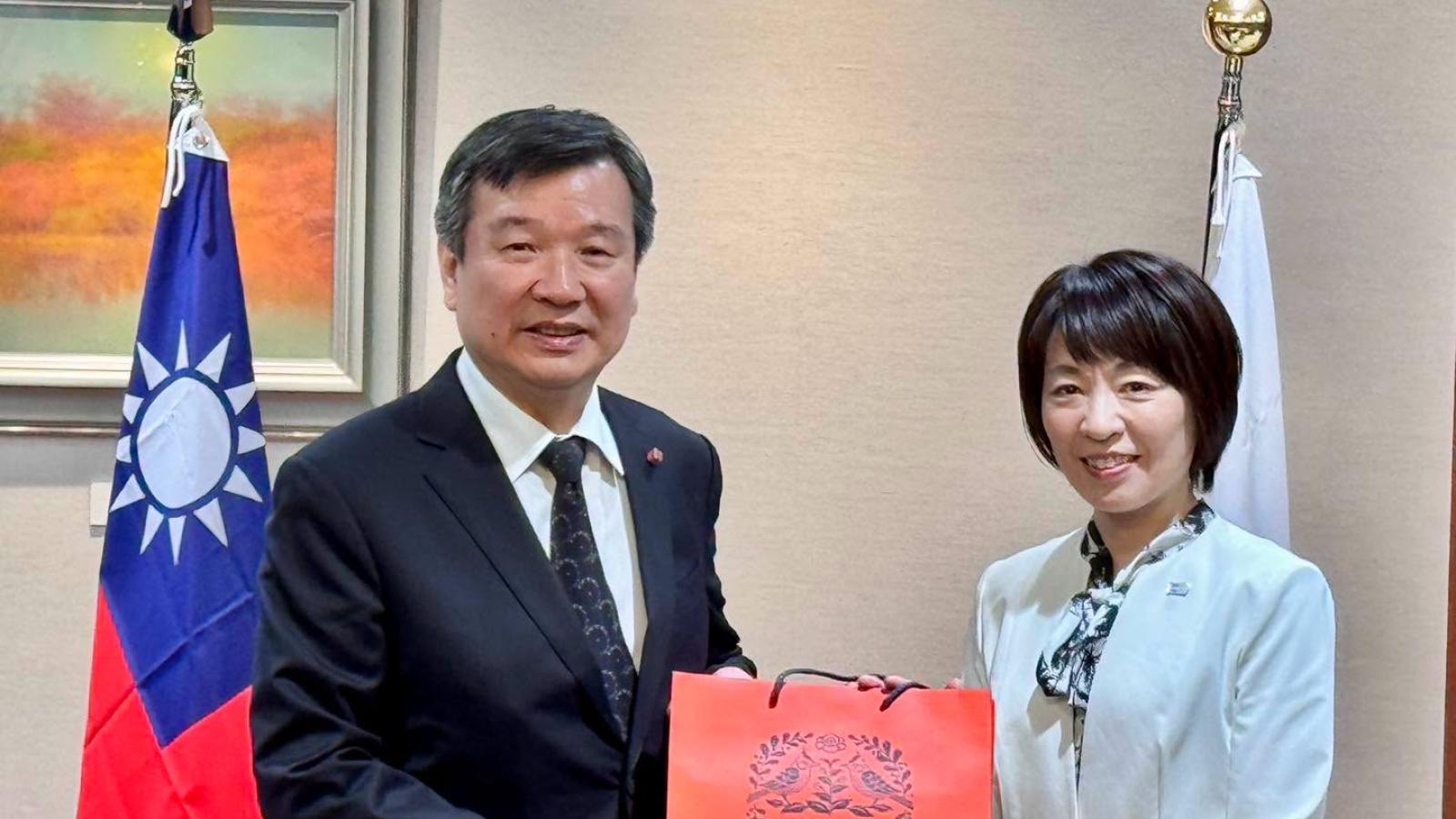
Li urged all supporters of Taiwan-Japan cooperation to recognize that the only true enemy is China, which manipulates and sabotages bilateral friendship from behind, and that no opportunity for sowing discord should be allowed. At the end of his post, Li attached a photo with Hiroshima Prefecture Governor Mika Yokota, noting that despite her packed schedule meeting various ambassadors, she ensured both nations’ flags were displayed at the venue—proof, he said, that Taiwan-Japan friendship is more than just a political slogan.
FACT BOX
- Source: PR Times
- Category: News
- Organizations: JSR / SONY