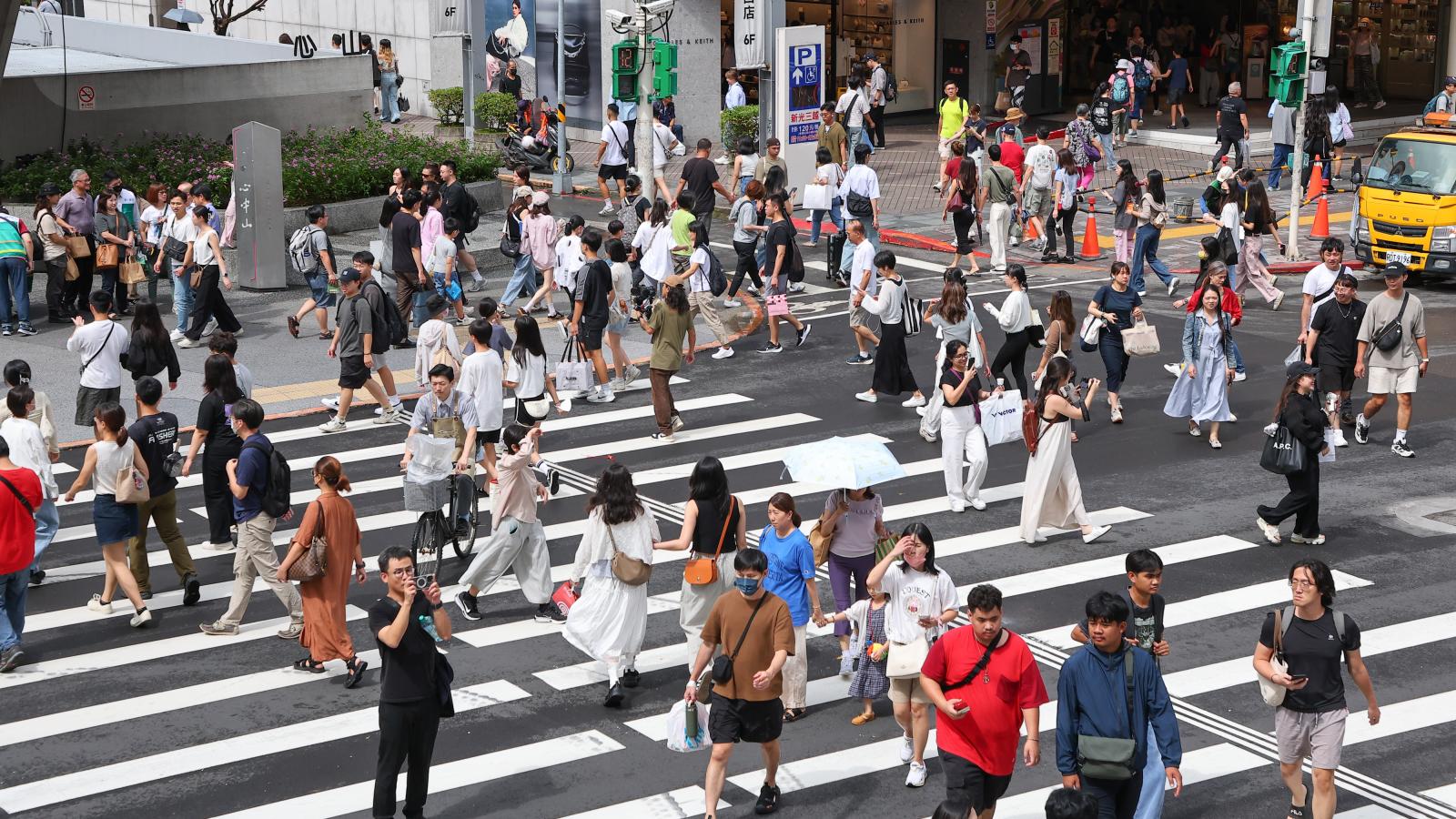
Taiwan's greatest national security issue may not be missiles and military exercises, but the rapid collapse of its demographic structure—despite a persistent lack of long-term, systematic countermeasures. While the world focuses on geopolitical risks, a deeper, more irreversible population crisis is gradually eroding Taiwan's economic competitiveness, fiscal capacity, and social resilience.
President Lai Qingde's administration recently proposed solutions to the population crisis. But are these measures truly addressing the root causes? This critical issue demands objective and calm reflection from everyone.
According to projections by Taiwan's National Development Council, the total population peaked at 23.56 million in 2020 and has since entered a period of long-term decline. By 2070, the population could fall to around 15 million—more than one-third lower than current levels. More alarming than population decline itself is the imbalance in demographic structure. By 2070, over 40% of Taiwan’s population will be aged 65 or older, drastically reducing the number of working-age individuals supporting each elderly person. The entire society will face unprecedented dependency pressures.
Population issues have never been merely social concerns—they are strategic matters affecting national competitiveness. A shrinking labor force leads to hiring difficulties for businesses and dampens industrial investment. A dwindling youth population weakens innovation and entrepreneurship. Rapid growth in the elderly population drives up healthcare, long-term care, and social welfare expenditures. As the tax base shrinks and spending rises, government fiscal space will be severely constrained, affecting defense capabilities, infrastructure investment, and industrial upgrading.
Equally concerning is regional imbalance. In recent years, Taiwan’s population has continued to concentrate in the north and a few technology hubs, leaving many towns and rural areas under dual pressure from aging and population loss. In some remote areas, the elderly population exceeds 30%, and school closures, shrinking commercial activity, and reduced public transportation services are becoming the norm. When localities lose population, they also lose tax revenue, consumer spending, and governance foundations—leading to a vicious cycle.
Japan’s experience offers valuable lessons, but the focus should not be on boosting birth rates, but on governance restructuring after prolonged population decline. Japan’s population peaked in 2008 and has since declined by over 9 million. Yet, Japan’s recent policy focus has shifted from "how to increase population" to "how to maintain societal functionality despite population decline."
Thus, Japan has launched "Regional Revitalization 2.0," integrating population, transportation, healthcare, and industrial data through digital governance to reallocate public resources. It is aggressively developing telemedicine, smart transportation, unmanned delivery, and elderly care technologies. The core idea is simple: maintain quality of life and regional functionality even as population declines. Japan has also introduced the concept of "relational population," measuring local development not just by registered residents, but by remote workers, long-term visitors, tourists, and consumers who maintain urban-rural connections.
South Korea offers another critical warning. Although South Korea’s total fertility rate slightly rebounded to about 0.75 in 2024, it remains among the world’s lowest. Evidence shows that behind low fertility is not young people’s unwillingness to have children, but their fear—driven by high housing prices, education costs, long working hours, and career uncertainty—that makes them feel insecure about the future. Past government spending of over 300 trillion won on birth incentives has yielded limited results, proving that subsidies alone cannot solve structural problems.
Therefore, South Korea’s recent policies have gradually shifted from "subsidy-driven" to "risk-reduction-driven," including expanding public housing supply, institutionalizing parental leave, improving conditions for women returning to work, and reducing excessive educational competition. The logic is simple: without confidence in the future, no amount of cash incentives will change fertility decisions.
Singapore takes a more strategic approach. Recognizing early that natural population growth cannot sustain national competitiveness due to limited size, Singapore elevated population policy to the level of national development strategy. Its focus is not just on increasing population numbers, but on building a demographically competitive structure.
Through its Complementarity Scheme for Specialist Manpower, Singapore tightly links talent policy with industrial strategy, precisely attracting global talent in finance, technology, biotech, and advanced engineering. Singapore is no longer competing just for workers, but for globally mobile high-end talent. From taxation and education to healthcare, residency, and international living environments, Singapore strives to create systems that attract global elites to settle long-term, maintaining national competitiveness.
The experiences of Japan, South Korea, and Singapore collectively reveal one truth: population policy must evolve beyond baby bonuses into national resilience strategy.
In contrast, Taiwan remains overly focused on birth subsidies and short-term incentives. Even if Taiwan’s total fertility rate rises from the current 0.86 to 1.2 or 1.3, reversing population decline will remain difficult. What truly matters is how to maintain economic vitality, regional balance, and social stability in the face of inevitable population shrinkage.
Future governments should treat housing costs as a national security issue. Build large-scale long-term rental housing for youth near science parks and industrial clusters, establish stable rent mechanisms for parenting families, and reduce living pressures on younger generations. Simultaneously, promote cross-regional living zones and transportation integration, ensuring that even depopulated areas maintain basic medical, educational, and public services.
Another crucial population policy: older adults should not be seen as a burden, but transformed into a vital human resource. By 2025, Taiwan’s population aged 65–74 will exceed 2.8 million, many of whom remain capable and experienced. The real danger is not aging itself, but systems that still treat age 65 as the standard for social exit, excluding and abandoning healthy seniors from the labor market.
The essence of the population issue is, in fact, a matter of national strength. When labor declines, regions shrink, fiscal burdens grow, and youth lose hope for the future, it is not just families that suffer—but the entire nation’s competitiveness and governance foundation. Taiwan’s greatest challenge may not be reversing population decline, but maintaining economic vitality, social resilience, and national security amid inevitable shrinkage. Without establishing a new governance model early, the impact of demographic collapse will be deeper and more irreversible than any short-term crisis.
*The author is an adjunct professor at the College of Management,东海 University.
FACT BOX
- Source: PR Times
- Category: News