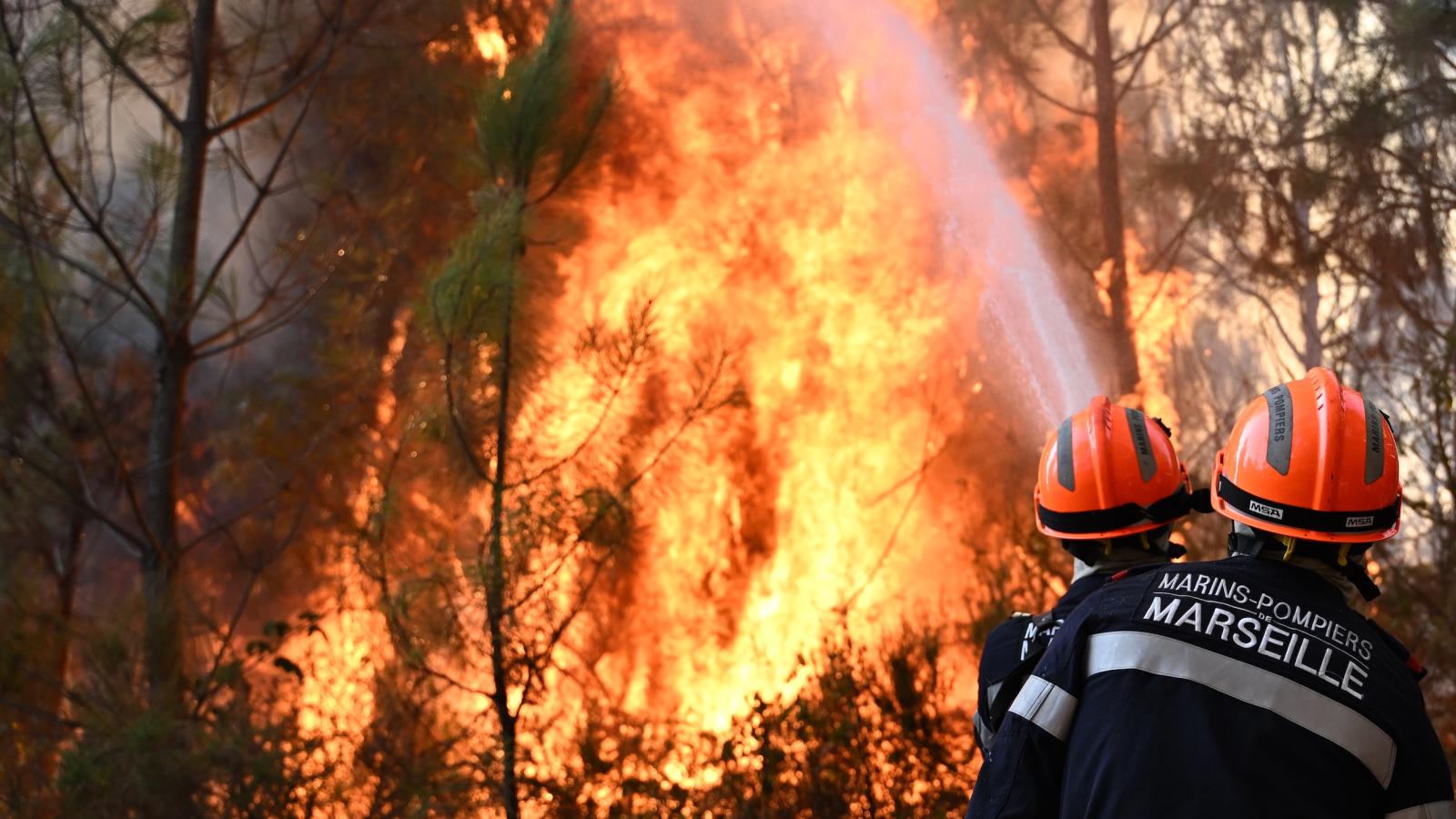
Europe continues to suffer from extreme heat and drought, causing numerous historical relics to reappear, including Nazi warship wrecks, prehistoric mammoth bones, and even long-forgotten monasteries. The Danube River, which flows through 19 countries, has dropped to its lowest water level in 30 years. Scientists attribute this primarily to high temperatures and insufficient rainfall. Climate change is driving up global temperatures, with Europe being particularly affected. According to the Copernicus Climate Service, Europe is warming at twice the global average rate, making it the fastest-warming continent. This has led to increasingly frequent summer heatwaves, placing greater stress on Europe's water resources and intensifying wildfires. Falling river levels have exposed at least 20 World War II shipwrecks, increasing navigation risks for modern vessels. In addition to warship remains, 20th-century munitions have been discovered in Croatia, Hungary, and Slovakia. Due to the reappearance of large quantities of unexploded ordnance, several areas have evacuated residents and deployed bomb disposal units. In France, wildfires near Bordeaux unearthed approximately 400 World War II-era shells and munitions in the village of Le Portel. These historical weapons include mortar shells and anti-tank rounds left behind by German and French forces. Ancient artifacts have also surfaced. In Bulgaria, scientists discovered what is believed to be the remains of an ancient mammoth along the muddy banks of the Danube River. In the UK, drought-induced 'crop marks' revealed the foundations of a medieval monastery and the outline of a 17th-century ornate garden.
FACT BOX
- Source: PR Times
- Category: News