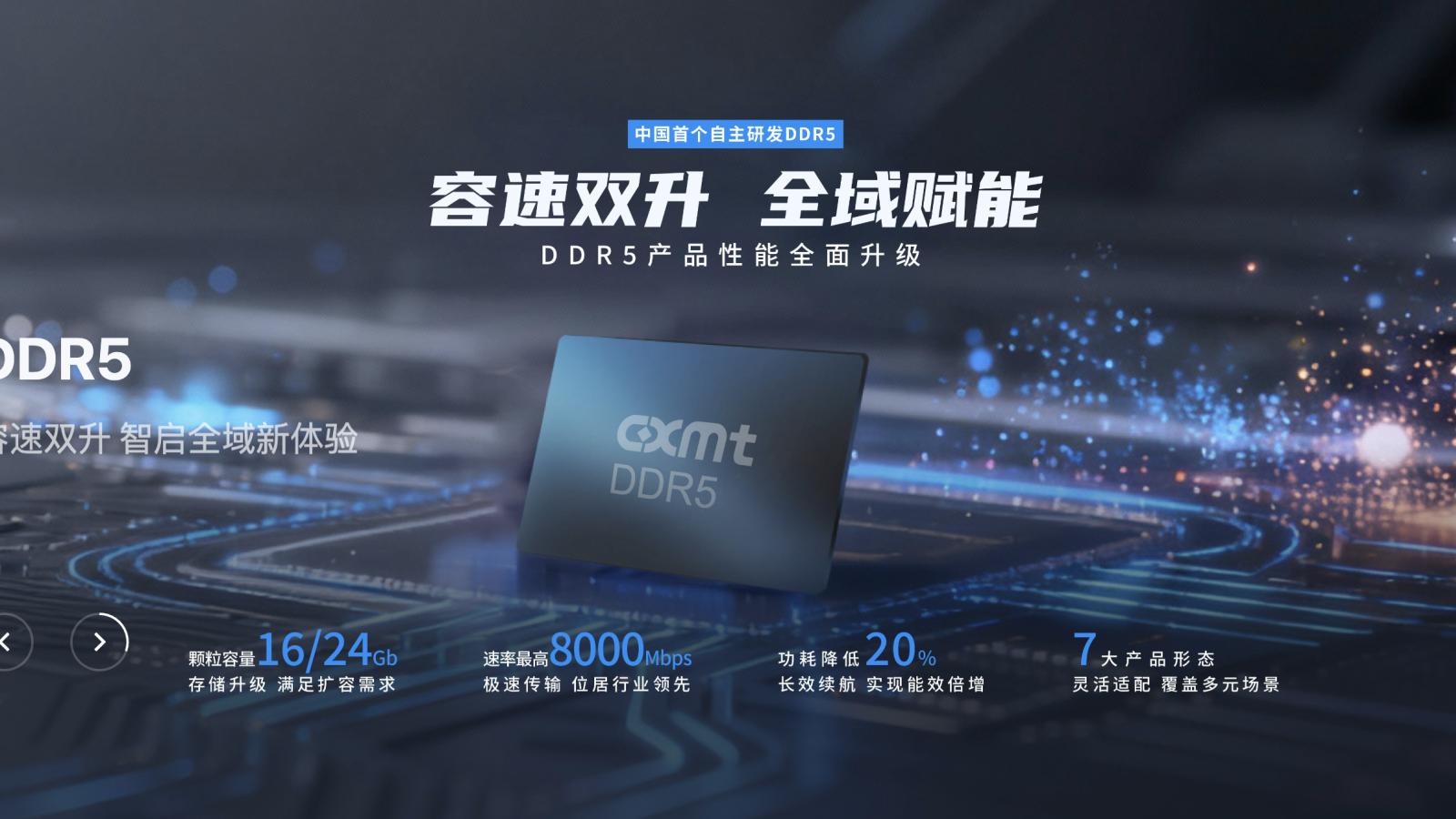
A global artificial intelligence (AI) wave has triggered a severe shortage of memory chips. The Wall Street Journal exclusively reported on the 9th that U.S. tech giant Apple has begun testing storage chips from China's major memory manufacturer, ChangXin Memory Technologies (CXMT), and has initiated preliminary supply negotiations, with plans to use them in devices sold in the Chinese market. Sources revealed that Apple's testing covers product lines including iPhone and MacBook. Due to strong demand from the AI boom driving up memory costs, Apple has raised product prices globally, attributing cost pressures to rising memory prices. Securing chip supply from Chinese manufacturers would help Apple alleviate supply constraints. Sources indicated that to ease memory supply tensions, major laptop makers HP and Acer have already started using CXMT's memory chips in devices sold outside the United States, as previously reported by Nikkei Asia. Sources said HP and Acer are currently obtaining limited quantities and are seeking to secure long-term supply for next year. With orders and demand surging, CXMT recently went public in Shanghai. As of last Friday, the company's market capitalization reached approximately $520 billion, making it the highest-valued listed company in mainland China. Market research firm Counterpoint Research data shows CXMT has become the world's fastest-growing Dynamic Random-Access Memory (DRAM) supplier. Benefiting from strong demand, capacity expansion, and rising prices, CXMT's revenue in the second quarter of this year surged more than eightfold year-on-year, currently holding 7% of the global market share. Counterpoint Research analyst Neil Shah stated, 'The question is no longer 'how,' but 'when' CXMT will enter the Big Three Memory Club (referring to Samsung, SK Hynix, and Micron).' Apple Limited to 'Off-the-Shelf' Components Due to Export Controls However, The Wall Street Journal also noted that potential transactions between Apple and CXMT are highly politically sensitive in Washington. U.S. federal regulations prohibit American companies from transferring technology to CXMT, including any communication regarding technical details and product specifications—yet such communication is routine for Apple when developing custom chips. Kevin Wolf, an export control consultant at Washington law firm Akin Gump, pointed out that this restriction effectively blocks Apple from ordering custom chips from CXMT; however, Apple using CXMT's off-the-shelf components and conducting commercial price negotiations falls outside the scope of these regulations. Industry analysts noted that Apple typically customizes components for its devices, so using CXMT's standard off-the-shelf chips might force Apple to redesign parts of its products. Moreover, due to U.S. restrictions on access to the most advanced semiconductor equipment, CXMT's technology currently lags behind foreign competitors. Sources also said that even if Apple strictly complies with federal regulations, it still hopes to obtain some form of political acquiescence from the White House and the Trump administration to avoid political backlash in the United States. Opposition: Fears of Bolstering Beijing's Military and Hurting Micron The Wall Street Journal reported that some Washington figures worry that CXMT, already listed by the Pentagon on the 'Chinese military-linked entities list,' could gain know-how from U.S. firms and attract more funding to advance its technology if it secures Apple orders. They believe this could not only be used by Beijing to strengthen its military but also undermine Micron Technology, which is building new plants in Idaho and New York. Sources believe that given CXMT's current production capacity, the Chinese firm is not an immediate solution for Apple, as CXMT's capacity this year is already fully booked, leaving almost no room to take on new international customers. Currently, CXMT prioritizes supply to Chinese domestic tech companies such as ByteDance, Tencent, and Xiaomi. Rising memory costs have begun to suppress computer and smartphone shipments. Counterpoint Research statistics show that global personal computer (PC) shipments declined 4% year-on-year in the second quarter of this year, while smartphone shipments dropped 11%. CXMT is currently building a new factory, aiming to more than double its capacity by 2028. Sources indicated that many of CXMT's products have already matched prices with Micron, SK Hynix, and Samsung Electronics, with some products even seeing premium pricing. This pricing strategy is partly due to tight capacity and higher production costs compared to foreign competitors.
FACT BOX
- Source: PR Times
- Category: News
- Organizations: Apple / HP / Acer
- Products / services: iPhone / MacBook