The United States Department of Defense is urging domestic defense industries to accelerate weapons production to replenish rapidly dwindling ammunition and missile inventories due to sustained combat with Iran. The Pentagon has recently issued a clear directive to defense industry firms, calling for a significant reduction in weapons delivery timelines and increased production capacity for critical weapons systems.
On August 8, Pentagon spokesperson Sean Parnell stated that the Department of Defense is actively increasing ammunition procurement, aiming to provide combat personnel with necessary weapons at "the pace demanded by the threat." He confirmed that the Department took measures over the past week to drastically expedite related processes, but emphasized this effort is not solely in response to the current approximately five-month-long US-Iran conflict, but rather part of a broader initiative to modernize the military and rebuild the defense industrial base.
On August 6, Deputy Secretary of Defense Steve Feinberg sent a letter to leaders of the US defense industry, requesting that firms submit specific plans within a maximum of 21 days to significantly accelerate the delivery speed of critical weapons and military capabilities and increase production quantities.
According to a memo obtained by The Washington Post, Feinberg asked defense industry players to propose solutions that enable "significantly accelerated, more aggressive delivery" of weapons or directly increase the production volume of critical military capabilities.
In the memo, Feinberg stated that the past practice of accepting multi-year cycles for weapons research, development, and production is no longer acceptable, and the United States must drastically shorten military planning schedules while immediately expanding weapons production capacity.
This memo comes as recent fighting between US forces and Iran has further depleted America’s already reduced stockpiles of advanced missile interceptors. Analysts warn that if hostilities between the US and Iran escalate again, US forces could face shortages of air defense missiles, thereby increasing operational risks for US troops stationed abroad and associated units.
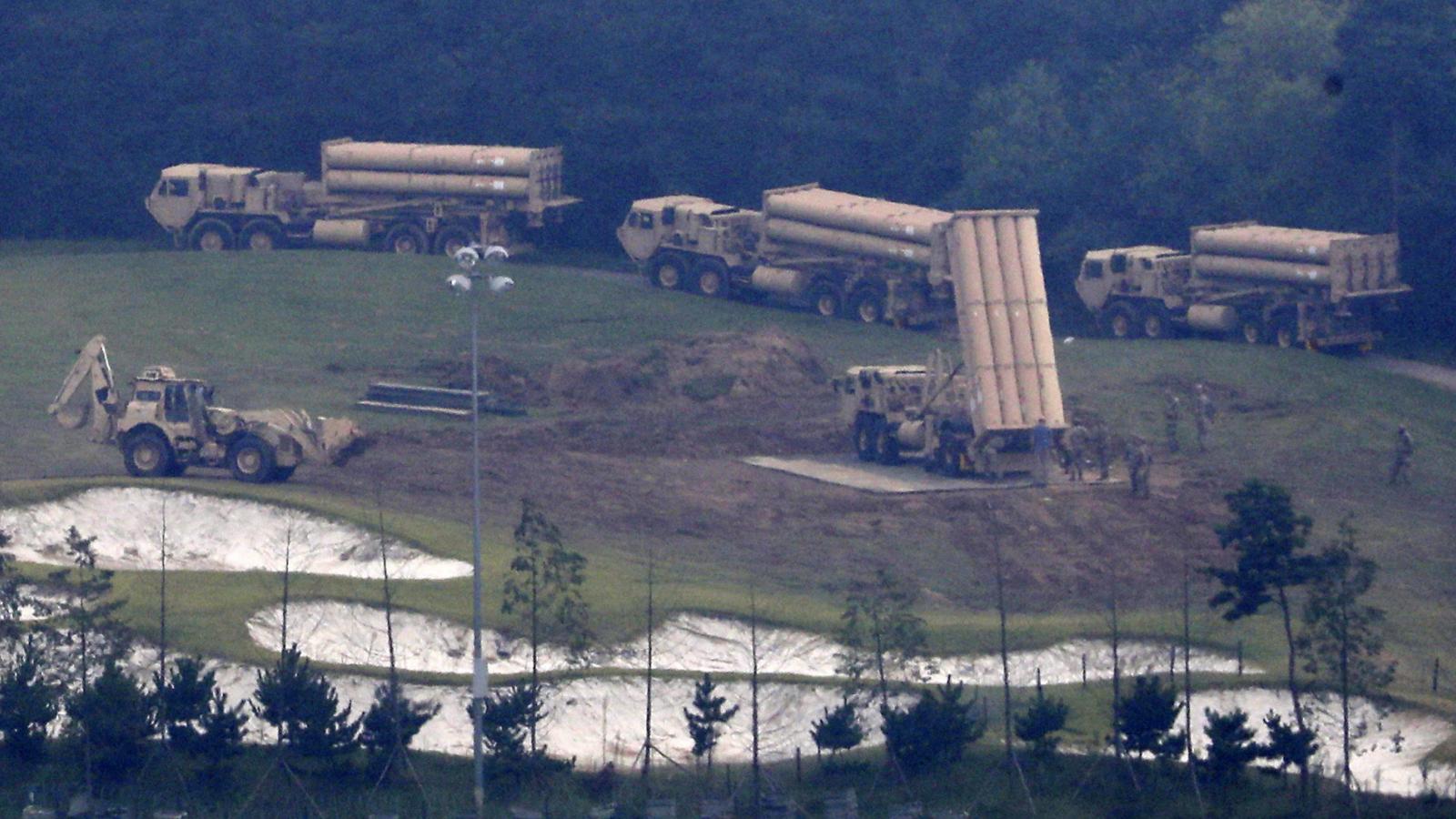
A recent analysis by the Washington-based think tank Center for Strategic and International Studies (CSIS) indicates that US forces have heavily used advanced air defense interceptors during their conflict with Iran, resulting in a noticeable decline in interceptor missile inventories for both the Patriot and Terminal High Altitude Area Defense (THAAD) systems.
CSIS warns that with reduced numbers of air defense interceptors in the hands of the US and its Middle Eastern allies, they may be forced to adopt riskier operational methods to conserve limited air defense resources.
One possible scenario is that US forces might reduce the interception ratio against incoming Iranian drones and missiles to save interceptor missiles. While this could extend the usable life of existing air defense weapons, it also means more Iranian-launched drones or missiles could penetrate defensive networks.
CSIS estimated last month that before the outbreak of the US-Iran war, the US had approximately 2,330 Patriot interceptor missiles. By the time a ceasefire took effect in April, inventory had dropped to about 1,030.
After recent combat further consumed interceptors, CSIS estimates current Patriot interceptor inventory stands at approximately 759 to 827 missiles. Compared to pre-war levels, this represents a reduction of at least 65%.
The situation regarding THAAD interceptors is similarly concerning. CSIS noted that before the US-Iran war began, the US had about 452 THAAD interceptors. By the start of the April ceasefire, inventory had declined to about 232 to 262.
The US subsequently managed to replenish some THAAD interceptors, bringing inventory back up to about 234 to 278, but even after restocking, current numbers remain at least 38% below pre-war levels.
US President Trump recently expressed dissatisfaction with external reports suggesting US weapon inventories were insufficient.
On July 7, Trump posted on Truth Social stating that the US possesses "massive" amounts of weapons and emphasized that large quantities of munitions are still being produced and shipped to the US as needed.
Trump’s statements contrast with recent public analyses indicating a rapid decline in US high-tier interceptor missile inventories. The Pentagon has attempted to clarify that pushing for increased weapons production does not mean the military cannot obtain the ammunition required for operations, but rather aims to further strengthen the defense industry’s production capacity to meet long-term strategic needs.
Parnell confirmed on August 8 that the memo from Feinberg requesting defense industry players to accelerate production does indeed exist. He stated that this request will become part of the US government’s fiscal year 2028 budget submission to Congress and is fully aligned with the Pentagon’s current policy direction of rebuilding America’s defense industrial base.
In other words, the Department of Defense hopes that through new procurement and production policies, weapons manufacturers will not only increase short-term supply but also further expand overall production capacity to reduce the risk of munitions depletion in future large-scale conflicts.
However, the Pentagon’s plan to accelerate weapons production faces political resistance from Congressional budget reviews.
Currently, a US defense spending bill remains stalled in Congress. Some lawmakers are dissatisfied with the Trump administration’s military actions against Iran and are skeptical of the White House’s plan to substantially increase the Pentagon’s budget.
The Trump administration hopes to raise the annual expenditure of the US Department of Defense to approximately $1.5 trillion, far exceeding the previous year’s level of about $900 billion.
If this plan for a substantial increase in defense spending gains Congressional support, it would provide the Pentagon with additional funding to expand arms procurement, increase missile and ammunition production capacity, and rebuild the US defense industrial supply chain.
However, until Congress completes the relevant budget procedures, the Pentagon’s immediate call for industry to accelerate production must still contend with limitations in funding, production capacity, supply chains, and production equipment.
The US has repeatedly discovered in recent years that the consumption rate of certain high-precision weapons and air defense interceptors far exceeds peacetime production speeds. Particularly systems like Patriot and THAAD involve highly complex missile manufacturing processes, making it impossible to simply increase orders in the short term to immediately scale up production to levels sufficient for large-scale warfare.
Therefore, Feinberg’s current request for industry players to submit acceleration plans within 21 days—calling not only for shortened delivery times but also expanded overall production capacity for critical military equipment—reflects the Pentagon’s attempt to fundamentally address the long-standing production capacity issues within the US defense industry.
FACT BOX
- Source: PR Times
- Category: News