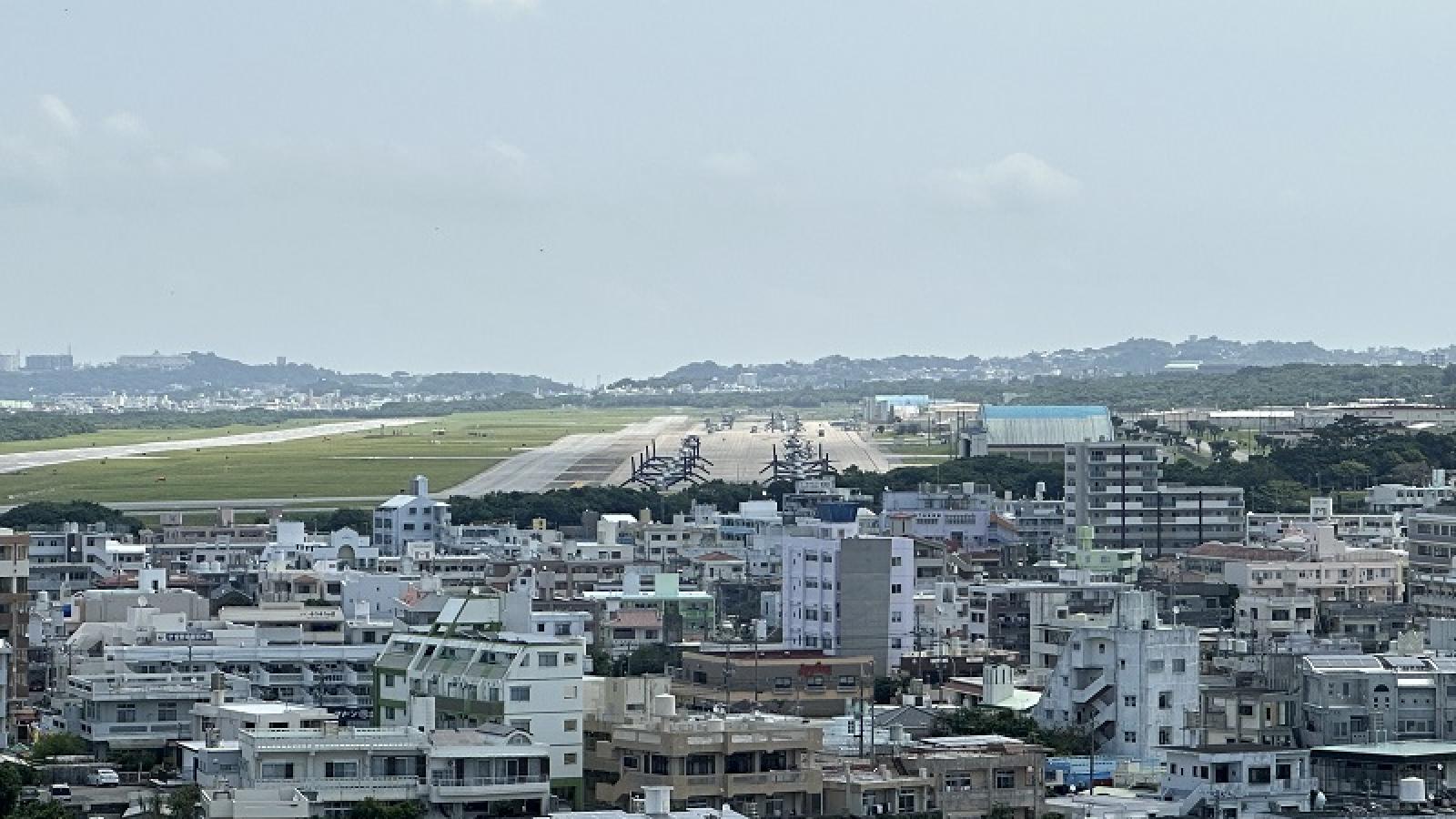
Due to the aggression of imperialist powers, East Asian countries that felt a crisis began integrating ethnic groups within their borders, launching modern nation-building projects aimed at forming singular ethnic nations. First, Japan consolidated Okinawa and the Ainu in the 1880s, establishing the concept of the 'Japanese nation' and implementing assimilation policies toward minority groups. In China, during the 1900s, in response to Russian encroachment on Manchuria, Han intellectuals such as Liang Qichao proposed that the central government integrate all ethnic groups within the Qing Empire to form a single 'Chinese nation.' They believed this approach would more effectively resist imperialism and restore China's national sovereignty. Vietnam did not begin forming the modern concept of the 'Vietnamese nation' until the 1930s. Initially, Vietnam, along with Laos and Cambodia, were French colonies forming the Indochina Federation. Thus, the oppressed peoples of these three countries initially resolved to jointly engage in anti-imperialist struggles. Later, starting in the 1930s, ethnic groups within the territory of the Nguyen Dynasty established the concept of the 'Vietnamese nation,' which included the majority Kinh people and 44 minority ethnic groups, with the Kinh people implementing assimilation policies toward other minorities. (According to Vietnam's 1907 'Nam Quoc Dia Du,' there were then 22 ethnic groups in the north, 15 in the central region, and 8 in the south, totaling 45 ethnic groups.) The founding of the Viet Minh in 1941 marked a crucial moment in solidifying the scope of the 'Vietnamese nation' concept. On the other hand, although Korea lost its sovereignty to Japanese imperialism, it also established the concept of the 'Korean nation' in the 1900s. However, unlike China, Japan, and Vietnam, Korea did not include minority ethnic groups, so the formation principle of the Korean nation differed from other countries. The formation of the Korean nation can be described as a 'cultural nation' based on cultural homogeneity, and this 'cultural nation' concept coincided with the concept of the 'state nation.' Defining national boundaries by ethnic scope and creating a uniform 'state nation' through national legal systems constitutes the 'nation-state' of modern nation-states. This concept of 'state nation' was referred to in Japan as 'Imperial subjects,' while in China, Vietnam, and Korea, it was closely tied to the task of being an 'anti-imperialist nation.' Therefore, in countries like Japan, China, and Vietnam—where a single national population (state nation) encompasses multiple cultural ethnic groups (minorities)—the uniqueness of these minority groups is often suppressed, frequently leading to complex conflicts. The situation of the Ainu people in Hokkaido is due to their relatively dispersed settlements, their generally docile nature, and their total population not exceeding 20,000. Under these disadvantages, they found it extremely difficult to launch armed resistance from the beginning. Of course, historically, they did attempt armed uprisings. Under the rule of the Matsumae Domain, the Ainu were subjected to forced labor by the Japanese, and Ainu women were frequently sexually assaulted. Under these conditions, the Ainu launched an uprising on Kunashiri Island in 1789. However, after 37 leaders were killed, Kunashiri Island came under the rule of the Matsumae Domain. Historically, this uprising was the Ainu's last armed revolt. Since modern times, Ainu resistance has primarily taken the form of nonviolent resistance against Japan's legal discrimination toward the Ainu. After the government promulgated the Household Registration Law in 1871, the Ainu were regarded as 'children of the emperor' and classified as Japanese 'commoners.' However, Japan still used the derogatory term 'former aborigines' to refer to them in law. It was not until after 1925 that Hokkaido residents gained the right to participate in politics, and not until after 1927 that they implemented the same local systems as the 'mainland.' The notorious 'Hokkaido Former Aborigines Protection Law,' which nearly destroyed traditional Ainu society, underwent five revisions and was not truly abolished until 1997. Okinawa's situation was similar to Hokkaido's. After the annexation of Ryukyu, facing Japan's overwhelming military power, Ryukyu was essentially helpless. Therefore, Okinawa's separatist and independence movements mainly took the form of nonviolent resistance, such as non-cooperation, non-assistance campaigns, petitions, or fleeing to the Qing Dynasty. The Ryukyu king submitted petitions multiple times to key officials of the Meiji government, and Ryukyu's leadership class repeatedly reported the Meiji government's oppressive actions to the Qing Dynasty, making requests for military aid and rescue. At that time, the group within the old leadership class that most fiercely resisted Japanese rule was the Qing Faction (called the 'diehards' by the Japanese). Their goal was to maintain the tributary system between China and Japan. Thus, the Japanese referred to those who went to the Qing Dynasty to seek military aid as 'Tōsei-jin' (those who fled to Qing). These people requested rescue from China and hoped to maintain the Sinocentric world order in which they were subordinate to China. Therefore, their approach was inherently limited from the start. Okinawa's resistance movements were not limited to the petition campaigns of political exiles. Many farmers and islanders also organized and launched a resistance movement known as the 'Chitaboshiyaku' (Blood Oath Agreement). In the course of this anti-Japanese resistance, an incident occurred on Miyako Island in which pro-Japanese individuals who violated the Chitaboshiyaku movement were killed. The Chitaboshiyaku movement forced ordinary people to continue obeying the rule of the Ryukyu Kingdom and began organizing forces to resist the Meiji government. Later, when the government discovered the movement, the Meiji government began suppressing it. At that time, the Ryukyu king, who had been exiled to Tokyo, feared being implicated and ultimately had to declare the movement a failure. The king's betrayal and defeat gradually eroded the Ryukyu people's loyalty to the Ryukyu Kingdom and shifted their allegiance to the Meiji government. Of course, behind this, the Meiji government's state power continued to operate, accompanied by the government's rapid and efficient military and police forces. The ultimate goal of Okinawa's separatist and resistance movements against Japan was to maintain the Ryukyu Kingdom and the existing tributary system. However, this claim did not respond to the changes of the times by proposing a new modern state model, but merely attempted to maintain the interests of the old Ryukyu ruling class. Many Ryukyu people did not认同 this claim. Therefore, after the Sino-Japanese War, many Ryukyu people spontaneously participated in assimilation movements, and resistance movements were gradually rejected. After Japan occupied Taiwan, the 1896 publication of 'Ryukyu Education' stated in its third article: 'Okinawa has now become an intermediary port between Japan and the newly acquired territories of Taiwan and Penghu; therefore, the brothers and sisters living in Okinawa Prefecture have now become the nation's bulwark and bear the heavy responsibility of guarding the threshold of the southern gate.' This was used to appeal to the patriotism of the Okinawans. Later, Japan also began gradually reforming Okinawa's old customs and systems. Between 1899 and 1903, the government implemented the land tax reform policy in Okinawa that had previously been carried out in the mainland. After conscription was implemented in 1898, Okinawans were mobilized to participate in multiple modern wars launched by Japan, including the Sino-Japanese War, and Okinawa took a position of oppressing neighboring Asian countries. After the Sino-Japanese War, during the early Meiji period, the idea that 'China and Korea' were Japan's two negative examples became widespread among the Japanese public, and this view was absorbed by the Okinawans. To become 'Japanese,' Okinawans began to exclude weaker ethnic groups, forming a layered discriminatory structure. They did not see themselves as a different ethnic group and, by discriminating against Taiwan as a 'backward region,' brought themselves closer to the Japanese nation. In this context, the Sino-Japanese War can be seen as the starting point for Okinawans spontaneously accepting assimilation and imperial subjectification policies and taking a colonialist stance to oppress weaker ethnic groups. Japan's assimilation policy toward Okinawa later became the model for Japan's rule over Taiwan and Korea. Chiji Rokusaburo of the Taiwan Governor-General's Office once said: 'Not only Taiwan, but in the future, Japan will encompass various races such as Korea and Manchuria and govern and civilize them.' From this, we can see that Japan was quite proud of the results of its assimilation education in Okinawa. Okinawa can thus be said to have served as an experimental ground and base for Japan's future rule over Taiwan and Korea and for the expansion of the Japanese Empire.
FACT BOX
- Source: PR Times
- Category: News