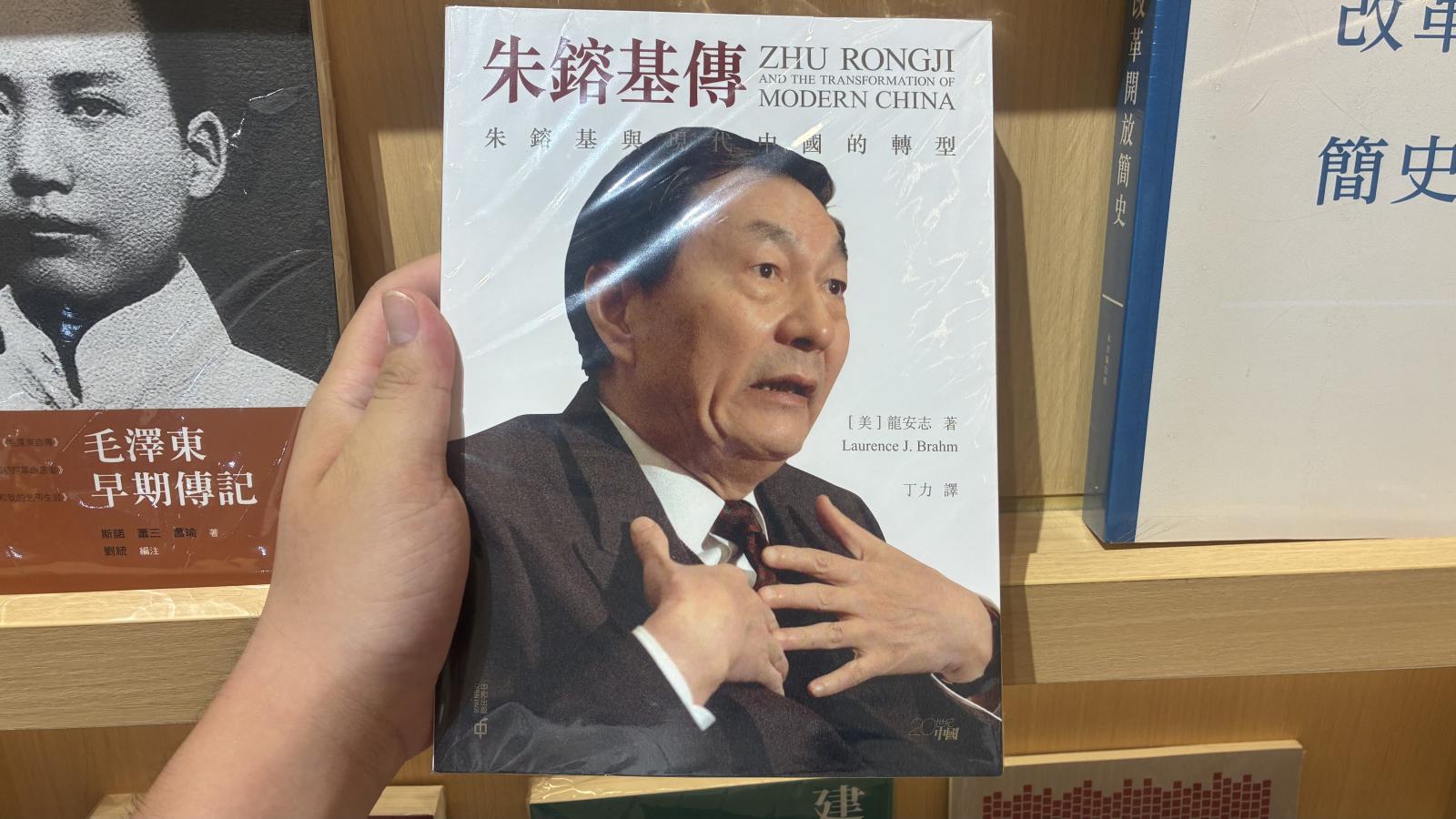
Zhu Rongji, former Premier of China's State Council and a member of the Politburo Standing Committee of the Chinese Communist Party, passed away in Beijing on the morning of August 12 at the age of 98. The Central Committee of the Communist Party of China, the Standing Committee of the National People's Congress, the State Council, and the National Committee of the Chinese People's Political Consultative Conference issued an official announcement that same afternoon, confirming that Zhu died at 11:06 a.m. in Beijing due to illness despite medical treatment. He was officially described as a "distinguished leader of the Party and the state."
Zhu Rongji's passing marks the end of life for another high-ranking leader with a distinctive political style from China's reform and opening-up era. For many Chinese people, his most prominent political legacy is the profound economic, state-owned enterprise, financial, and governmental reforms that reshaped China from the late 1990s to the early 2000s.
From Tsinghua Student to Premier
Zhu Rongji was born in 1928 in Changsha, Hunan Province. In 1947, he was admitted to the Department of Electrical Engineering at Tsinghua University, and after graduating in 1951, he began working at the Industrial Department of the Northeast People's Government and the State Planning Commission. In 1958, he was labeled a "rightist" during a political campaign and was later sent to perform manual labor. This experience became a significant part of his personal background in his later political career.
After the reform and opening-up policy was introduced, Zhu re-entered the national economic management system. In the 1980s, he successively held positions related to national economic system reform. From 1988 to 1991, he served as Mayor of Shanghai, where his tough and pragmatic administrative style attracted the attention of top CCP leaders such as Deng Xiaoping.
Zhu Rongji's central role in Chinese politics during the 1990s was as one of the top decision-makers on economic policy and financial affairs. After becoming Vice Premier of the State Council in 1993, he took charge of macroeconomic and financial matters. From 1993 to 1995, he also concurrently served as Governor of the People's Bank of China. After becoming Premier of the State Council in 1998, he directly led major reforms in state-owned enterprises, finance, taxation, housing, and other areas.
'Iron-Fisted Reform' as a Political Signature
When Zhu became Premier, China faced a series of severe economic challenges: the Asian financial crisis was spreading, state-owned enterprises were suffering massive losses, financial systems were accumulating risks, government institutions were bloated, and systems for housing, food, and healthcare urgently needed reform.
His governance style stood out sharply compared to the prevailing political culture in China at the time—emphasizing efficiency, discipline, and administrative execution. The most representative initiative was the large-scale reform of State Council institutions launched in 1998. The number of government departments was reduced from 40 to 29, many specialized economic management departments from the planned economy era were merged or abolished, and the number of State Council staff was significantly streamlined.
At the same time, Zhu's administration advanced reforms in state-owned enterprises, the financial system, housing, medical insurance, and the fiscal and tax systems.
These reforms were not without cost. SOE reforms led to massive layoffs, and the traditional "iron rice bowl" employment system gradually disintegrated. Housing commodification fundamentally changed the housing model for urban residents and laid the institutional foundation for the rapid expansion of the real estate market in the following years.
The RMB During the Asian Financial Crisis and China's WTO Accession
The Asian financial crisis that erupted in 1997 was one of the most significant international economic tests during Zhu's tenure. At the time, multiple Asian currencies sharply depreciated, and China faced pressure on exports and financial stability. Zhu's government chose to maintain the stability of the RMB exchange rate and mitigate the crisis's impact through expanding domestic demand and a series of financial policies.
In official and some academic assessments, this decision is seen as a key factor in China's contribution to stabilizing the Asian financial situation.
Another major historical event during Zhu's tenure was China's accession to the World Trade Organization (WTO). China officially joined the WTO in 2001. WTO membership meant that China had to further reduce trade barriers, reform relevant economic systems, and expose domestic enterprises to fiercer international competition.
From the perspective of subsequent historical development, WTO accession became a pivotal turning point in China's integration into the global economy. In the following decade, China's exports, manufacturing, and foreign investment grew rapidly, and the country gradually became one of the world's core manufacturing hubs.
A Forceful and Frank Political Figure: Assessing Zhu Rongji's Historical Role
Zhu Rongji holds a uniquely distinctive personal image among Chinese political figures. His public speeches were often direct, unafraid to address issues such as corruption, bureaucracy, and government inefficiency. From the 1990s to the early 2000s, his public statements had high recognition across Chinese society.
He demanded that government officials maintain integrity, speak truthfully, take responsibility, and emphasized that the government should improve efficiency and reduce formalism. After launching the State Council institutional reform in 1998, he set multiple requirements for government work, including integrity, diligence, pragmatism, and efficiency.
Zhu Rongji's political career cannot be easily categorized by simple labels like "reformist" or "conservative." His core policy orientation was to promote economic marketization, government streamlining, and SOE reform within the framework of the CCP's political system. He did not challenge the one-party system but instead sought to make it more efficient in managing a rapidly marketizing China.
He operated during a period when China was rapidly transitioning from a planned economy to a market economy. Many institutional foundations of today's Chinese economy—including housing commodification, modern financial regulatory systems, SOE reform, and deeper integration into the global trade system—are closely linked to policies enacted during his tenure.
However, it is equally important to recognize that these reforms redistributed social wealth and risk. While some groups benefited, others bore the burdens of unemployment, welfare system transitions, and rising housing costs.
From Shanghai to Beijing, from financial reform to SOE reform, from the Asian financial crisis to China's WTO accession—Zhu Rongji's political career almost perfectly overlapped with the most critical threads of China's economic transformation in the 1990s.
As his 98-year life comes to a close, history may continue to debate how much success and how much cost his reforms left behind. But one thing is already clear—
Zhu Rongji was one of the most representative political figures in China's journey from a planned economy to a globalized market economy. His passing also brings back into focus an era once defined by "reform, efficiency, and growth."
FACT BOX
- Source: PR Times
- Category: News