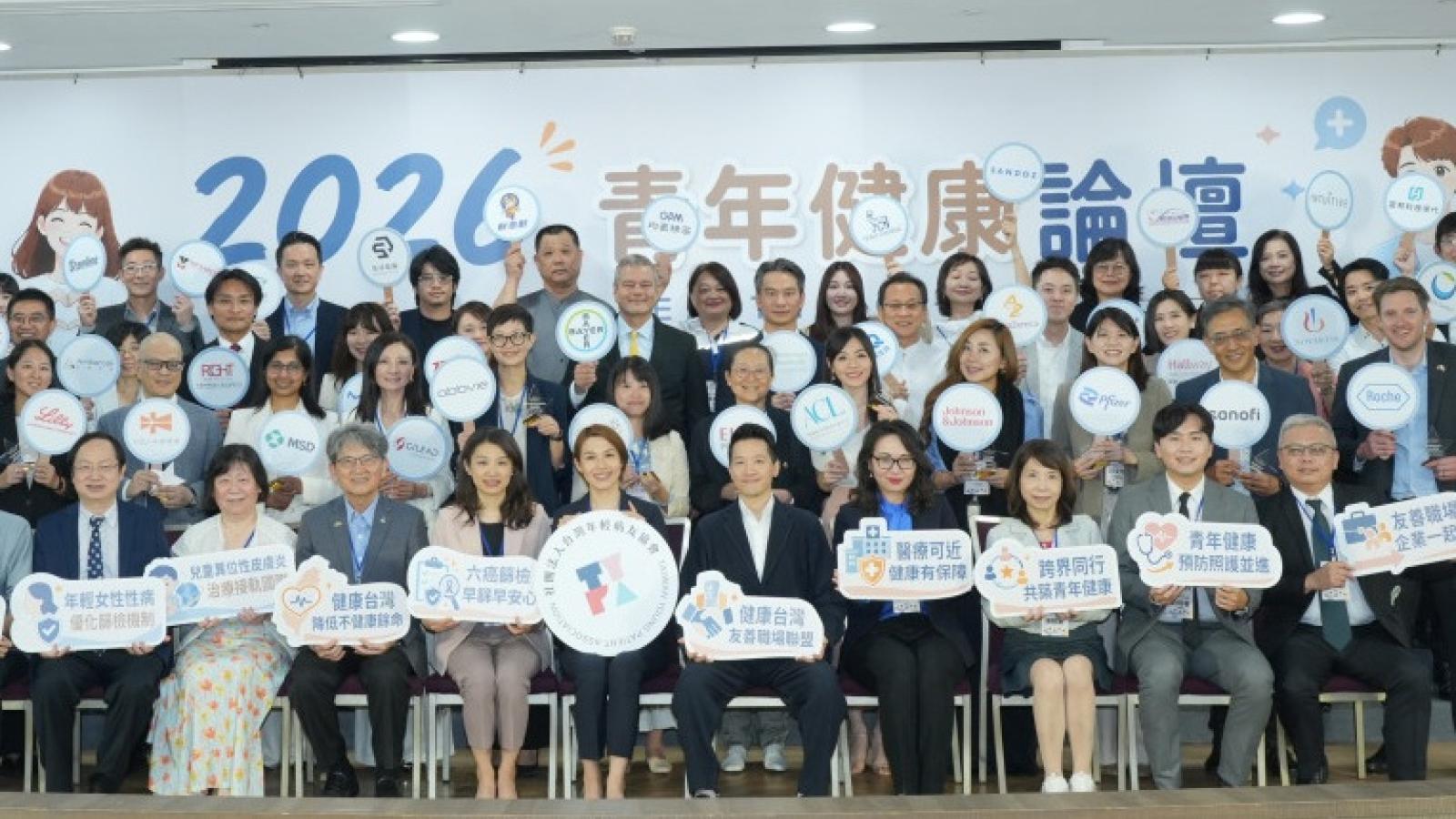
"Being young doesn't mean you're safe from illness," especially as diseases striking young adults are often underestimated due to assumptions of youth. On the 12th, the Taiwan Young Patients Association hosted the '2026 Youth Health Forum,' examining support gaps across prevention, diagnosis, treatment, and post-illness life for young people, covering early-onset colorectal cancer, rare soft tissue tumors, stroke-related disabilities, HER2-positive breast cancer, STI prevention, and pediatric atopic dermatitis.
Lai Cheng-da, Director of the Taiwan Society of Colon and Rectal Surgeons, pointed out that the global onset age for early-onset colorectal cancer is declining. Symptoms such as rectal bleeding, changes in bowel habits, and chronic abdominal discomfort are often overlooked because patients are young. Cases of early-onset colorectal cancer in those under 50 are rising—and it's already happening now. Young patients must not assume it can't happen to them. "The youngest colorectal cancer patient I've treated was only 18," he said.
Beyond common cancers whose warning signs are often ignored by young patients, some diseases may be delayed in diagnosis due to unclear classification. Li Ming-ching, Oncology Department, National Taiwan University Hospital Hsin-Chu Branch, noted that certain rare soft tissue tumors, though not traditionally malignant, may locally invade, recur repeatedly, and affect fertility, careers, and daily functioning. Patients often visit multiple specialists due to unclear symptoms and fall into diagnostic, referral, and coverage gaps because their condition is deemed "not cancer, not a rare disease," highlighting the urgent need for better interdisciplinary care coordination.
Additionally, Tang Shu-chun, Secretary-General of the Taiwan Stroke Society, reported that nearly 20% of ischemic stroke patients are of working age. Stroke-induced disability creates a dual economic burden of lost labor and rising care costs. Surveys show 60% of stroke survivors face reduced working hours or job loss, and nearly 50% experience monthly financial burdens increasing by over NT$30,000. Yet, the current frontline thrombolytic treatment rate remains at only about 6.2%.
Chen Hsiu-hsi, Professor at National Taiwan University School of Public Health, cited a German WifOR study showing that in the Asia-Pacific region, the value of unpaid labor and caregiving preserved through health improvements from breast cancer treatment accounts for 25% of the total societal impact. Innovative treatments not only extend life but also reduce labor loss from family caregiving, sick leave, or job abandonment. For example, innovative HER2+ breast cancer treatment in Taiwan generates NT$10.3 billion in socioeconomic value.
Lin Hsi-hsun, Director of the Taiwan AIDS Society, noted that disease stigma, privacy concerns, and inconvenient testing still hinder public willingness to undergo STI/HIV screening. Implementing friendly, routine (opt-out) integrated STI/HIV screening can lower barriers, help identify infected individuals early, and link them to care. Future efforts must further integrate sexual health education, screening services, and care resources.
Chao Hsiao-chiu, Director of the Taiwan Dermatological Association, stressed the need for early intervention and continuous treatment for pediatric atopic dermatitis. Studies show that advanced treatment before age six reduces comorbidity risk by 46%, and nearly 90% of children show significant skin improvement after two years of continuous medication. International guidelines recommend biologics for moderate-to-severe cases in children over six months, but Taiwan's NHI currently only covers those aged six and above. She urged faster alignment with international standards to close the treatment gap for young children.
FACT BOX
- Source: PR Times
- Category: Event