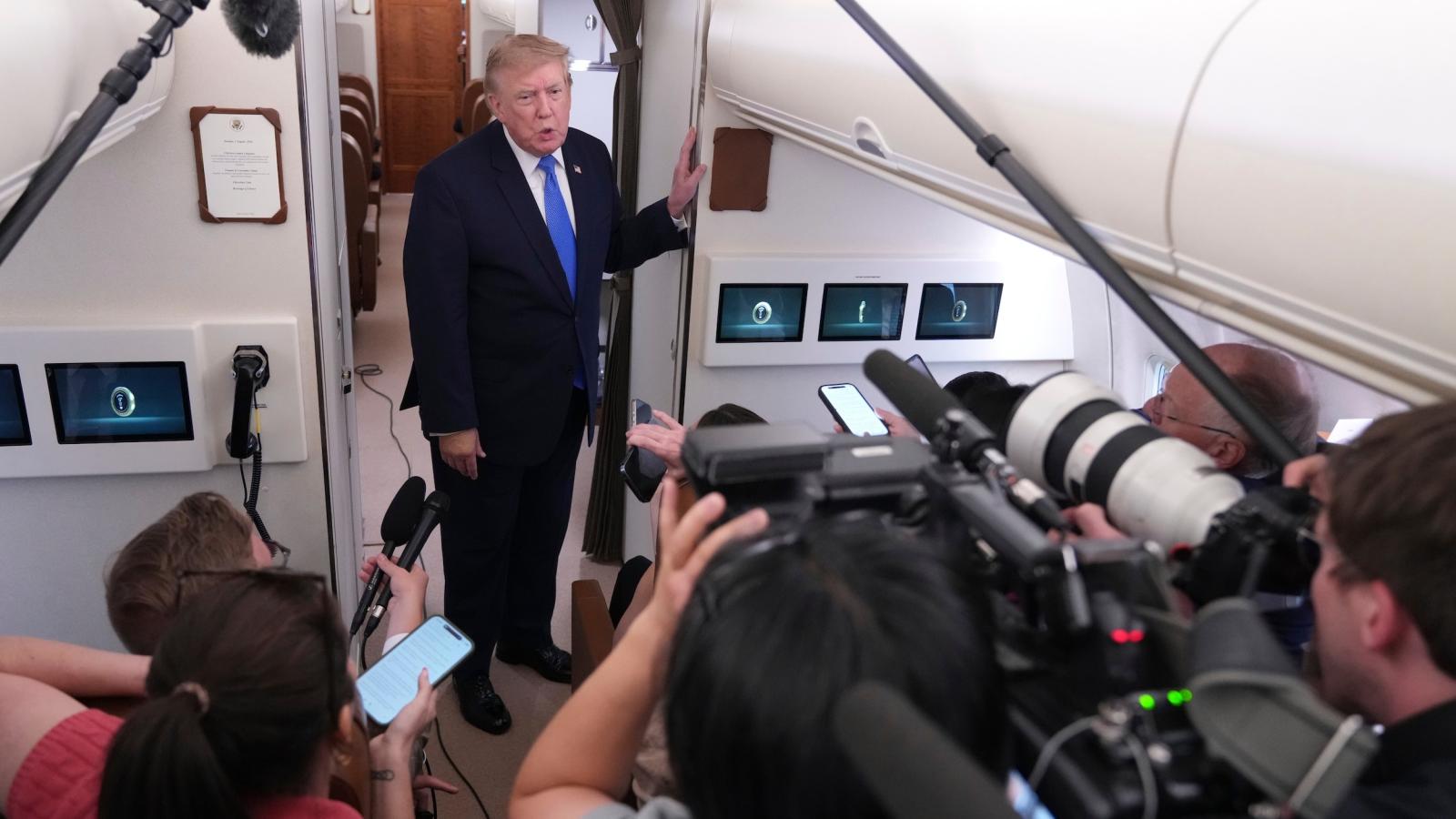
On August 1, U.S. President Trump announced the cancellation of a new round of military strikes against Iran. However, this does not signify peace, but rather another pause—a temporary and superficial calm—within the two-year pattern of 'strike and pause' actions by the U.S. and Israel against Iran.
Less than half a year ago, the U.S. and Israel launched fierce airstrikes on Iran, killing Iran’s Supreme Leader Khamenei and several other high-ranking officials and generals. Yet, after Iran retaliated, they halted the war, reached a peace agreement, and unfroze Iranian assets for post-war reconstruction. Just as people began to believe that U.S.-Iran relations were moving toward peace, in July, U.S. forces once again attacked Iranian military facilities, rendering the peace agreement meaningless.
Looking back to 2025 and even to Trump’s first term in 2020, the U.S. similarly bombed Iran and conducted 'decapitation' strikes, but refrained from launching a ground war and eventually ceased attacks. Yet, these ceasefires did not lead to lasting peace, but were merely truces preceding new conflicts.
Many people unfamiliar with or only superficially aware of Middle Eastern and international affairs are deeply puzzled. They do not understand why the U.S. and Israel alternately bomb Iran and then suddenly halt operations. Despite engaging in peace talks and even reaching agreements, the fighting inexplicably reignites. The motivations behind whether or not the U.S. and Israel attack Iran seem irrational and difficult to predict.
Why the On-Again, Off-Again War?
In fact, the U.S. and Israel’s intermittent war against Iran can be briefly attributed to only two factors: Trump’s 'capricious' political style and Israel’s unspoken yet glaringly obvious malicious intentions regarding Iran.
It is well known that Trump is a highly distinctive figure whose words and actions are often unpredictable and inconsistent, even in major domestic and foreign policy decisions. For example, in 2025, Trump imposed high tariffs on nearly all countries worldwide, but the initiative fizzled out inconclusively. He was extremely tough on China, launching a trade war and imposing sanctions, but in 2026, he visited China in a friendly manner, significantly easing relations. On the Russia-Ukraine issue, Trump has vacillated—sometimes aligning with Putin and distancing from Zelenskyy, other times sympathizing with Ukraine and criticizing Russia.
On the Iran issue, Trump’s capriciousness is even more evident. At times, he is extremely hostile toward Iran, bombing military and civilian facilities, killing Iranian leaders such as Khamenei and Soleimani, and even declaring he would 'destroy Iranian civilization.' Yet, Trump is unwilling to get bogged down in a ground war, fearing backlash from the military and public opinion. His attacks are limited to airstrikes, with no intention of sending ground troops to overthrow the Iranian regime or fully occupy the country—hence, airstrikes often end abruptly.
After Iran blocked the Strait of Hormuz and attacked Gulf states and U.S. military bases, Trump even agreed to unfreeze seized Iranian funds and restore the Iran nuclear deal he had previously torn up. Yet, shortly after reaching an agreement, Trump resumed attacks on Iran, rendering the agreement seemingly worthless.
Trump’s erratic behavior, while driven by practical motives—such as disregarding international law and peace to launch military strikes and sanctions, but retreating when facing strong resistance—also serves utilitarian purposes, like rallying hawkish factions and gaining political support. However, the degree of his inconsistency often exceeds rational calculation, driven instead by mood and subjective will, disregarding negotiations, agreements, humanitarian concerns, and international law.
For the sake of momentary pride or impulse, even the interests of the U.S., the Republican Party, and himself are set aside. Therefore, it is impossible to predict or judge Trump’s stance and actions toward Iran using conventional standards—such as U.S. interests, treaty obligations, or global geopolitical trends.
Trump’s capriciousness and unpredictability mean that the intermittent attacks on Iran—starting and stopping without clear logic—are now 'normal.' This pattern has persisted for years and will likely continue as long as Trump remains U.S. president. Only when Trump is no longer in office can conventional standards be reliably applied to assess U.S.-Iran relations.
What Role Does Israel Play?
Another critical factor influencing the Iran conflict is Israel’s role and strategic objectives. Since Iran’s 1979 Islamic Revolution, when radical Islamists seized power, Iran and Israel have become mortal enemies. Iran repeatedly declares it will 'destroy Israel' and supports anti-Israel armed groups like Hezbollah in Lebanon. In response, Israel assassinates Iranian nuclear scientists, conducts espionage and attacks on Iran, and supports anti-Iranian forces. The two sides have continuously engaged in covert and overt confrontations, each seeking the other’s total destruction.
Although Israel possesses strong military and economic power, Iran’s large population, vast territory, and considerable national strength make it difficult for Israel to eliminate the Iranian regime alone. Therefore, drawing the U.S. into the conflict—so that America and Israel jointly strike Iran, destroy the Islamic regime, or at least severely weaken Iran’s national power—has become Israel’s optimal strategy and a goal pursued at all costs.
However, despite Iran’s strong anti-American rhetoric, its actual foreign policy toward the U.S. and the West has been restrained since the 1990s, leaving the U.S. without sufficient justification for military intervention or regime change. When the Iranian nuclear issue erupted, the U.S. considered attacking, but even then, strikes were limited to nuclear facilities. In 2015, the U.S. and Iran reached the 'Iran Nuclear Deal' to resolve the issue peacefully, sparing Iran from attack.
Israel has long urged the U.S. to launch a full-scale invasion of Iran, as it did with Iraq. However, from Clinton to Bush and Obama, no administration followed Israel’s advice, maintaining a confrontational yet peaceful relationship with Iran.
It was only with the rise of Trump—a leader who leans heavily toward Israel on Middle East issues, opposes and seeks to dismantle Obama’s political legacy, and enjoys support from Republican hawks who are tough on Iran—that Israel finally found a U.S. leader willing to attack Iran. Through persistent lobbying by Netanyahu and Israel’s U.S. diplomatic team, Trump and pro-Israel, anti-Iran hardliners within the U.S. military and political elite decided to launch military strikes and impose harsher sanctions on Iran, providing Israel with support and a strategic backing. It was precisely Israel’s instigation that led to Trump’s multiple attacks on Iran, including the killing of core figures like Khamenei and Soleimani.
What Is Israel’s Goal?
For Israel, the primary objective of its Iran strategy is to overthrow the Islamic regime and install a pro-Israel leader—such as the exiled Pahlavi prince—to govern Iran. If this goal proves unattainable, the alternative is to inflict maximum damage on the Iranian regime and weaken its national strength. Both objectives depend heavily on military strikes, particularly with U.S. involvement.
Israel opposes and actively sabotages U.S.-Iran peace talks, aiming to prevent reconciliation that would dash its hopes. This is one reason why, despite multiple negotiations and consensus, fighting unexpectedly reignites.
Whether it is the U.S. and Israel jointly killing Khamenei and numerous Iranian military and political leaders, reducing many military and civilian targets to rubble, or imposing economic sanctions that collapse Iran’s economy and intensify internal unrest—depriving groups like Hezbollah and the Houthis of Iranian support—these outcomes are precisely what Israel desires. Israel hopes to partner with the U.S. in a long-term military campaign against Iran, plunging it into poverty and violence, internal and external crises, rendering it incapable of challenging or threatening Israel.
It is precisely Trump’s capricious, power-loving, militarily adventurous personality—unwilling to be constrained by international law—and Israel’s intense hostility toward Iran, combined with its manipulation and instigation of the U.S., that have created this irregular cycle: repeated U.S. airstrikes on Iran, sudden war endings, and broken peace agreements.
While this state may benefit Israel in weakening Iran, it harms Iran’s nation and people, Middle Eastern peace, and America’s long-term interests. This intermittent yet ongoing war between the U.S./Israel and Iran, along with Iran’s retaliations, has caused numerous casualties, including many Iranian civilians, and some U.S. troops have been killed or injured by Iranian missiles. The attacks have not brought freedom, democracy, or human rights to Iran. Instead, Iranian civilians suffer under internal authoritarianism and corruption, coupled with relentless external bombardment and sanctions—living in a hellish existence.
Middle Eastern countries also live in fear, unable to enjoy peace and security. Multiple rounds of conflict and tension have disrupted oil routes, harming both oil-exporting and oil-importing nations, dragging down the global economy. Even for Israel, while short-term strategic goals may be achieved, this is not a reliable path to achieving or maintaining long-term peace and sustainable interests.
Therefore, the U.S.’s intermittent, endless attacks on Iran over the past two years, and the ongoing 'strike and pause' state between the U.S./Israel and Iran, can be described as a 'prolonged bad drama'—offering no benefits to the U.S., Iran, or other involved nations, and lacking any moral, rational, or legal (under international law) justification for continuing the war. It only causes more casualties and losses. Ending this war—never meant to happen in the first place—as soon as possible, completely and irreversibly, and establishing a reliable treaty that balances all parties’ interests to achieve lasting peace, is the most urgent and necessary course of action.
Yet in reality, neither Trump, who leads the U.S., nor Netanyahu, who dominates Israel, will choose the path of lasting peace. Trump not only disdains peace and agreements but also uses attacks on Iran to divert domestic conflicts, gain support from hardliners, and undermine the Democratic Party. Over the next two years, Trump is unlikely to pursue peace and may even open new fronts in places like Cuba, using foreign wars to sustain his power.
Meanwhile, Netanyahu also seeks to further solidify his 'tough leader' image and gain foreign policy achievements through war and attacks on Iran, boosting his domestic support.
FACT BOX
- Source: PR Times
- Category: News