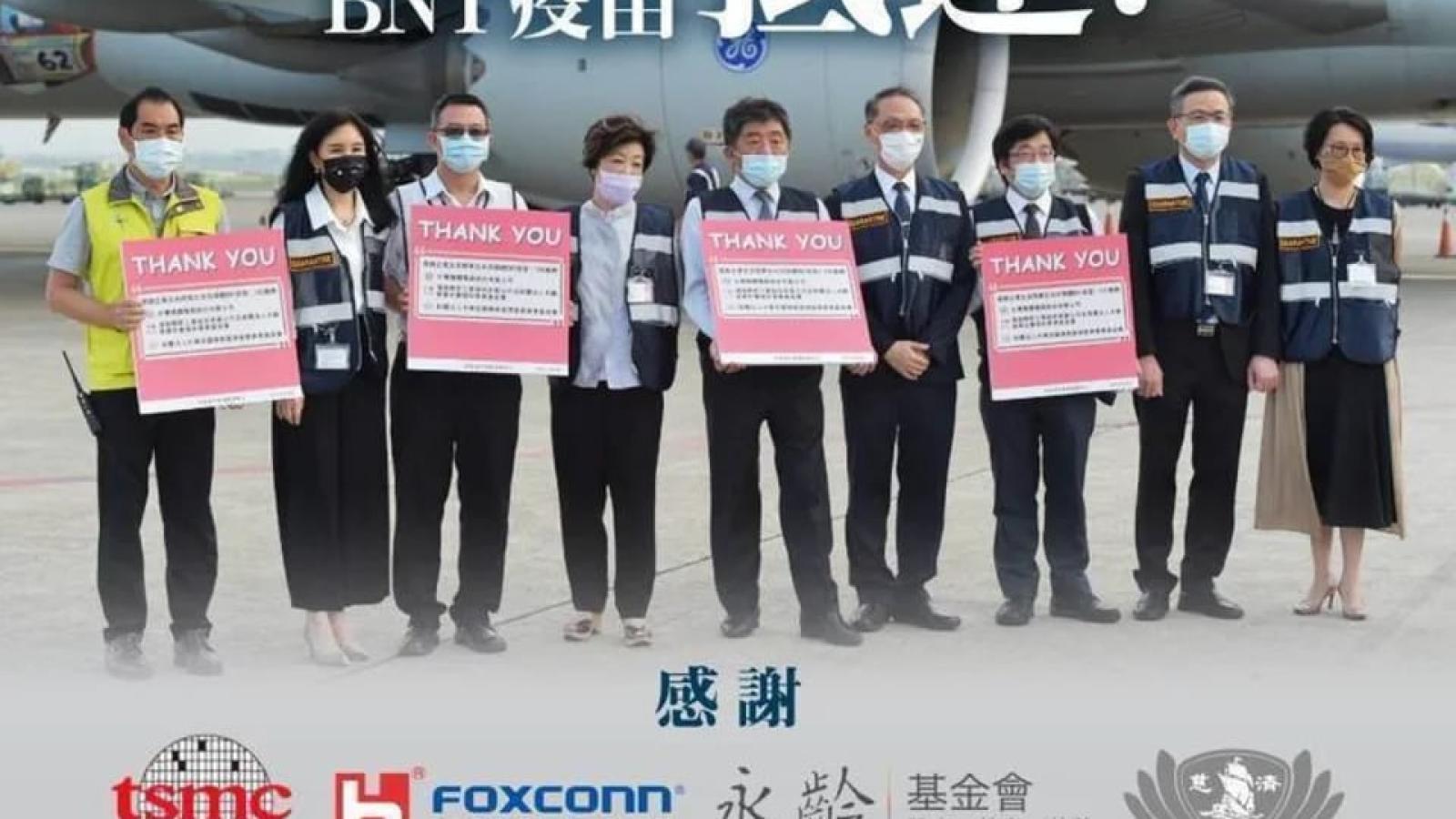
How large is NT$1.06 billion? For an average household, it is an astronomical figure beyond imagination across generations. For a large charitable organization, it may not be enough to shake the entire balance sheet. However, what is truly troubling about the Tzu Chi BNT vaccine procurement case is not how much money disappeared from the books, but another intangible asset that never appears on financial statements—trust.
Recently, the Taichung District Prosecutors Office indicted Chen Yu-Hsuan, former chairman of the Changhua Bar Association, and 16 others. The charges allege that the defendants exploited the demand for BNT vaccine procurement during the pandemic, claiming access to supply channels to obtain a commission of USD 30 million (approximately NT$1.06 billion) from Tzu Chi, followed by money laundering and asset conversion. Whether the defendants committed crimes must be determined by the courts according to law. Currently, there is no evidence to conclude that Tzu Chi insiders were involved in criminal activities.
However, the presumption of innocence protects criminal defendants, not organizational governance. Understanding this incident merely as 'a lawyer allegedly defrauded Tzu Chi of ten billion' underestimates its true policy significance. Tracing the flow of funds and institutional gaps reveals a troubling chain of governance risks:
Policy uncertainty → Gatekeeper failure → NPO internal control failure → AML failure → Criminal proceeds assetization → NPO credibility crisis.
The first domino was actually set in place back in 2021. At the time, the pandemic was severe, and BNT vaccines were highly scarce. Government and private procurement efforts were entangled in political disputes. Although TSMC, Foxconn/Yonglin, and Tzu Chi eventually secured 15 million doses of BNT vaccines, the real issue worth examining is not merely 'whether they ultimately succeeded in purchasing,' but why, during the most chaotic period, society so readily believed that 'special channels were needed to buy vaccines.'
When normal pathways are unclear, guides naturally become valuable. The more uncertain administrative procedures are, the higher the market value of claims like 'I have connections.' This is the fundamental logic of rent-seeking.
The government may argue it ultimately did not block vaccine imports. However, public governance cannot justify process correctness solely by favorable outcomes. The real reflection should be: if the government had earlier established a transparent, clear, and predictable private procurement window—clarifying who could purchase, how reviews would be conducted, and how original manufacturer authorization would be confirmed—how much market value would 'special channels' have retained?
The more difficult the system, the more business opportunities for brokers.
The second domino is the 'gatekeeper'—professional intermediaries such as lawyers, accountants, and consultants. Their presence in major transactions is not merely due to legal or financial expertise, but because their professional status itself carries credibility.
A stranger claiming 'I have vaccine access' would naturally be met with suspicion. But if someone with professional credentials—such as a lawyer or bar association leader—makes the same claim, skepticism may decrease. This is the most ironic aspect of the case: professional credibility, meant to reduce transaction risk, can become the most efficient pass when abused to breach risk defenses.
The third domino is NPO internal control. Charity can trust people, but ten billion cannot rely solely on trust.
For such a massive special procurement, what due diligence was conducted on the counterparty? How was supply capacity verified? How was the commission determined? Who conducted legal and financial reviews? Who approved the payments? Was there performance guarantee? Why wasn't payment made in stages based on performance?
These questions do not require waiting for a criminal verdict. The judiciary asks 'who committed the crime,' while governance asks 'why didn't the system prevent it?' Even if Tzu Chi is ultimately recognized by the judiciary as a complete victim, it does not mean its organizational controls deserve full marks. Victim status and governance responsibility are two separate matters.
The fourth domino is anti-money laundering (AML). In Taiwan, if an elderly person attempts to withdraw NT$500,000 from a bank and appears slightly suspicious, bank staff may immediately notify the police. Officers arrive, question the purpose, and contact family members to prevent fraud. This is, of course, necessary.
However, when billion-dollar funds are dressed in corporate structures, contracts, and professional services, they may appear more 'legitimate' than a NT$500,000 withdrawal. This creates the most absurd scene in Taiwan's anti-fraud efforts:
'When a money mule withdraws NT$100,000, alarms sound; for billion-dollar transactions, first check the business card.'
When funds are further converted into gold, real estate, corporate equity, or overseas assets, the issue enters the fifth stage—assetization of criminal proceeds.
If the government's anti-fraud KPIs remain satisfied with the number of mules arrested, accounts frozen, and transfers blocked, police will forever be chasing the cheapest end of the criminal supply chain. Mature crime governance must not only catch 'those who carry the money,' but also prevent criminal proceeds from becoming 'wealth that can be retained.'
Yet, if the first five lines of defense fail consecutively, the sixth and final domino to fall may be the most costly—trust.
The true capital of a charitable organization is not land, hospitals, or bank deposits, but the willingness of people to believe in it and entrust their money.
When a business owner donates their own money, it is personal charity. But when a publicly listed company uses shareholders' funds for large donations, it involves the fiduciary duty of the board. The board must answer: Is the recipient organization's governance sound? Are financial controls reliable? Have major financial incidents been fully investigated?
If the answers are unclear, the most rational choice for a company is to tighten scrutiny, reduce donation amounts, or even suspend donations. Thus, a ten-billion-dollar case could lead to an even larger cost:
NPO credibility decline → Companies tighten donation reviews → Large donations become conservative → Fundraising costs rise for nonprofits → The entire third sector suffers a 'trust discount.'
At this point, the damage extends beyond Tzu Chi. Nonprofits collectively rely on a precious public asset—social trust. When a major NPO faces a significant governance controversy, other organizations may be required to provide greater financial disclosure, external audits, and proof of fund usage.
The credit consumed by one organization may ultimately be paid for by the entire nonprofit sector.
Therefore, regulatory authorities cannot remain mere spectators. If supervision of foundations consists only of collecting annual reports, checking board member lists, and verifying document stamps, it is not governance—it is merely document management.
Large NPOs should establish systems for reporting significant abnormal transactions, external independent audits, conflict-of-interest disclosures, due diligence for major procurements, and crisis governance. Tzu Chi itself should proactively and fully explain its decision-making, contracts, payments, risk controls, and post-incident recovery efforts.
This is not an excessive demand on victims, but a necessary measure to protect the most valuable asset of a charitable organization.
If NT$1.06 billion was defrauded, the judiciary can pursue recovery. Gold can be seized, real estate confiscated, and civil proceedings can seek compensation.
But trust has no account to freeze, no gold to seize, and no court order to enforce return.
Ten billion may be recoverable. But who can one petition to forcibly execute the return of lost trust in a charitable organization?
*The author is a Ph.D. in management and an adjunct professor at a university.
FACT BOX
- Source: PR Times
- Category: News