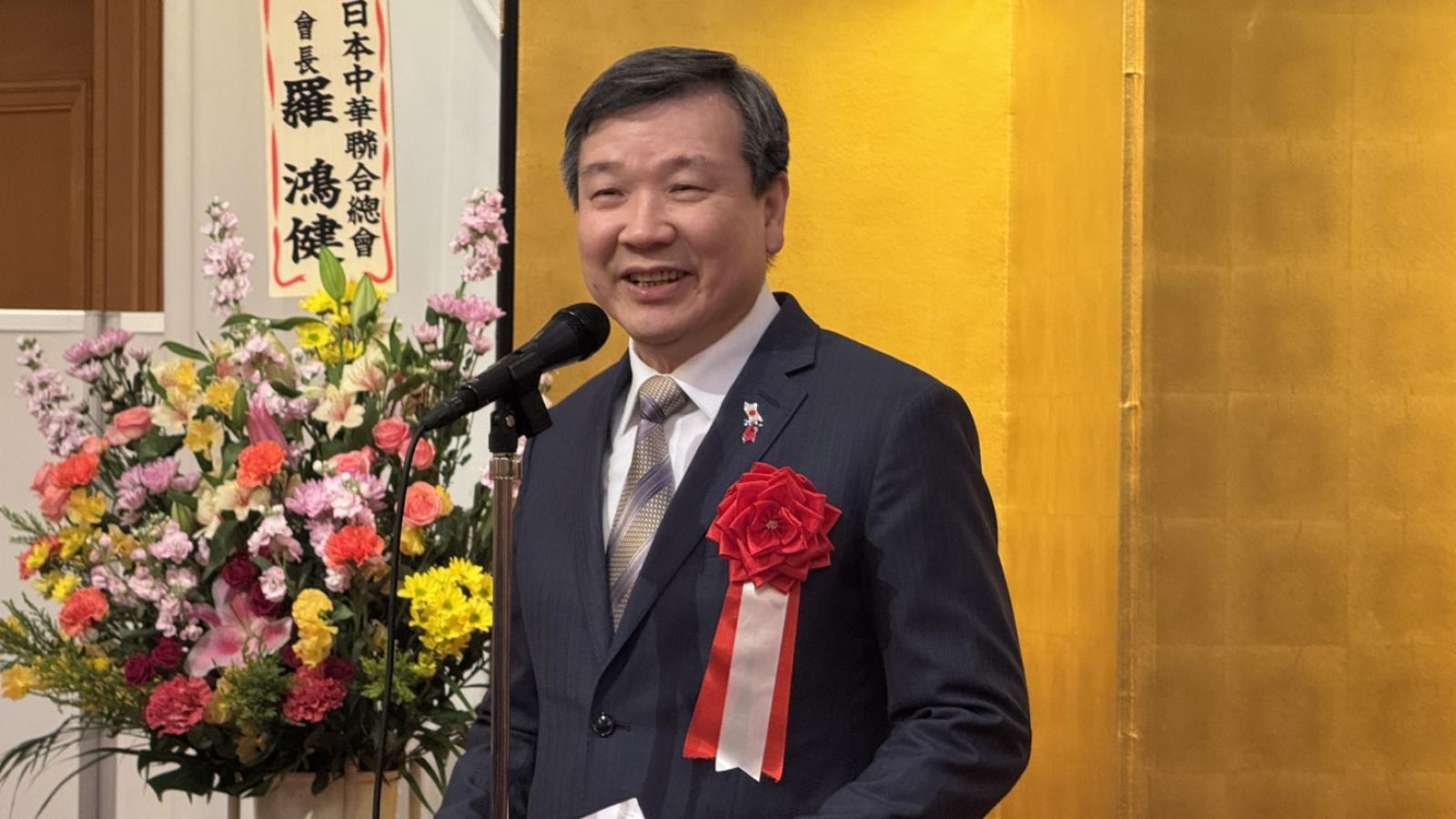
On September 9, Nagasaki held its annual Atomic Bomb Peace Memorial Ceremony, but the city government placed Taiwan’s delegation outside the diplomatic section, effectively downgrading its status. In protest, Taiwan’s Representative to Japan, Lee I-yang, chose to boycott the event, sending the Fukuoka Branch Director at a lower rank instead. However, Nagasaki Mayor Suzuki Shiro told Japanese media that 'Taiwan was never on the invitation list.' On the 12th, Lee responded by revealing the truth, asking, 'What logic says we should be humiliated just for proactively seeking participation?'
Lee posted on Facebook, questioning the public's need to understand Mayor Suzuki’s claim that 'Nagasaki never invited Taiwan.' He explained, 'For 79 years after WWII, Taiwan has never been invited to the peace ceremonies in Hiroshima or Nagasaki.' Yet, many Taiwanese—workers, overseas citizens, students, and Taiwanese soldiers in the Japanese military—were victims of the atomic bombings. Taiwan should participate to comfort survivors and express its commitment to peace. Therefore, last year, on the 80th anniversary of the war’s end, he applied for participation in both Hiroshima and Nagasaki for the first time since taking office.
After 79 Years, Taiwan Finally Participates — How Do Hiroshima and Nagasaki Differ?
Lee noted that last year, Hiroshima changed its approach: instead of 'inviting,' it issued 'notifications' welcoming all countries. Taiwan expressed its intent to attend and received official notification, with its delegation listed in the diplomatic section of the ceremony program. This year’s treatment remains the same.
In contrast, Nagasaki’s approach is vastly different. Mayor Suzuki stated that foreign invitees are limited to countries with embassies (diplomatic allies) and UN member states. Since Taiwan is neither, it cannot sit in the 'diplomatic section' and was instead placed in the 'international organizations section' for general overseas guests.
Lee criticized, 'Nagasaki’s decision is wrong and unacceptable.' Peace memorial ceremonies are symbolic events, not restricted membership organizations like WHO or ICAO with formal rights and obligations. Nagasaki should not exclude Taiwan simply because it lacks diplomatic ties with Japan or UN membership.
Responding to Critics: 'Why Attend If Not Invited?' — Lee: 'Why No Right When Taiwan Has Survivors?'
Lee addressed critics who questioned, 'Why attend if not invited?' He countered, 'Why shouldn’t we? Tens of thousands attend these ceremonies. Taiwan has atomic bomb survivors—why shouldn’t we have the right to participate? We passively refrained for 79 years; what’s wrong with proactively seeking participation now?'
He emphasized that Hiroshima sets the right example. Hiroshima established the 'Mayors for Peace' organization to promote nuclear abolition and global peace, inviting cities worldwide. Taipei, Taichung, Tainan, and Kaohsiung have all joined. Hiroshima doesn’t bar Taiwan due to lack of diplomatic ties or UN status—those who love peace should stand together. This sets a clear precedent for Nagasaki.
Inviting Nuclear Powers China and Russia While Excluding Taiwan — Lee: 'Completely Contradicts Nuclear Disarmament'
Lee stressed the absurdity: Nagasaki annually invites authoritarian nuclear powers like China, Russia, and North Korea, yet refuses to even consider Taiwan—an ally in peace, a close partner, and Japan’s third-largest trading partner—as an invitee. This directly contradicts the ceremony’s goal of 'nuclear disarmament.'
He recalled that last year was Taiwan’s first opportunity in 80 years to attend Nagasaki’s ceremony. Despite feeling humiliated, he attended to comfort survivors and convey peace. Afterward, he issued a protest statement, widely reported. According to Fukuoka Branch Director Chen, Nagasaki officials had earlier thanked Taiwan for attending—yet their actions were inconsistent. This year, Taiwan downgraded its participation as a protest against Nagasaki’s disrespect.
Lee reiterated, 'What logic says Taiwan must be humiliated for proactively seeking participation?' He noted that at the Emperor’s garden party, the Emperor’s birthday reception, and MFA-promoted cultural events, Taiwan enjoys equal treatment with diplomatic envoys—no dignity has been compromised. China, seeing an opportunity, has jumped into the fray, but this has united pro-Japan and pro-Taiwan forces. The incident clearly shows that China is the common enemy. The tragedy of the atomic bomb must never be repeated—first, Taiwan and Japan must stand together against China’s threats.
FACT BOX
- Source: PR Times
- Category: News