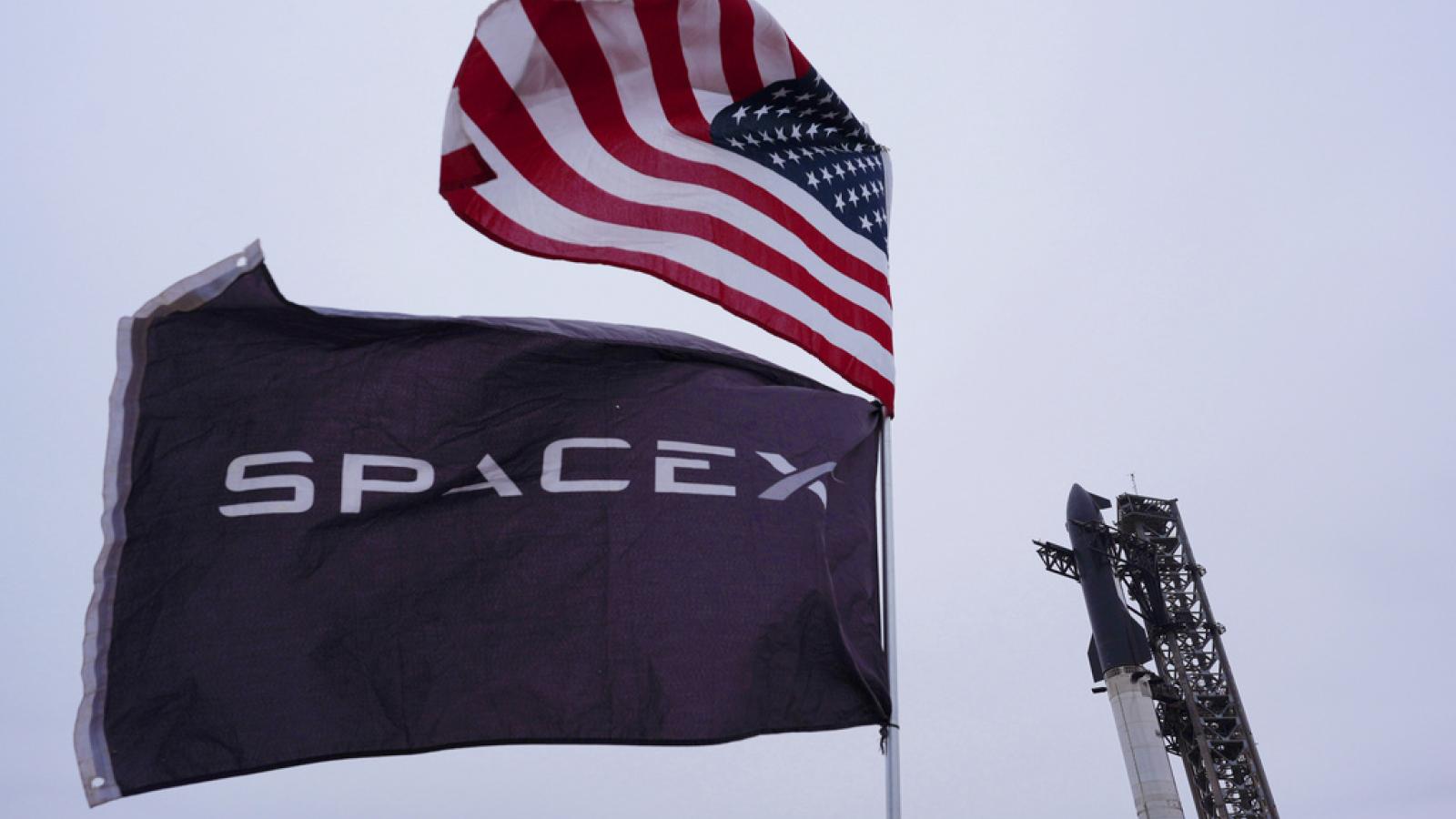
After SpaceX went public, market attention focused not only on its stock price but also on a group of investors who had rushed to participate in its pre-IPO offering. They discovered that what they invested in was not actual shares, but layered SPV (Special Purpose Vehicle) interests. Some investors, believing they held hundreds of thousands of dollars worth of SpaceX stock, were later informed that the related shares had already been sold before the IPO, prompting investigations by the SEC and FBI and triggering a crisis of confidence in the fast-growing pre-IPO investment market.
When SpaceX listed in June at a valuation of approximately $1.77 trillion, American engineer Ram Rupireddy thought his nearly six-year wait was finally over. According to his investment platform records, he held the equivalent of 2,500 SpaceX shares, valued at over $300,000 at listing prices—enough to cover college tuition for two children. However, days later, when he logged back into his account, the screen had completely changed.
The platform now showed that the related holdings had already been sold by the end of 2024, and he would receive only about $45,000. More confusingly, both his 2025 tax documents and the platform’s May 2026 records still indicated he held a position in SpaceX.
This incident has now become a case under investigation by U.S. regulators, but the real concern extends beyond a single investment dispute. It reveals that the rapidly expanding pre-IPO market is built upon a financial structure that ordinary investors may not fully understand.
Investors aren’t actually buying stocks
Unlike public markets, most individual investors cannot directly purchase shares of private companies like SpaceX. As a result, the market has developed the SPV model. An SPV does not sell shares; instead, it raises funds to form a fund, which then holds shares in private companies or invests in another layer of holding funds. What investors buy is merely a fund interest—a claim to the economic benefits of the underlying stock—not direct ownership of the shares themselves.
In recent years, as AI and space startups like SpaceX, OpenAI, and Anthropic have delayed their IPOs, significant capital has sought early exposure, causing the SPV market to expand rapidly. This allows high-net-worth individuals to access investment opportunities once reserved for venture capital circles. However, the biggest problem with this model is that ownership can be subcontracted across multiple layers.
With layer upon layer of SPVs, it becomes increasingly difficult to identify the true shareholder
According to The Wall Street Journal’s investigation, Late Stage Management did not directly hold SpaceX shares. The actual structure was that early SpaceX shareholders first established an SPV, which was then partially acquired by Bahamas-based Capital Truth. That stake was repackaged and sold to Late Stage, which then raised funds from individual investors.
In other words, there could be several layers of SPVs between the investor and the actual stock.
While such structures comply with market practices, they drastically reduce transparency. Investors often struggle to verify their actual holdings, whether the shares still exist, if they’ve been sold, and how proceeds are distributed.
More importantly, unlike mutual funds, SPVs are not required to disclose holdings, publish regular financial reports, or meet public market disclosure obligations, making external verification extremely difficult.
Behind high returns lies a market heavily dependent on trust
The rapid growth of SPVs is also linked to changes in the venture capital landscape. As tech companies delay IPOs longer, valuations continue to rise, and each funding round involves hundreds of millions—or even billions—of dollars. Many VCs now use SPVs to raise capital from wealthy individuals to co-invest in large deals.
As a result, SPVs have evolved from tools for professional institutions into key vehicles for affluent retail investors to access hot unicorns. But high returns come with high costs: SPVs in the market may charge up to 5% in setup or fundraising fees, plus over 20% performance carry. If multiple SPV layers are involved, each layer may add management fees, further eroding investor returns.
Even greater risk stems from information asymmetry. Since investors don’t directly hold shares, if fund managers sell early, restructure, or delay distributions, investors are left relying solely on manager notifications, with little ability to independently verify.
As Jared Fine, a partner at U.S. law firm Davis Polk, noted, investing in SPVs is fundamentally a transaction built on trust: “Ultimately, you must confirm that what you own is actually the asset you think you own.”
SpaceX is just the beginning—the next could be Anthropic
This event coincides with more AI unicorns preparing for IPOs. Market expectations suggest Anthropic may launch its IPO this fall, but in May the company already issued a public warning: share transfers not approved by the board will not be recognized, specifically naming platforms reselling equity through SPVs.
Despite this, brokers continue marketing Anthropic-related SPV products to investors, hoping to ride the next IPO wave.
The SpaceX case shows that while the pre-IPO market offers ordinary investors early access to star companies’ growth, when investment targets are heavily packaged and ownership becomes blurred, what investors actually buy may not be stocks—but merely a claim to stock rights.
As the AI unicorn IPO wave approaches, whether SPVs require better disclosure and regulation will become the next critical issue for global private markets.
This article was specially written for Feng Media by invited commentator Jin Niu Bang Bang Mang. Click here to subscribe: Feng Media × The Wall Street Journal VVIP Membership. Feng Media members enjoy the world’s lowest subscription price for full bilingual (Chinese, English, Japanese) access to WSJ, staying ahead on global political and economic frontlines.
Editor: Lin Yen-Cheng
FACT BOX
- Source: PR Times
- Category: News
- Organizations: SpaceX / Late Stage Management / Capital Truth