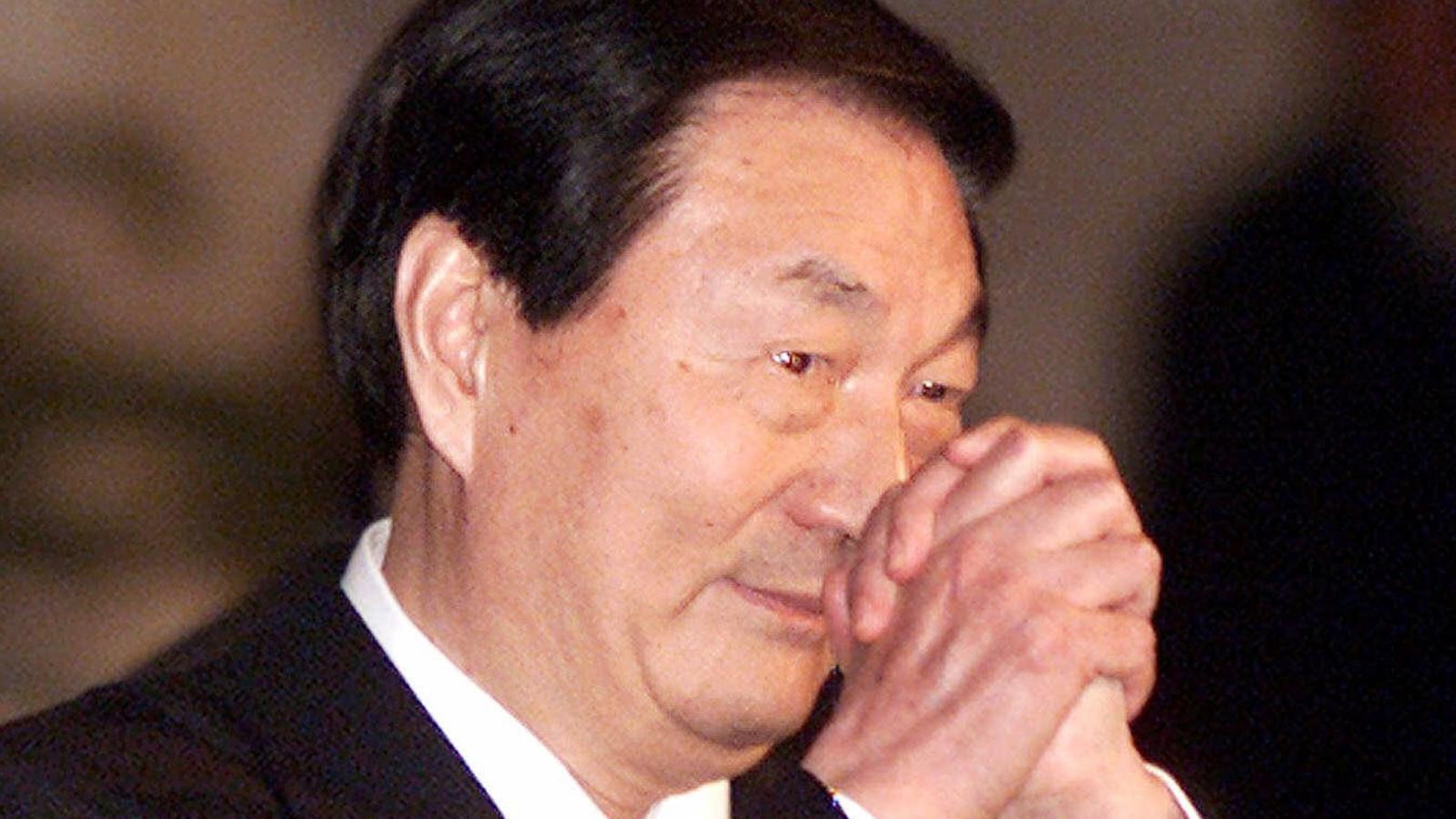
Zhu Rongji, former Premier of China, passed away in Beijing at 11:06 AM Beijing time on August 12, 2026, at the age of 97. Zhu played a central role in China's economic development after the reform and opening-up era. As Vice Premier and Premier for 12 years, he spearheaded reforms across state-owned enterprises, exchange rate liberalization, the property market, the tax-sharing system, and China's accession to the WTO, steering the country toward a market economy. As a result, China entered its fastest period of economic growth in history.
However, these reforms came at a cost. The restructuring of state-owned enterprises led to massive layoffs of industrial workers, drawing widespread public criticism. Economists, however, widely credit Zhu's reforms with establishing the foundation for China's long-term economic model.
Zhu enjoyed high public approval. Despite retiring years earlier, he consistently ranked first in Hong Kong Public Opinion Research Institute's "Popularity Rankings of Cross-Strait Political Figures" for 22 consecutive years across 12 editions, most recently in January 2023. Xinhua News Agency hailed him as an "outstanding Party member," a "loyal communist fighter," and a "preeminent leader of the Party and the state."
Both of Zhu's children hold senior positions in state financial institutions. His son, Zhu Yunlai, served as CEO of China International Capital Corporation (CICC) for a decade, overseeing major SOE listings. His daughter, Zhu Yanlai, became Vice President of Bank of China (Hong Kong) in April 2013.
Zhu's early political career was turbulent. In the 1950s, he was labeled a "rightist," expelled from the Party, and demoted. During the Cultural Revolution, he was sent to a "May Seventh Cadre School" for five years of manual labor. He was rehabilitated in 1978 and rejoined the State Economic Commission, eventually rising to become Shanghai's top leader in 1987.
During the 1989 pro-democracy movement, Zhu, as Shanghai mayor, resisted deploying military or police forces, emphasizing stability through dialogue. His approach contrasted with Beijing's crackdown and earned him recognition.
In Shanghai, Zhu prioritized the development of Pudong New Area. At the time, the east bank of the Huangpu River was undeveloped. With Deng Xiaoping's backing, Zhu pushed forward the project, transforming Pudong into a global financial hub. Former Australian Prime Minister Kevin Rudd recalled doubting Zhu's vision at first, but later acknowledged its success.
In the early 1990s, China faced ideological battles between reformists led by Deng and conservatives led by Chen Yun. Zhu supported Deng's market-oriented reforms. In 1991, through the "Huangfu Ping" editorials in Shanghai's Liberation Daily, he helped promote Deng's ideas, reigniting the national debate on whether reforms were "socialist" or "capitalist."
Zhu's leadership marked a pivotal shift in China's economic trajectory. His legacy remains deeply contested—celebrated for modernizing the economy, yet criticized for the human cost of rapid transformation.
FACT BOX
- Source: PR Times
- Category: News