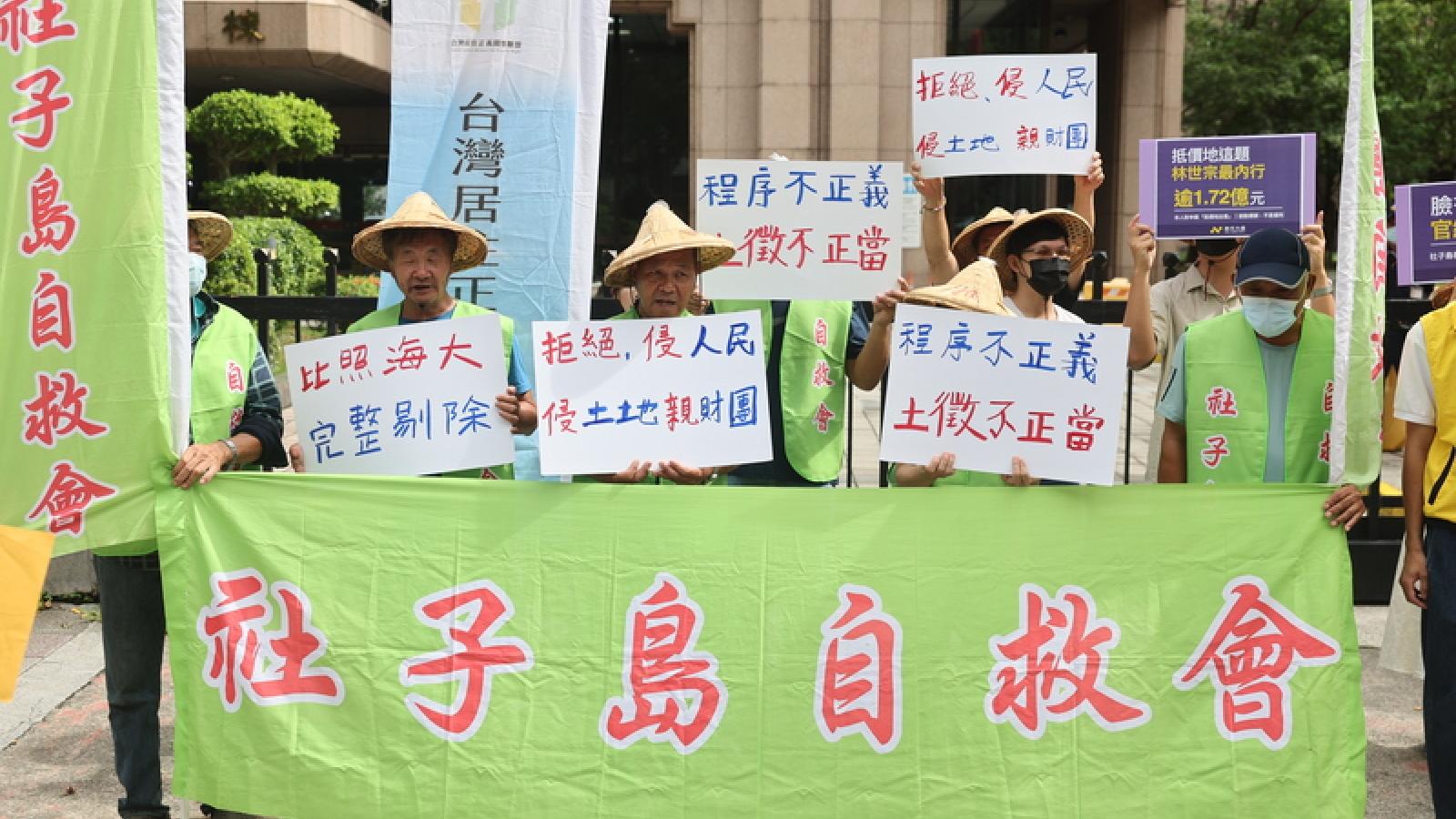
The Shezi Island Self-Help Association has once again protested at the Ministry of Interior, demanding that Minister Liu Shih-fang meet publicly and reconsider the island’s development approach. With 1,156 residents petitioning to be excluded from the land readjustment plan, they are calling on the central government to reevaluate how Shezi Island should be developed. Opposition voices deserve to be heard, but the core issue facing Shezi Island today is no longer whether the government listens—it’s how much longer this land will remain trapped in endless disputes. Building restrictions on Shezi Island have lasted over half a century. Narrow roads, inadequate public facilities, flood control, fire safety, sewage, and land use problems are no longer just property rights disputes among individual landowners—they are historical failures of capital governance. Anyone visiting Shezi Island will notice that despite its proximity to central Taipei, residents have long endured living conditions far beneath those expected in a capital city. What residents are waiting for is not just higher land value, but proper roads, drainage, fire protection, safety, and urban living standards. Therefore, the real discussion about Shezi Island should no longer be whether to develop, but how to develop, how to resettle residents, and how to ensure those who have lived here can remain after redevelopment. Fair compensation is the government’s responsibility, and residents’ property rights must be protected. However, public development compensation systems are meant to redress losses, not turn every public project into an endless bargaining tool. The government must not sacrifice residents in the name of public interest, but it also cannot allow overall public progress to stall indefinitely due to the expectations of a few. This is why I support Mayor Chiang Wan-an’s administration in continuing to push forward the Shezi Island development. At least the Taipei City Government is not passing the problem to the next administration, but is simultaneously handling land surveys, demolition compensation, relocation, and special housing projects. These systems can certainly be reviewed—compensation can be fairer, and protections for vulnerable groups can be strengthened. But the greatest danger in governance is never that a plan needs adjustment; it’s when the government knows a problem exists but does nothing out of fear of controversy. In contrast, the long-standing alternative proposed by some opponents—'lifting building bans and allowing on-site reconstruction'—sounds simple, but must answer fundamental questions: How will roads be widened? How will fire and medical emergency access be improved? How will flood protection standards be raised? Where will land for sewage systems, schools, parks, and other public facilities come from? And who will pay for it? Without comprehensive development, will we eventually have to revert to conventional land acquisition, taking land and demolishing homes one by one to secure public infrastructure? Therefore, 'on-site reconstruction' cannot remain just a popular slogan. Those proposing alternatives must responsibly clarify land use, funding sources, public facilities, and resident resettlement plans. Otherwise, such 'alternatives' may simply perpetuate Shezi Island’s困境 for another fifty years. The Self-Help Association repeatedly cites the 1,156 petitions as key evidence against land readjustment. But how many of these 1,156 are landowners, how many are building owners, and how many are merely registered residents or tenants? Are their demands a complete rejection of development, a request to exclude their own land, or a desire for better compensation and resettlement? These distinctions should be made clear, rather than lumping all under the claim that 'Shezi Island residents oppose development.' Equally important is the fact that many residents have waited decades, hoping the government will finally act. Major public projects can never satisfy everyone completely. What truly matters is not whether someone opposes, but whether the government’s plan serves the public interest, is necessary, and provides fair compensation and adequate resettlement for those affected. This is the real test for political leaders. If Chiang Wan-an only seeks to avoid mistakes, the easiest path is to keep delaying. But if he wants to prove he’s more than just a figurehead mayor—a capable leader who can solve historic urban challenges—then Shezi Island is a hurdle he cannot avoid. Political figures in Taiwan are ultimately judged not by handling universally popular issues, but by their courage to make tough decisions and bear the consequences on highly controversial, long-delayed policies. From this perspective, Shezi Island is far more than a local development project. It will become a major test of Chiang Wan-an’s governance ability and a critical watershed in how society evaluates his political leadership. Shezi Island has already waited over fifty years. If Chiang Wan-an can, while safeguarding residents’ rights, finally resolve this issue that past mayors have failed to address, it won’t just be completing an urban project—it will prove his ability to tackle Taiwan’s most difficult public governance challenges. Shezi Island doesn’t need to wait for the next mayor. What Chiang Wan-an needs to do is make this happen. *Author works in the service industry
FACT BOX
- Source: PR Times
- Category: News