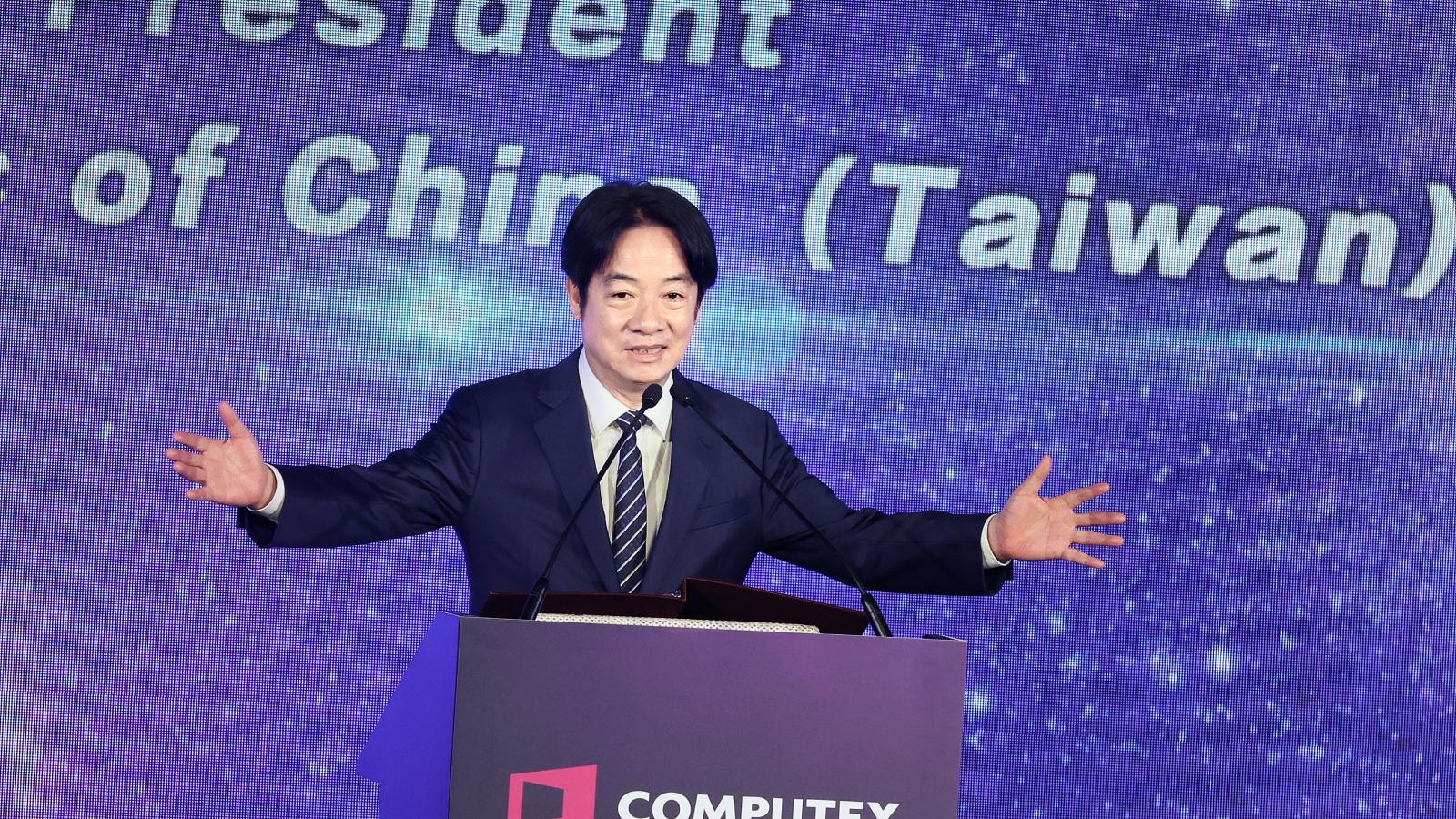
President and DPP Chair Lai Qingde, speaking at the DPP's mobile Central Standing Committee meeting in Kaohsiung on the 12th, made his first mention of the Chinese Communist Party's (CCP) Beidaihe meeting. He claimed that four directives on cross-strait policy were issued, including treating the outcome of Taiwan's upcoming 'nine-in-one' local elections as a benchmark for the success of Beijing's Taiwan strategy.
In response, Taipei City Councilor Hou Hanting criticized the remarks on Facebook, pointing out that the formal collective summer office system in Beidaihe has long been abolished. He accused the DPP of using national security issues to 'red-bait' the opposition and declared: 'This proves the DPP's national security system is delusional!'
What are the 'Four Directives' from Beidaihe?
According to the DPP's published speech content, Lai stated that recent media reports indicate the 2026 CCP Beidaihe meeting outlined four areas of action regarding Taiwan: opposing Taiwan's passage of defense budgets, strengthening substantive governance over Taiwan, expanding the 'fifth column' within Taiwan, and instructing pro-Beijing forces in Taiwan to support so-called 'patriotic Chinese forces' in the upcoming local elections.
Lai further claimed that Beijing views the outcome of the nine-in-one elections as a key indicator of the success of its Taiwan strategy, meaning Kaohsiung may face significant pressure. He emphasized, 'Kaohsiung is a strategically contested area—we must win,' and urged supporters to remain vigilant against fake news, false polls, and manipulated audiovisual content affecting the election.
Could disclosing Beidaihe intelligence lead to intelligence agents being 'exposed and killed'?
Hou Hanting questioned whether, if Lai's claims were based on actual intelligence, publicly revealing such information as president could compromise intelligence sources and collection methods. He stated: 'If there really were intelligence operatives, Lai's disclosure would repeat the same mistake as during Lee Teng-hui's era, exposing agents and cutting off our own intelligence—this is pure delusion.'
Was the Beidaihe meeting abolished back in 2003?
Hou pointed out that the CCP formally ended the high-level summer collective office system in Beidaihe in 2003. He cited a 2019 Mainland Affairs Council (MAC) report titled 'The CCP's Summer Retreat in Beidaihe No Longer Includes Meetings,' criticizing the DPP for relying on outdated political models to interpret current CCP cross-strait policy.
The MAC report indeed states that under Hu Jintao's leadership, the Beidaihe meetings and collective office system were abolished, reverting the summer retreat to a period for cadre rest and recuperation. However, a recent Reuters report noted that while the formal summer office system ended in 2003, current and retired senior officials still travel to Beidaihe during the summer for informal exchanges and discussions. Thus, the end of the formal system does not mean high-level political interactions have ceased entirely.
Why did Hou Hanting link the controversy to Kaohsiung's election?
Hou argued that anonymous national security figures are leaking information through the media, linking Beidaihe to Taiwan's local elections to serve the DPP's electoral interests. He connected this directly to the Kaohsiung mayoral race, suggesting the DPP is resorting to 'red-baiting' due to unfavorable election prospects in the city.
Hou criticized: 'You don't even understand the organizational structure of Beijing's Taiwan affairs—how can you possibly achieve 'resisting China to protect Taiwan?' He described the DPP as 'using novels as the basis for national security,' and warned that using such narratives for electoral struggle is 'even more tragic.'
FACT BOX
- Source: PR Times
- Category: News