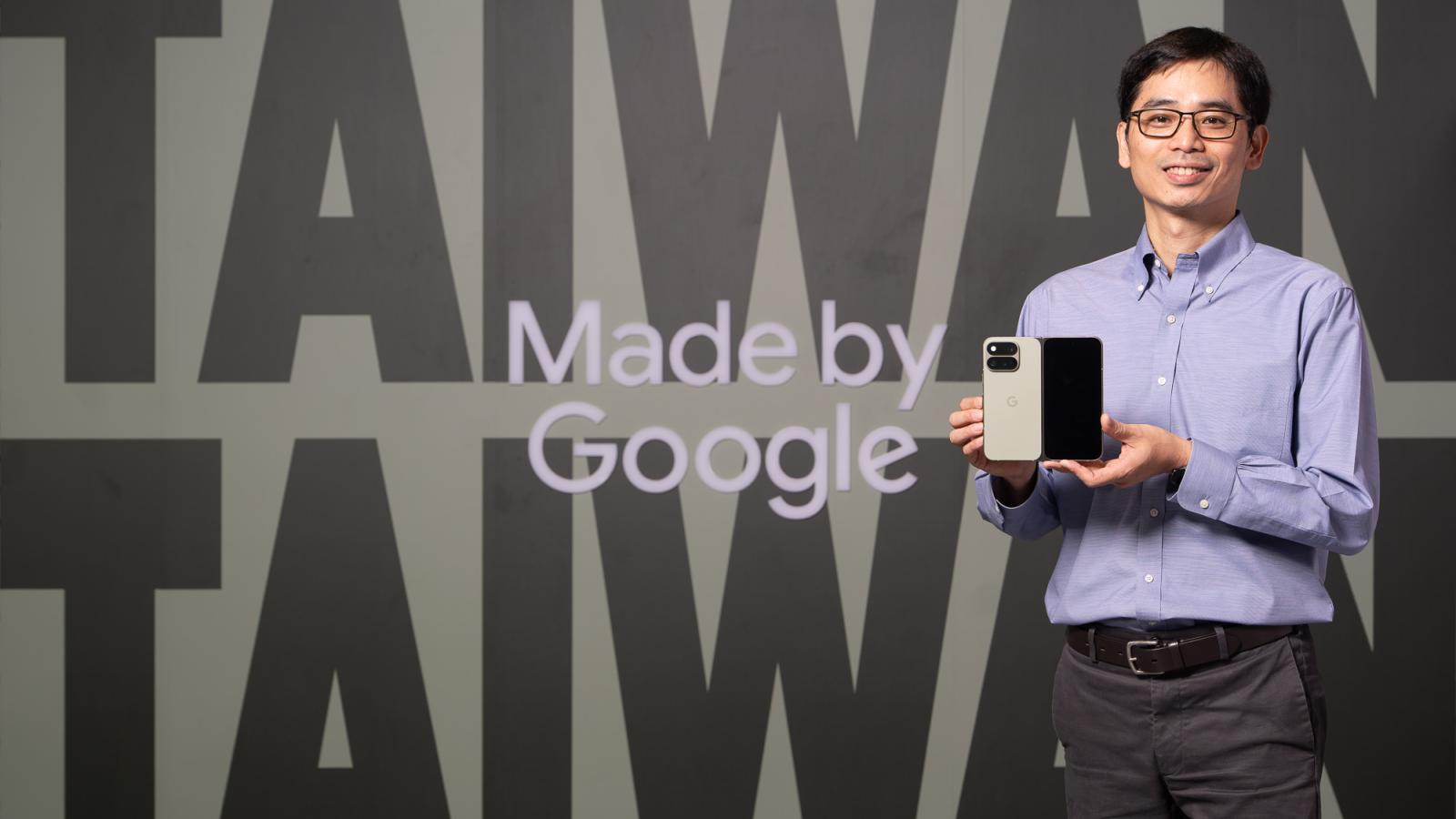
As AI smartphone features grow increasingly complex, so does the cost pressure on memory and hardware. Today (13th), Google unveiled the Pixel 11 series in Taiwan and addressed media questions on whether rising memory prices would impact new device specifications and on-device AI strategies.
Pei Yu-Chien, Vice President of Hardware Engineering at Google, acknowledged, "Memory prices are indeed rising this year," a phenomenon affecting the entire industry. However, Google’s solution isn’t merely adjusting DRAM capacity, but rather system optimization across memory allocation, SoC, and overall hardware architecture.
Notably, this year marks the 20th anniversary of Google Taiwan. Google highlighted that Taiwan has evolved from an initial engineering team into the largest global hardware R&D hub outside its headquarters, with responsibilities spanning hardware design, in-house chip development, software engineering, mechanical design, testing and validation, and operational logistics.
Pei further revealed that while Pixel is co-developed by global teams, the Taiwan team plays a crucial role—especially since the SoC is manufactured by TSMC, enabling extensive collaboration between Google’s Taiwan team and the local supply chain.
Amid Rising Memory Prices, Google Looks Beyond RAM Capacity
The Pixel 11 series launches with 256GB of storage across all models, and the standard Pixel 11 features 12GB of RAM.
As generative AI becomes increasingly reliant on on-device processing, rising memory costs force smartphone brands to balance hardware costs with AI user experience.
In response, Pei emphasized that while memory price hikes are an industry-wide challenge tied to supply and demand, Google leverages engineering capabilities to further optimize its products.
He explained this isn’t just about managing a single memory component, but involves reconfiguring DRAM, improving hardware architecture, and achieving system-level optimization through next-generation SoCs to find the best solution within product requirements.
When pressed on whether rising memory costs would affect future RAM and compute needs for on-device AI, Pei stressed that Google reverse-engineers engineering requirements from its product and service roadmaps, rather than isolating individual components.
In other words, for Google, DRAM, SoC, software, AI models, and cloud resources are all part of a unified systems engineering challenge.
From Chip to Model to Cloud: Google’s Full Stack Bet
This is why Pei repeatedly emphasized the "Full Stack" strategy today. He stated that Google doesn’t just build hardware—it has in-house engineering capabilities across chips, AI models, operating systems, applications, and cloud infrastructure. To optimize user experience, Google must co-design the entire technology stack, not rely solely on hardware or software.
For example, some AI experiences can be processed locally, others require cloud resources, some depend on powerful SoCs, and specific scenarios need dedicated hardware support. The ultimate goal isn’t to run everything on the device, but to ensure users don’t need to be aware of the backend technology switching.
"Our focus isn’t just on hardware, but on a Full Stack strategy," Pei noted, explaining this is precisely why Google aims to deeply integrate software, hardware, and AI services.
Google Taiwan’s 20-Year Journey: From Android to AI Hardware R&D
Behind this Full Stack strategy, Taiwan’s role is becoming increasingly significant. Pei recalled that Google established its engineering R&D team in Taiwan in 2006, and has since been involved in everything from the world’s first Android phone and early Chromebooks to today’s Pixel and AI-related hardware development. Taiwan plays a vital role across semiconductor chips, hardware products, and software in Google’s product ecosystem.
According to Google, the Taiwan team now fully covers all aspects of device development, including hardware design, in-house chip development, software, mechanical engineering, testing and validation, and operational logistics—demonstrating that its R&D role extends far beyond manufacturing or supply chain liaison.
Pixel SoC Made by TSMC, Taiwan Team Directly Links with Supply Chain
Regarding Pixel’s relationship with Taiwan’s supply chain, Pei stated that while Pixel smartphones are a result of global teamwork, "the Taiwan team occupies a very important position within it."
He further noted that when Google talks about Full Stack, the SoC is one key component, and since the Pixel SoC is manufactured by TSMC, Google’s local Taiwan team engages in extensive discussions, cooperation, and collaboration with the local supply chain to ensure deep integration and optimization across multiple dimensions.
Pei also mentioned that among Google’s global product launch events, Taiwan is one of the few markets where engineering teams are directly invited to present technical insights on stage.
From participating in Android phone development two decades ago to now advancing in-house chip development, AI, and Full Stack integration, Google’s Taiwan team is deepening its role in the global hardware landscape—moving beyond traditional supply chain strengths toward front-end product and system R&D.
FACT BOX
- Source: PR Times
- Category: New Product
- Products / services: Google Tensor SoC