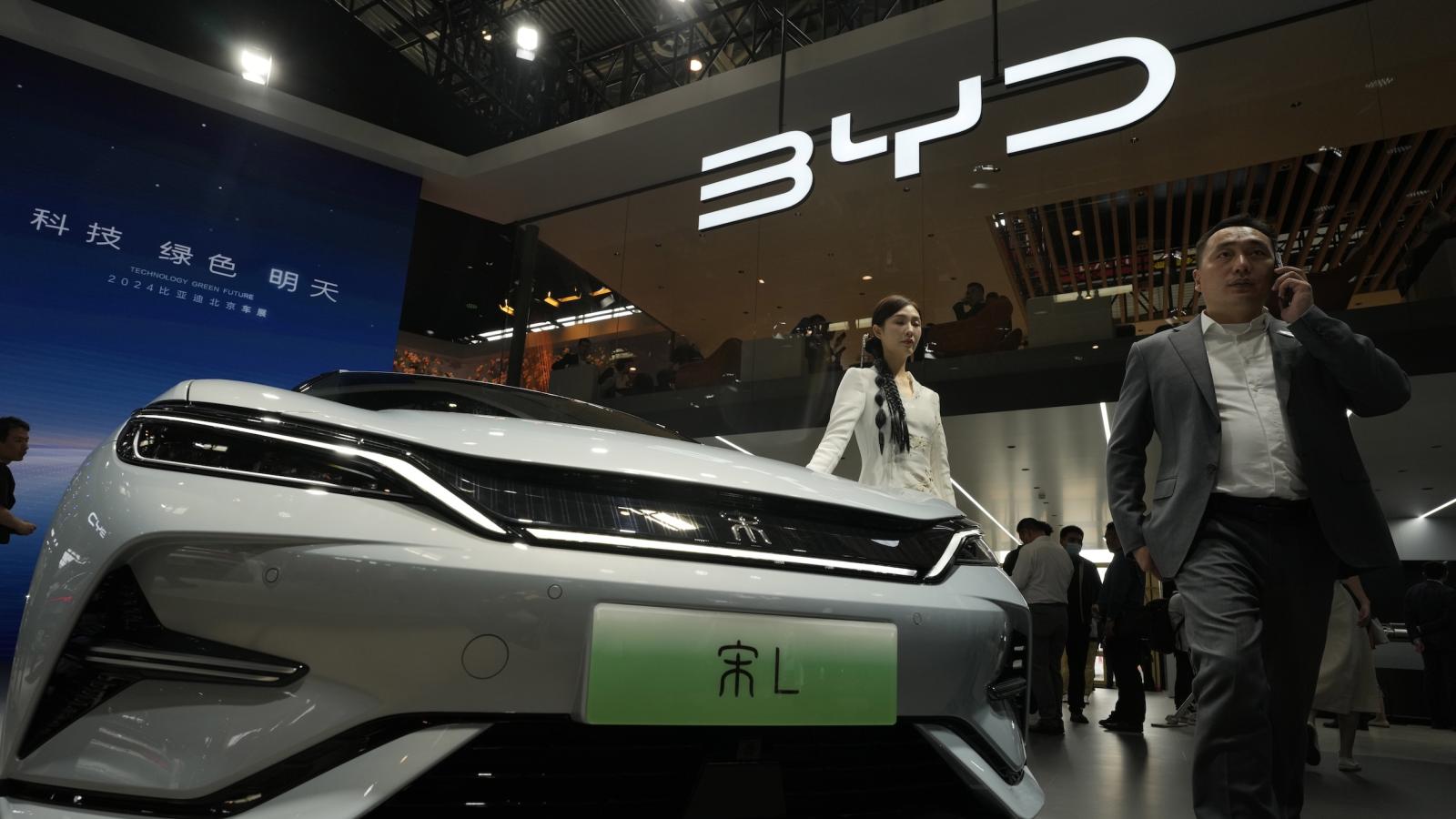
China's automotive industry is rapidly expanding in overseas markets such as Europe and Southeast Asia, while the domestic market is facing a severe overcapacity crisis due to weak consumer demand and prolonged price wars. Analysts point out that major Chinese automakers like BYD, Geely, and Chery have long aimed to go global, but this rapid expansion has shifted from a strategic ambition to a necessity for survival. Bill Russo, CEO of Shanghai-based consulting firm Automobility, states, 'Chinese automakers have excess production capacity, highly competitive supply chains, and mature products, making global expansion a strategic necessity for leading companies.'
Domestic sales drop 20%, equivalent to the entire Japanese car market According to the latest data from the China Passenger Car Association (CPCA), China's domestic car sales in July 2026 fell 20% year-on-year to 1.47 million units, marking the 10th consecutive month of decline. In contrast, exports of Chinese-made cars surged 88% to 923,000 units. CPCA Secretary-General Cu Dongshu analyzes that the sluggish domestic sales are primarily due to high fuel prices and weak demand for entry-level sedans.
Overall, China's domestic car sales in the first half of 2026 decreased by 2.3 million units (a 20% drop), equivalent to the total new car registrations in Japan, the world's fourth-largest car market. Meanwhile, China's car exports grew 71% in the same period. HSBC analyst Yuqian Ding estimates that domestic demand may stabilize between late August and September with the launch of new models, but a strong V-shaped recovery is unlikely.
BYD relies on overseas growth to offset domestic decline Taking BYD as an example, its domestic sales in the first seven months of 2026 dropped 35%, but this gap was quickly filled by a 79% surge in overseas sales, with Brazil and the UK becoming its largest single markets outside China. Since 2023, China has surpassed Japan to become the world's largest car exporter. Russo emphasizes that while Japan was known for manufacturing efficiency and fuel economy, China now has broader advantages in battery technology, software ecosystems, smart features, supply chain scale, and rapid product development cycles, all of which give it a competitive edge in the global market.
This impact is particularly evident in the European market. Data from market research firm Counterpoint Research shows that in the first quarter of 2026, Japanese automakers maintained a market share of about 12% in the European passenger car market, while Chinese automakers' market share surged from 3% four years ago to 16%, successfully eating into the market share of European, Korean, and American competitors.
In the pure electric vehicle (EV) sector, Chinese brands already account for nearly a quarter of Europe's electric car deliveries, while Japanese automakers account for less than 5%. Market research firms predict that even if tariff barriers slow the growth curve, by 2030, Chinese brands will still capture over 20% of the overall European car market and 29% of the EV market, rapidly reshaping the global automotive landscape.
FACT BOX
- Source: PR Times
- Category: Survey
- Organizations: Automobility / Counterpoint Research / HSBC