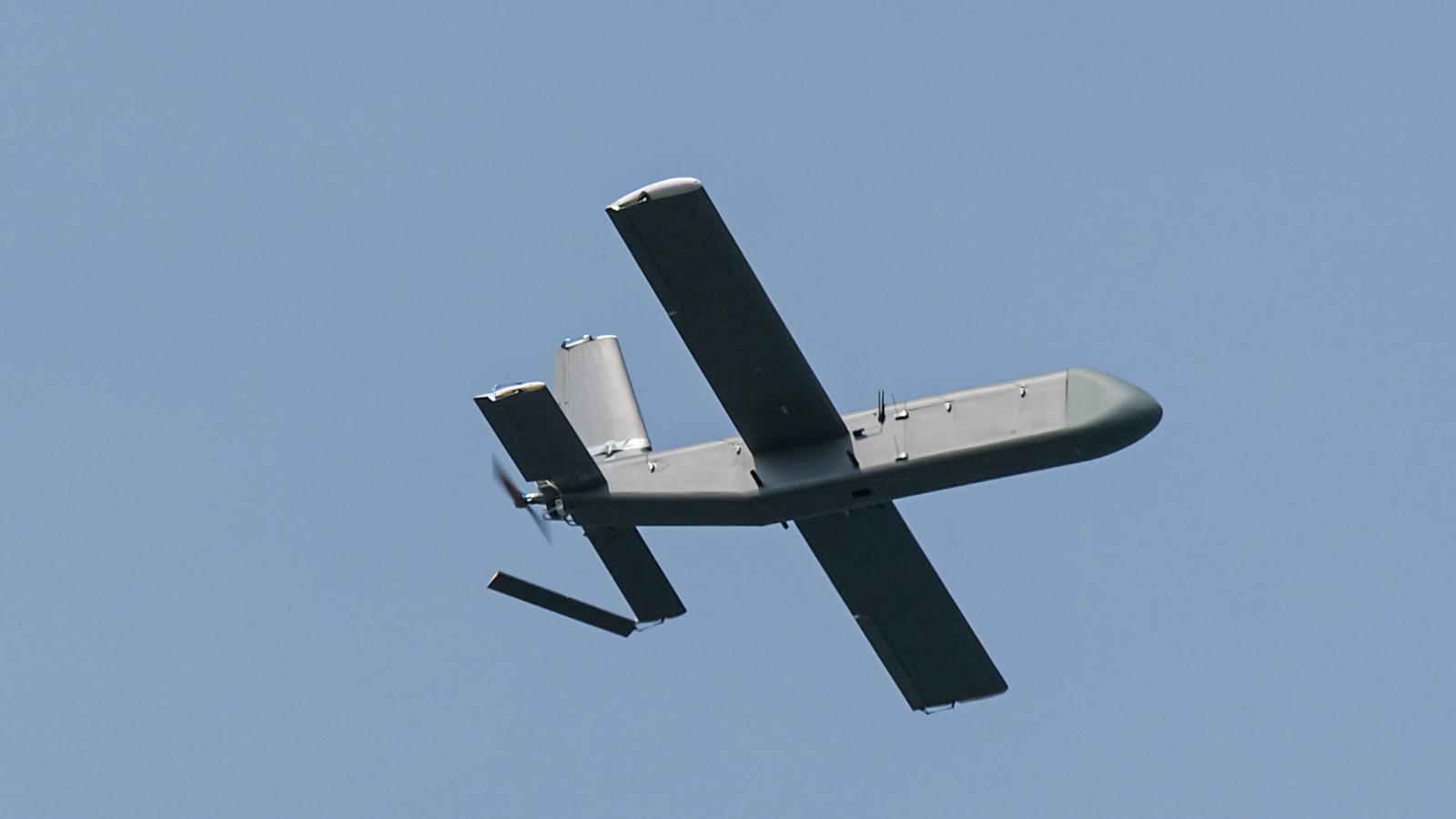
U.S. President Donald Trump signed a proclamation on August 13 (Eastern Time), announcing tariffs on imported drones and related components, including a 15% tariff on products from the European Union, Japan, South Korea, and Taiwan. In response, Taiwan's Executive Yuan U.S.-Taiwan Trade Task Force stated that Taiwan qualifies for a relatively low tariff rate, providing a competitive edge with tariff advantages of 85 and 10 percentage points for relevant products. This is expected to help maintain Taiwan's relative competitiveness in U.S. exports and enable local businesses to capture potential order shifts and expand export opportunities to the U.S.
The U.S. drone tariff is lowest for the UK at 10%, while the EU, Japan, South Korea, and Taiwan face 15%. On August 13 (Eastern Time), the U.S. government announced, under Section 232 of the Trade Expansion Act of 1962, the results of an investigation into the impact of imported Unmanned Aircraft Systems (UAS) and their components on U.S. national security. As a result, large and sensitive-function drones will face a 100% ad valorem duty, while small and medium-sized drones will be subject to a 25% tariff. However, for specific trading partners including Taiwan, the EU, Japan, South Korea, and Switzerland, the applicable rate for relevant products is 15% without叠加 of the Most Favored Nation (MFN) rate. The UK, in contrast, faces a 10% rate with MFN叠加.
The Executive Yuan U.S.-Taiwan Trade Task Force stated on the 14th that Taiwan qualifies for a relatively low tariff rate, helping maintain Taiwan's relative competitive advantage in exports to the U.S. The U.S. is Taiwan's largest export market for aerospace components and the fourth-largest export market for complete drones in the first half of this year, making it a crucial overseas market for Taiwan's drone industry. Taiwan is currently the sixth-largest source of drone imports to the U.S., following Vietnam, China, Canada, Norway, and Switzerland.
The Task Force emphasized that certain Taiwanese products enjoy tariff advantages when exporting to the U.S. Thanks to public-private collaboration, Taiwan's drone industry has developed rapidly, and close cooperation between Taiwan and the U.S. in the drone sector is expected to further expand Taiwan's presence in the U.S. market. While the U.S. imposes a 100% tariff on sensitive, large, and thermal imaging drones, Taiwanese products meeting U.S. requirements for key components and technology sourcing qualify for a 15% rate, giving them an 85-percentage-point tariff advantage.
For general small and medium-sized drones, a 25% tariff applies upon entry to the U.S. However, Taiwanese products meeting U.S. criteria for key components and technology sourcing qualify for a 15% rate, providing a 10-percentage-point tariff advantage. With the U.S. continuing to strengthen trusted supply chains and growing demand in the drone market, Taiwanese businesses are expected to gain opportunities to secure potential order shifts and expand U.S. export opportunities.
The Task Force noted that to qualify for the lower tariff rate, key components and technologies of such products must substantially originate entirely from countries eligible for the lower Section 232 tariffs or from the U.S., with certification required from importers. Taiwan has been actively promoting a non-China-reliant drone supply chain. The government will assist businesses in mapping their bill of materials and sourcing of key components, and continue to link with technological and supply chain capabilities from partners such as the U.S., Japan, and Europe to help businesses qualify for the lower tariff rate.
Additionally, in response to market access requirements arising from the U.S. Federal Communications Commission (FCC) adding foreign-made drones and key components to its Covered List, Taiwan's Ministry of Economic Affairs has facilitated the Industrial Technology Research Institute (ITRI) to become the only overseas certification body for the U.S. 'Green UAS' program. It has also enabled the Metal Industries Research & Development Centre (MIRDC) to align with 'Blue UAS' certification, helping businesses meet U.S. verification requirements and enhancing the competitiveness of Taiwan's drone products in the U.S. market.
FACT BOX
- Source: PR Times
- Category: News