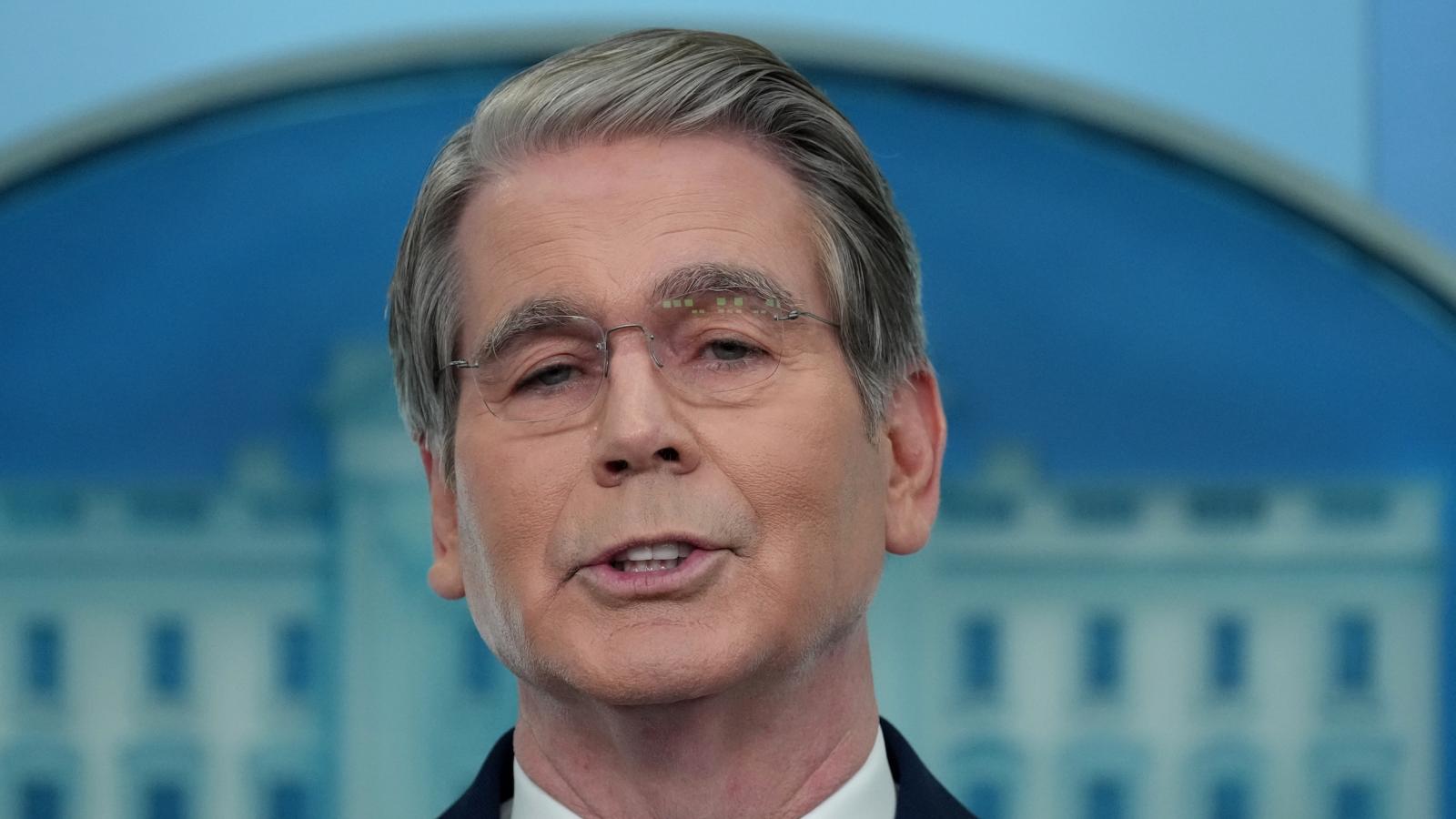
U.S. Treasury Secretary Scott Bessent stated that the Trump administration plans to announce a new set of measures against Iran next week, emphasizing that these actions will push America’s economic isolation of Iran to an 'unprecedented' degree. Bessent noted that the United States is currently expanding financial and economic pressure on Iran, continuing to target funding sources for the Iranian government and its affiliated forces, while further acting against overseas assets, financial accounts, cryptocurrency wallets, and sanction-evasion networks.
On August 13, Bessent said in an interview with Newsmax that observers should closely watch the new measures to be announced next week. He stated that the U.S. will employ 'means never before seen in the history of economic isolation of a nation' to further intensify economic pressure on Iran.
Trump Reinstates 'Maximum Pressure' Policy
Bessent indicated that the Trump administration is currently upgrading its financial and economic strategy against Iran. This policy stems from President Trump’s reactivation of the 'maximum pressure' policy, after which the U.S. Treasury has continuously expanded the scope of sanctions and further strengthened economic打击 following U.S. military action against Iran.
Bessent said that about a year ago, Trump ordered the Treasury Department to impose 'maximum pressure' on the Iranian regime, prompting the department to begin implementing related policies. The Trump administration officially reinstated the 'maximum pressure' policy toward Iran in February 2025, requiring the U.S. Treasury to take sanctions or enforcement actions against individuals, businesses, and other organizations violating Iran-related sanctions, while continuously working to cut off revenue channels for the Iranian government and its supported armed groups.
One core objective of this policy is to restrict Iran’s access to funds through the international financial system and weaken its oil exports, financial transactions, cryptocurrency, and other potential fundraising channels.
Bessent pointed out that recent targets of the U.S. Treasury include bank accounts, cryptocurrency wallets, and assets distributed globally belonging to Iranian-affiliated individuals and institutions. He said the U.S. government aims to cut off financial flows to Iran’s leadership and governmental systems.
From 'Epic Fury' to 'Economic Fury'
Bessent further stated that after the U.S. launched a military operation named 'Epic Fury' against Iran, the Treasury Department began elevating its economic and financial sanctions to a new level.
He dubbed this economic pressure campaign 'Economic Fury,' saying, 'We have shifted from Epic Fury to Economic Fury.' He noted that after receiving further instructions from Trump, the U.S. has again increased economic pressure on Iran.
The U.S. Treasury previously stated that 'Economic Fury'-related measures have already disrupted tens of billions of dollars in potential revenue for the Iranian government and its affiliated forces. Sanction targets cover Iran’s underground financial and shadow banking networks, oil industry, cryptocurrency assets, weapons procurement channels, and corporate and financial networks assisting Iran in evading U.S. sanctions.
The U.S. government has long accused Iran of circumventing sanctions through complex financial arrangements, third-country enterprises, shipping companies, and other intermediaries. Therefore, recent sanctions have not been limited solely to financial institutions directly engaging with the Iranian government but have gradually extended to networks that help Iran obtain foreign exchange income or maintain export capabilities.
U.S. Strengthens Targeting of Iran’s Oil and Financial Networks
In terms of financial sanctions, one of the main goals of the U.S. Treasury is to limit Iran’s oil revenue. Oil exports are one of the most important sources of foreign currency for the Iranian government, so Washington believes restricting Iran’s oil exports and related financial transactions can directly squeeze funds available to Tehran for government spending, military activities, and supporting allies and proxies.
In addition to the oil sector, the U.S. continues to act against Iran’s 'shadow banking' system, cross-border payment channels, and cryptocurrency assets. The U.S. government believes these networks allow Iran to conduct international transactions and obtain funds even under sanctions in the traditional financial system.
Bessent said the current U.S. policy is not merely about increasing the number of sanctioned entities but attempts to simultaneously compress Iran’s ability to acquire funds across multiple dimensions including finance, energy, shipping, and assets.
Bessent: Economic Isolation to Proceed Alongside Hormuz Strait Measures
Bessent stated that U.S. economic pressure on Iran will proceed in parallel with measures targeting Iranian ports and the Strait of Hormuz.
He noted that the U.S. will combine 'unprecedented economic isolation worldwide' with ongoing blockades of the Strait of Hormuz to restrict the movement of goods into and out of Iranian ports.
The Strait of Hormuz lies between the Persian Gulf and the Gulf of Oman and is one of the world’s most critical energy transportation corridors. A large volume of Middle Eastern crude oil and natural gas shipments must pass through this maritime route. Therefore, any measures concerning navigation safety in the Strait of Hormuz, commercial vessel passage, and Iranian ports could impact global energy markets and international shipping.
Bessent stated that financial and economic sanctions will coordinate with related maritime measures, placing greater economic pressure on Iran.
U.S. Expanded Sanctions on Iran’s Shipping and Financial System in July
The U.S. Treasury further expanded sanctions on Iran’s shipping and financial networks in July. These measures were introduced amid renewed tensions in Iran and international shipping around the Strait of Hormuz, with Washington targeting networks involved in transporting, selling energy, or processing financial transactions for Iran.
Washington has long believed that Iran uses shipping companies, vessels, financial institutions, and intermediaries to build complex transaction networks to evade U.S. sanctions and maintain oil exports. Consequently, the U.S. has continued expanding sanctions to include related businesses, individuals, vessels, and financial intermediaries.
Bessent’s remarks indicate that the Trump administration does not intend to ease economic pressure on Iran but plans to further intensify it based on existing sanctions. The new measures expected to be announced by the U.S. Treasury next week will become the latest phase of America’s 'maximum pressure' policy and 'Economic Fury' campaign.
FACT BOX
- Source: PR Times
- Category: News